The cheapest paddle quote can feel like a bargain and a warning at the same time. You do not want to overpay, but you also do not want a lower number to hide a different product. I treat a price gap as a reason to compare, not a verdict on quality.
A lower quote does not automatically mean corner-cutting. Compare the face material, core construction, finished paddle, delivered cost, and after-sales support together. We use imported Toray T700 face material and also offer Gen4 and Gen5 PP honeycomb core options. Our DDP door-to-door quotation includes delivery to the agreed destination, customs clearance, and the applicable import duties and taxes included in that quotation. Contact us about quality problems after receipt; we provide a free replacement paddle under our stated policy.
The useful question is not which supplier has the most impressive material name. It is which offer gives you the agreed product, an understandable total, and a workable response if something is wrong. I separate that judgment into four decisions below.
Are the Quotes Actually Pricing the Same Paddle?
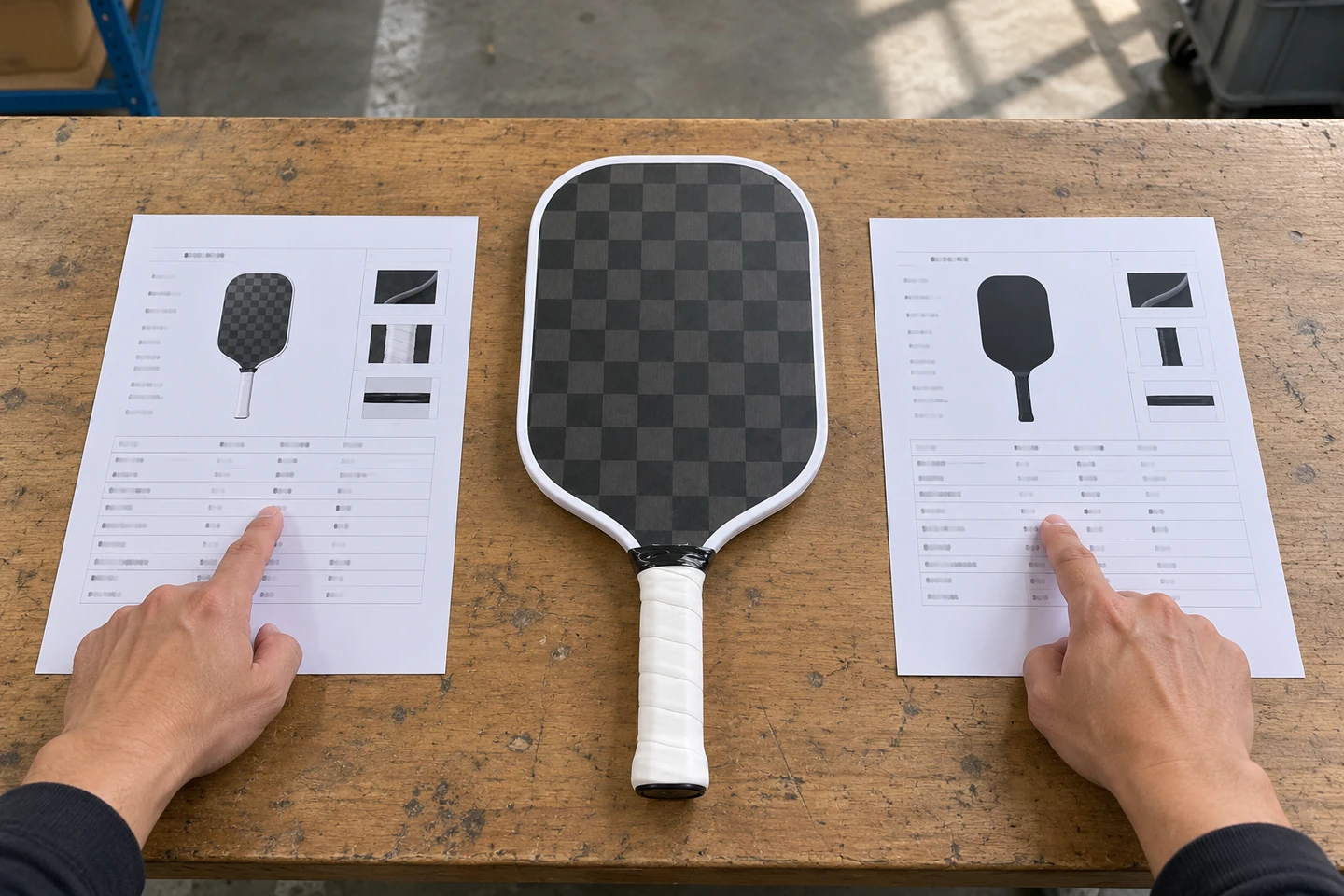
In June 2026, a brand development buyer in the United States asked about 40 paddles in shape 001, with 18K Carbon Fiber faces, a C07 Zoned Molded Full-Foam Core, and 14 mm thickness. A cheaper offer described only a carbon face and foam core. She wanted to know whether that difference meant inferior materials. I explained that the descriptions were not detailed enough to establish equivalence, then separated the named build from the unspecified alternative. She kept the 18K/C07/001 configuration as her comparison target and requested the other supplier's exact face and core details before ranking the quotes.
Compare one defined configuration first. Treat an unexplained difference as an open question, and treat a disclosed alternative as a separate offer rather than automatic evidence of dishonesty.
Identify the face and core separately
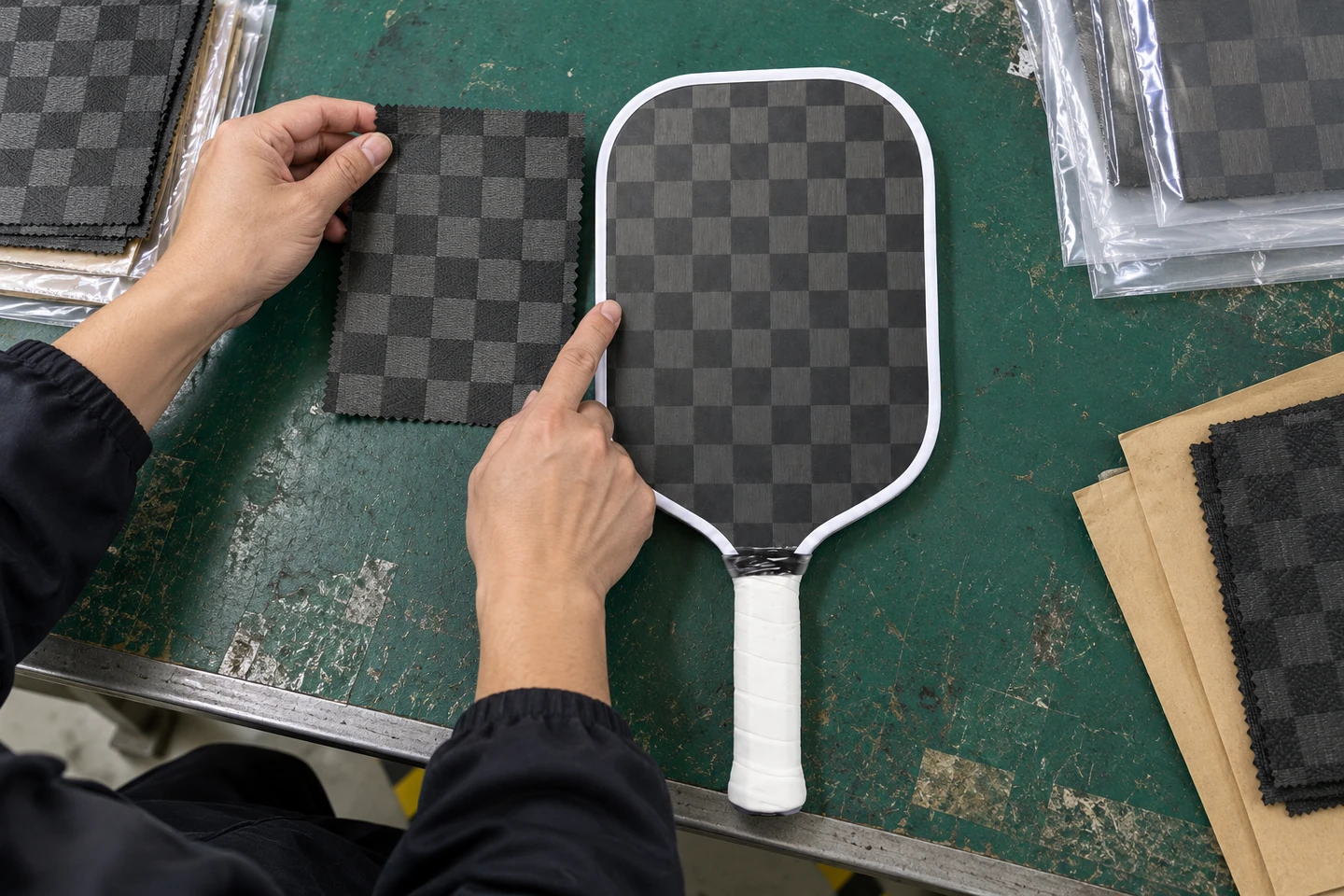
A face label does not describe the whole paddle. Ask for the material, surface finish, core structure, thickness, and shape in each offer. Our 18K Carbon Fiber paddle provides one face direction; the C07 core identifies a separate construction choice. Neither name tells you that every other carbon-and-foam paddle is equivalent.
We also use imported Toray T700 face material. Toray's T700S data sheet 1 distinguishes fiber properties from properties measured in a specified composite system. I therefore do not turn a fiber name into a promised result for a finished paddle. Ask which material is actually offered and which complete sample you will evaluate.
The same discipline applies to the core. We offer Gen4 and Gen5 PP honeycomb options alongside other constructions. Those options remain available even when a buyer chooses C07 full foam for a particular comparison. The paddle configuration library lets us name the intended structure instead of relying on a generation label alone.
Find legitimate reasons for a lower number
Two suppliers can quote different quantities, existing components, decoration scope, or packaging. One may have included a custom logo component while the other assumes an available standard part. These are possible scope differences to check, not explanations to invent on the supplier's behalf.
I ask the lower-priced supplier to show what is included without first demanding a discount from the other offer. A clear explanation preserves a potentially useful option. An evasive answer leaves the comparison incomplete. The point is to discover what changes when the price changes, not to reward the longest specification sheet.
| Compare this | Question for each supplier | How to handle a difference |
|---|---|---|
| Face and finish | What exact face material and finish are included? | Request a matching quote or identify an alternative |
| Core and thickness | Which structure and finished thickness are quoted? | Keep different constructions on separate lines |
| Shape and components | Which outline, grip, edge, ring and cap are included? | Confirm which details are standard or customized |
| Quantity and packaging | Is the same count and pack-out assumed? | Reprice on a common order scope |
Recognize a substitution without guessing its motive
A different build is not necessarily worse. It may suit another price position or customer. The problem is an unagreed change presented as the product you selected. If a supplier cannot identify what it intends to supply, do not fill the blank with its best-looking catalogue photograph.
For the American buyer, the next step was a clarified offer, not a bulk-order commitment. That distinction matters. She could still consider another construction, but she would decide to change the product explicitly instead of allowing the cheapest number to make that decision for her.
What Should the Finished Sample Show Before You Trust the Price?
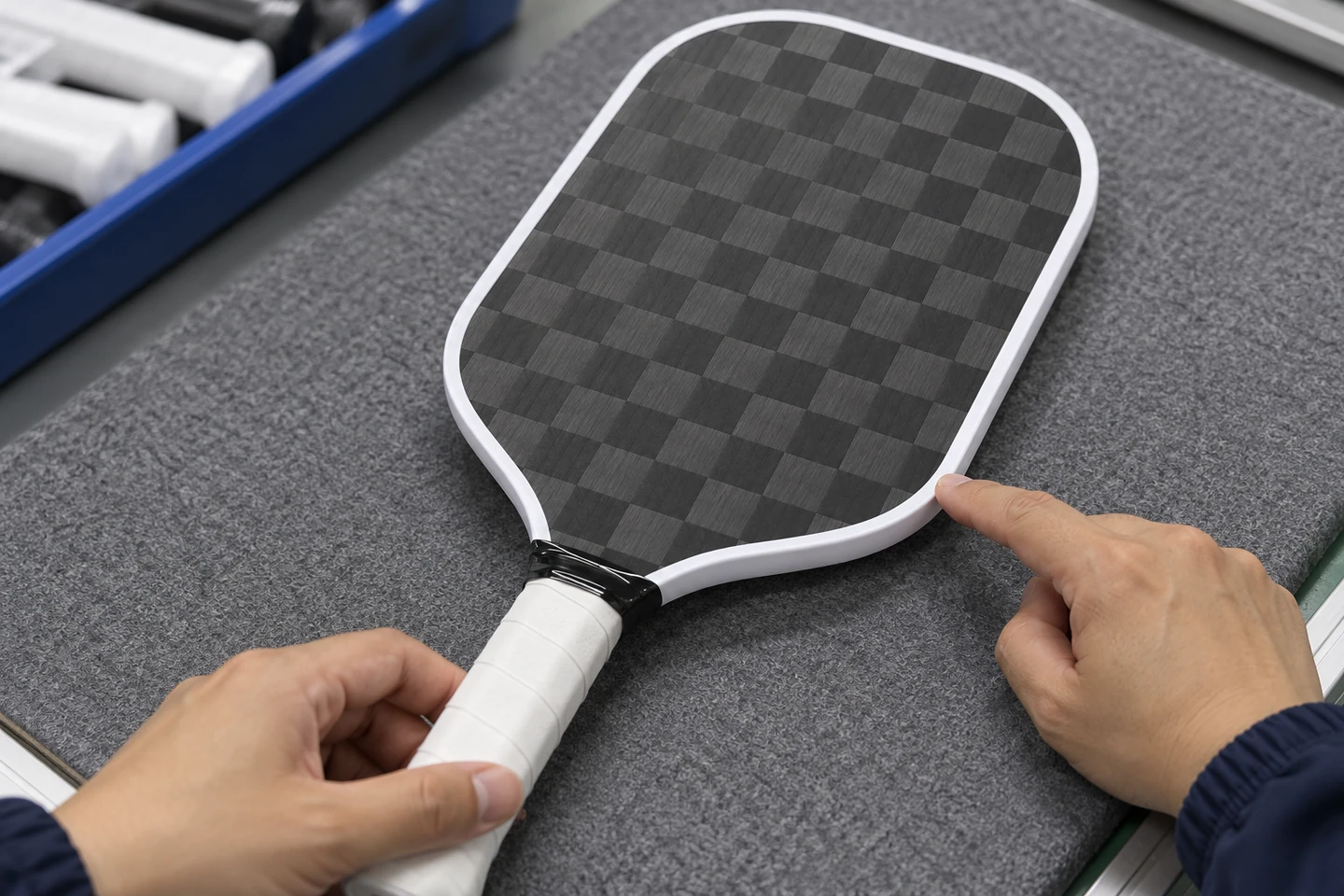
At the inspection bench, I separate a visible finish concern from a preference about how the paddle plays. A buyer worried about a loose-looking edge needs a close examination of that join; a buyer who dislikes the response needs a playing comparison. I do not accept a lower price as the explanation for either concern. I identify the specific issue first, because the next decision is whether to request a correction, reconsider the configuration, or continue evaluating the offer.
Check conformity and playing suitability separately. The sample should represent the quoted build, and its visible finish and actual use should answer the concerns that could make the saving worthless.
Look at the work that material names cannot show
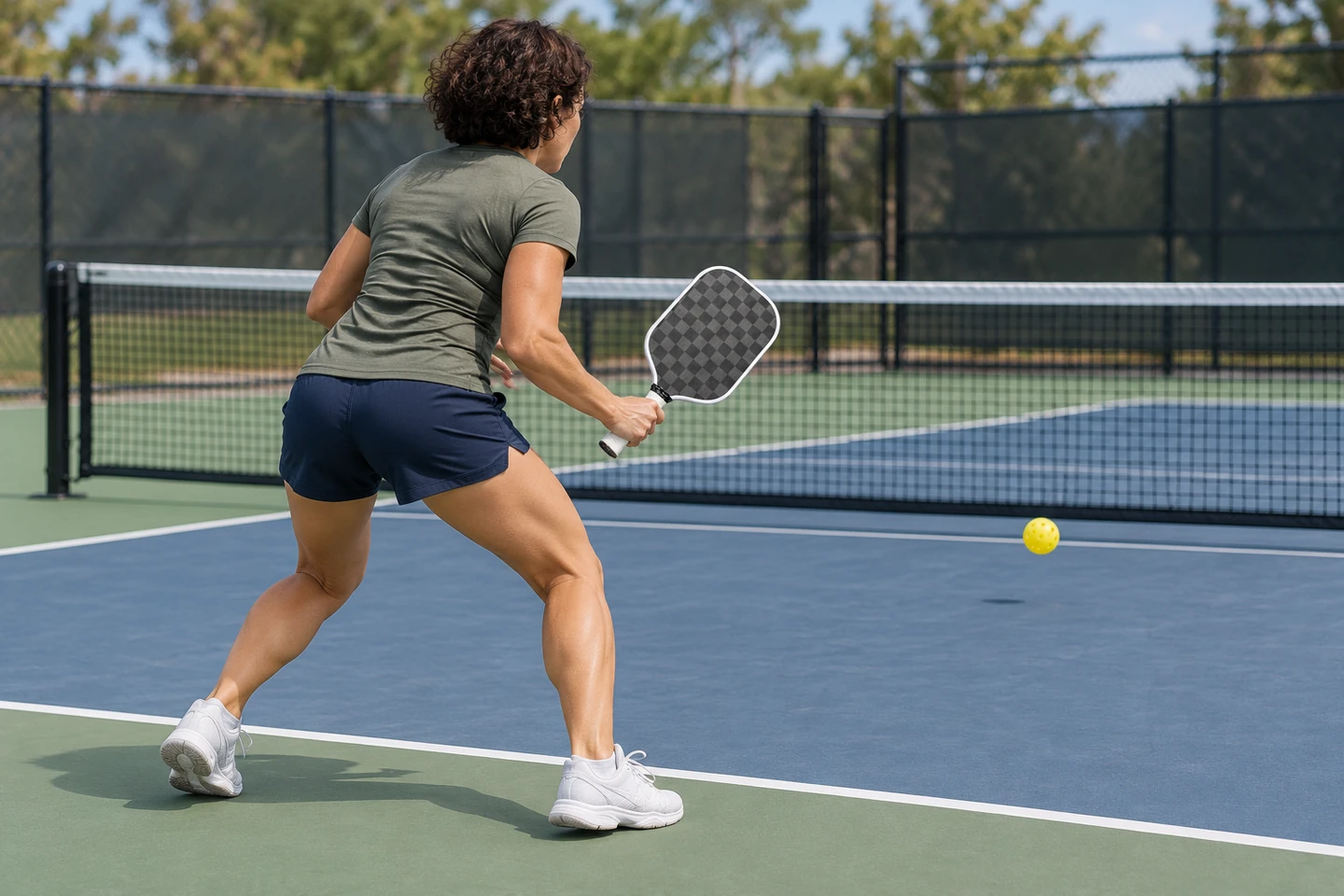
Examine the edge attachment, grip finish, component fit, artwork placement, and surface condition against what was agreed. Ask for close views when a photograph hides the detail. A material certificate cannot show whether the grip was fitted neatly, and a clean product photograph cannot tell you what sits inside the paddle.
ASQ describes inspection against specified requirements 2 as examining or testing characteristics and comparing them with requirements. That is a practical starting point: name the requirement before calling something a defect. Our manufacturing and finishing process includes surface checking before printing and finished-paddle checking after component assembly. Ask how the relevant check relates to your chosen build.
Put the quoted configuration into actual play
For the 18K/C07 comparison, the court session should use that selected build rather than another paddle carrying similar graphics. Return-of-serve practice can reveal how the complete paddle feels during preparation, contact, and recovery. Record the situation behind a preference instead of treating a single successful shot as a product verdict.
NIST's explanation of controlling nuisance factors in comparisons 3 supports keeping other influential conditions consistent. In a practical buyer trial, use the same players and ball within a session and vary the order of samples. This makes feedback easier to interpret; it does not turn ordinary court practice into a laboratory result.
If the cheaper option feels different, ask whether the build differs before blaming workmanship. A preference for one response does not establish that the other supplier secretly reduced quality. The decision remains whether the sample meets your product requirements at its stated cost.
Keep approval claims attached to the exact model
When competition eligibility is important, ask for evidence for the exact brand and model, not an assurance that a similar paddle was approved. The USA Pickleball Equipment Standards Manual 4 describes equipment requirements and a formal approval framework. Verify the applicable current requirements for the intended competition separately.
Neither a premium face nor an enjoyable trial establishes official approval. Likewise, a high quote does not buy evidence that is missing. Keep unresolved finish, use, and approval questions visible until the supplier has answered the relevant question rather than merely restating its price.
Does the Apparent Saving Survive Delivery to Your Address?
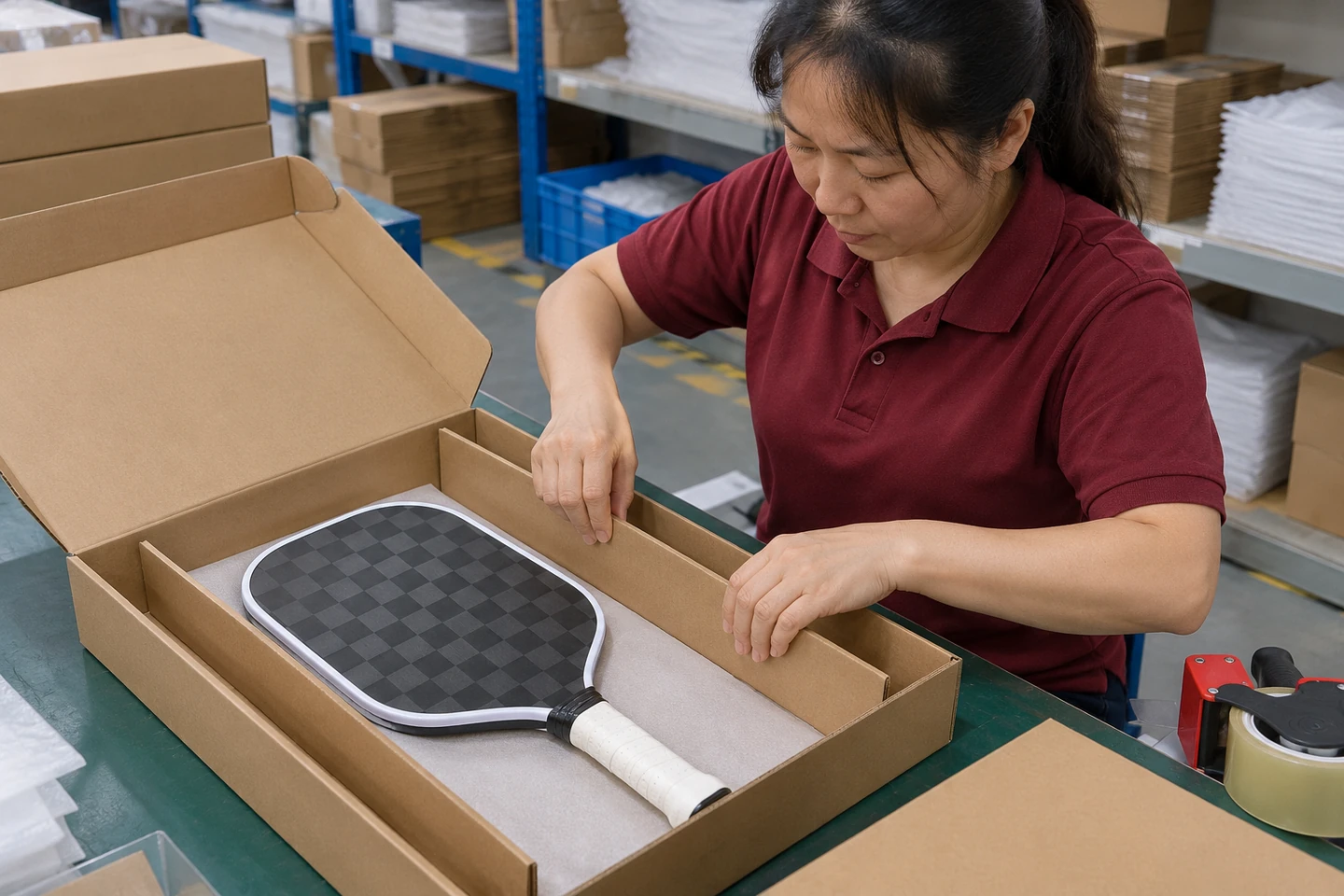
At the packing station, I compare the proposed protective layout with the quantity used in the freight calculation. The buyer is comparing a paddle-only price against our delivered quotation and worries that our product costs more. I separate product charges from delivery coverage, then check the pack-out behind the transport calculation. The comparison must finish at the same address, so I ask for the missing delivery scope before treating the apparent saving as real.
Compare complete order totals for the same destination and packaging assumptions. A low paddle price and a DDP door-to-door price are not directly comparable until the omitted transport and import costs are resolved.
Read the delivery term and named destination
ICC's Incoterms 2020 framework 5 allocates costs, risks, and responsibilities between buyer and seller. Put the agreed delivery term and destination beside the price. The words “shipping included” are too vague when they do not say where the service ends or which import charges are covered.
We provide DDP door-to-door delivery to the customer's agreed destination address. Customs clearance and the applicable import duties and taxes included in our DDP quotation are covered; the customer does not arrange that clearance or separately pay those included charges. Ask us to confirm the scope for the actual order and destination before comparing totals.
Do not add an estimated duty amount again if it is already included. Equally, do not assume an unnamed extra service is included merely because the quotation says DDP. Ask about any special delivery requirement while the address and shipment are being priced.
Compare the pack-out, not just the paddle count
Packaging can change the shipment's size. DHL explains that volumetric weight 6 is compared with actual weight when determining the chargeable weight for its service. The practical lesson is to use the quoted packaging and the applicable transport method, not a universal freight figure per paddle.
I do not remove protection merely to make the shipping line look smaller. Instead, I ask whether both offers assume the same individual packaging, carton arrangement, and order quantity. If one includes retail presentation packaging and the other does not, decide which you need and request the corresponding price. This is a scope choice, not proof of superior paddle construction.
| Cost comparison item | What must be visible | What would distort the comparison |
|---|---|---|
| Products and customization | Same count, build and included components | Comparing a basic paddle with a customized package |
| Packing and transport | Pack-out, shipping scope and destination | Assuming different carton volumes cost the same |
| Import handling | Clearance responsibility and included taxes or duties | Adding included charges twice or omitting excluded charges |
| Other agreed charges | Separately priced tooling or requested extras | Hiding a one-time charge inside an unexplained unit price |
Keep the delivered saving separate from product evidence
Once both totals cover the same destination, a remaining price difference is worth investigating, not automatically rejecting. A clear lower offer can stay on the shortlist if the sample and service terms also meet your needs. A higher delivered total may simply contain more services.
Ask for a revised written total when the quantity, packaging, or destination changes. Do not keep using an earlier freight assumption after changing the purchase. Your comparison should answer what this order will cost, not what a different order once appeared to cost.
How Should After-Sales Support Affect the Final Choice?
When a buyer raises a quality concern, I ask which paddle is affected and what the photograph or playing observation shows. I compare that concern with the agreed sample instead of answering with the original discount. A saving does not resolve an edge problem. The useful next step is a specific quality discussion and the applicable replacement process, so the buyer knows what support actually accompanies the purchase.
Include the remedy and its scope in the comparison. A free replacement paddle is meaningful support, but it should not be silently expanded into unlimited coverage, automatic refunds, or free return freight.
Ask what happens after a quality problem is reported
If you find a quality problem after receiving our paddles, contact us; we provide a free replacement paddle under our stated policy. Our stated policy covers a quality issue reported within seven days of receipt with one new replacement paddle. Confirm the quality assessment, procedure, and freight responsibility with us rather than assuming additional terms.
Ask every supplier the same practical questions: whom to contact, what information helps explain the concern, what remedy is offered, and what conditions apply. The phrase “good after-sales service” does not answer those questions. Nor does a longer promise necessarily mean better support if its scope remains unclear.
ASQ's cost-of-quality framework 7 includes failures discovered after delivery, including complaint handling and replacement-related work. That supports looking beyond purchase price without inventing a defect rate or assigning an unsupported cash value to the policy.
Make the concern easy to investigate
Keep the affected paddle identifiable and describe the concern precisely. A clear photo of an edge, a short unedited clip of a repeatable playing issue, and the receipt date are more useful than a message saying that the entire batch feels cheap. Share only the information needed for the review.
ASQ's check-sheet method 8 organizes repeated observations. A buyer can use that principle to note which units show which issue, without turning the form into proof of its cause. The factory still needs to examine the specific concern.
| After-sales question | Useful clarification | Assumption to avoid |
|---|---|---|
| What is covered? | Applicable quality issue and reporting period | Every change of preference is a defect |
| What is the remedy? | The stated replacement and procedure | Automatic refund or unlimited replacements |
| What must be sent? | Relevant images, description and order identification | Unnecessary personal or customer information |
| Who handles freight? | Explicit agreement for the applicable case | Free replacement automatically means free return shipping |
Choose the offer with the fewest important unknowns
Use the agreed sample as a reference when moving from sample evaluation into production. If you change the build after the trial, identify what needs another review. A sample for one construction cannot answer every question about another.
My shortlist has three possible outcomes: proceed with the clarified offer, request a focused correction or missing answer, or leave an offer out when an important uncertainty remains unresolved. I do not insist that the highest price wins. I want the chosen price to have an understandable product, delivery scope, and support behind it.
Conclusion
A low quote deserves questions, not an automatic accusation. Compare the exact configuration, inspect and try the finished paddle, bring both totals to the same delivery address, and read the after-sales terms. When those four parts are clear, you can judge the saving without confusing a different scope with corner-cutting. The best-priced offer for your project is the one you can explain all the way through.
Ask SHUEN to compare a defined build and delivery scope. Start with the 18K Carbon Fiber custom paddle, or tell us if imported Toray T700 and a Gen4 or Gen5 PP honeycomb option is your preferred direction. Send the shape, face, core, thickness, quantity, customization requirements, destination address, and the inclusions you want compared. Remove other suppliers' confidential or personal details before sharing a comparison.