Paying for custom pickleball paddles before they arrive can leave you wondering whether the finished order will match your agreement. At SHUEN, we give the buyer a confirmation stage between production and the final payment.
Our usual arrangement is a 50% deposit first. When the paddles are finished, we send the customer materials showing the completed order for confirmation. Once the customer confirms there is no issue, we collect the remaining 50% and then arrange shipment. To receive the right goods, connect that payment sequence to agreed specifications, a clear finished-order review, and shipment follow-up.
Here is what I recommend confirming before the deposit, what to review when production is complete, when to release the balance, and what to check after dispatch.
Customer conversations below are illustrative sourcing scenarios. Images are AI-generated illustrations of the workflow.
What Should I Confirm Before Paying the 50% Deposit?
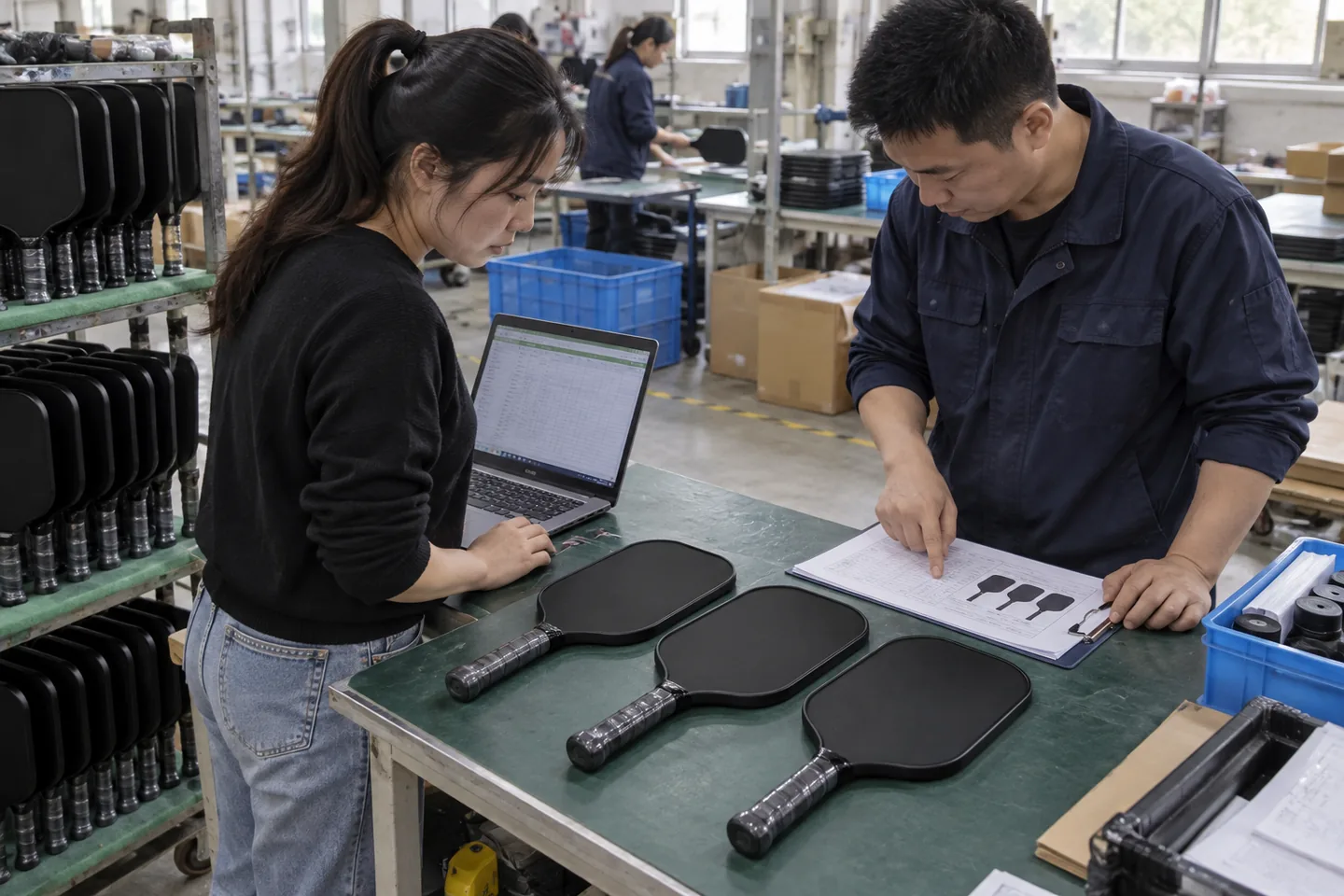
During an initial order discussion, a club buyer in Bangkok, Thailand, asked me, "If I pay half now, how do I know which paddle you will make?" I put the chosen shape, face material, core, artwork version, and quantity into one order summary. We then had a specific configuration to confirm before payment, rather than a loose request for "custom paddles."
Before paying the deposit, agree on what will be made and how the finished order will be confirmed. Record the 50% deposit, the remaining 50%, and the confirmation stage in the same written order agreement.
Define "qualified" for your own order
A paddle can look attractive and still have the wrong grip, artwork, or configuration. "Good quality" needs a reference both sides can use.
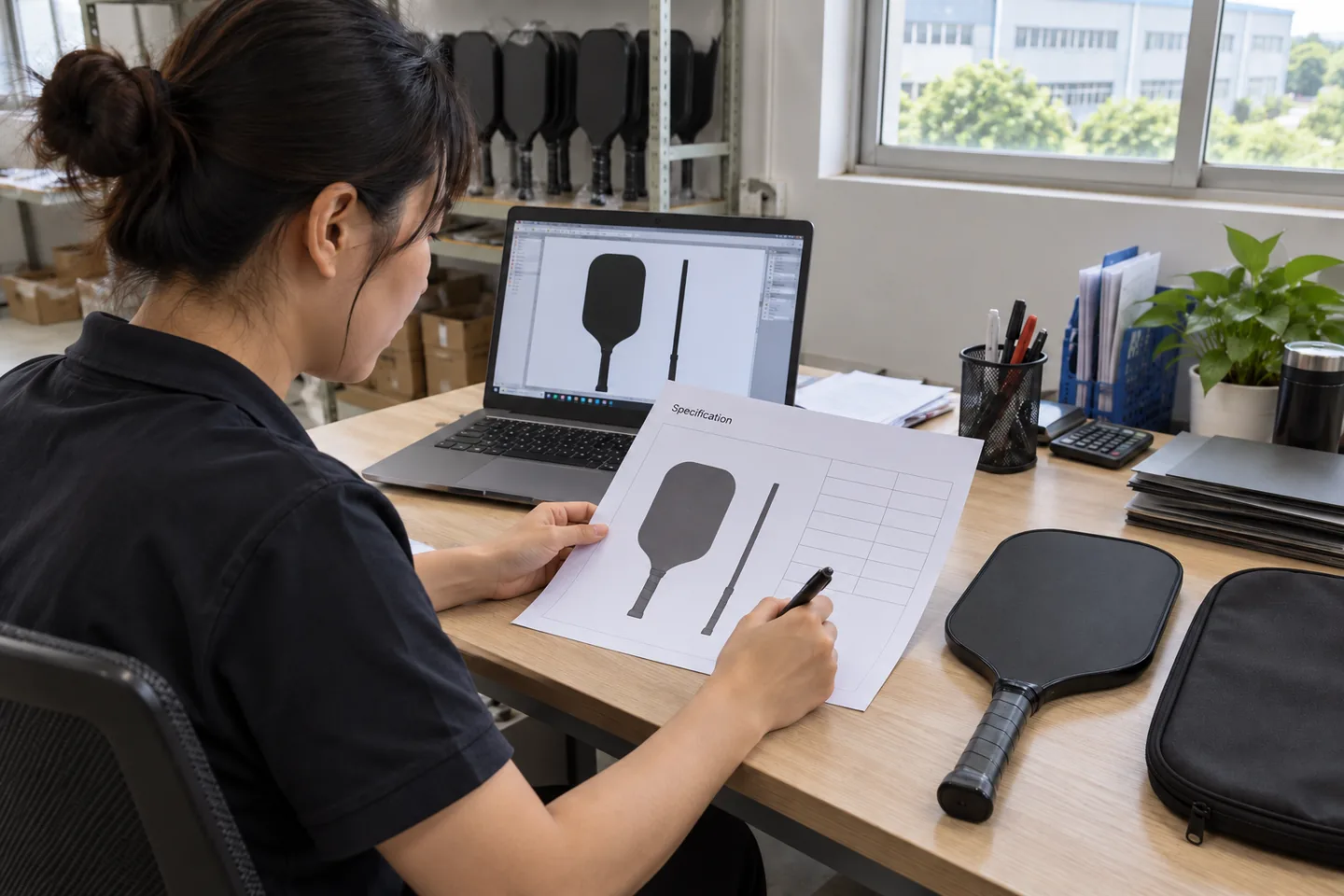
For a custom T700 pickleball paddle, name the selected face material and core configuration rather than relying on the product name alone. Record the approved sample or specification, including any agreed limits for measurable characteristics. Do not add a tolerance after the goods are finished and expect it to have been part of production.
| Item to agree | What the written record should identify | Why it matters |
|---|---|---|
| Paddle configuration | Shape, face material, core, thickness, grip and edge details | Prevents different versions being treated as the same order |
| Branding | Approved artwork version, front and back design, colors and logo placement | Gives the finished-order review a clear visual reference |
| Quantity and packaging | Units by design or version; agreed individual and carton packaging | Helps reconcile the finished order with the shipment |
| Payment sequence | 50% deposit; confirmation after completion; remaining 50%; shipment afterward | Makes the balance-payment trigger explicit |
| Review and delivery | Confirmation materials, any agreed inspection, destination and shipping responsibilities | Avoids deciding the review method only when payment is due |
Keep the approved files beside the order summary. If your brief is still incomplete, our guide to preparing a custom paddle brief helps organize the missing details.
Confirm who receives the payment
Check that the invoice, supplier identity, and payment beneficiary are consistent. If a beneficiary changes unexpectedly, verify the change through a previously established contact before transferring money.
International payment terms distribute risk differently between buyer and seller, as the International Trade Administration explains in its methods of payment guide 1. Our 50/50 arrangement gives the buyer a review before the second payment; it does not make advance payment risk disappear.
What Should I Check When the Paddles Are Finished?
At the finished-order review, a distributor in Mexico asked me, "The front looks right, but can I see the back and the grip before I approve?" I separated those views from the overall batch image and kept the approval pending until the requested details were clear. That changed the review from a quick glance at one face into a decision about the agreed order.
Review materials from the actual completed order against your approved specification and artwork. Ask for the views and records needed to resolve unclear details before confirming that there is no issue.
Review the order, not just one attractive paddle
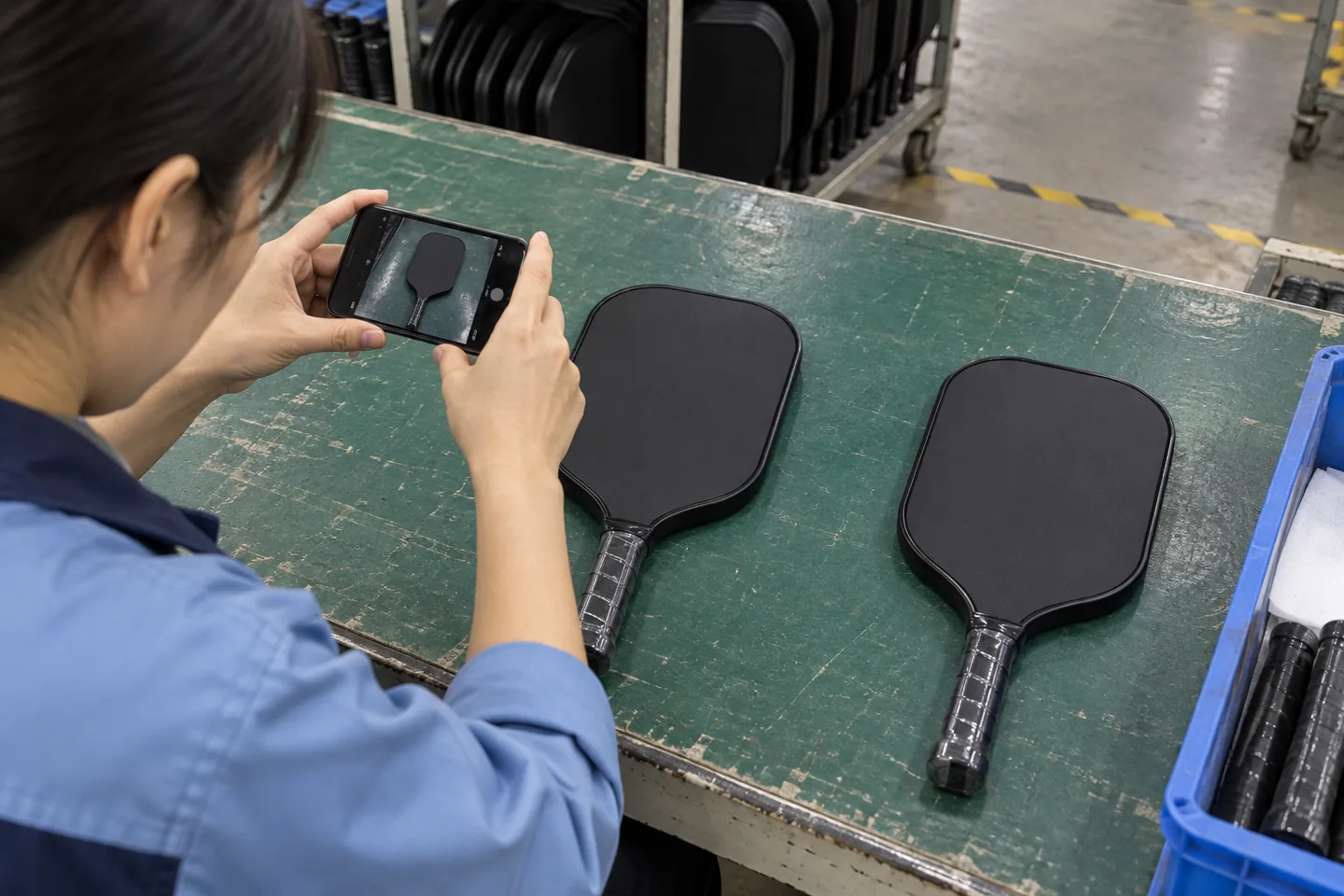
Start with clear views of the front, back, edge, grip, and butt cap. Link the review materials to your order and distinguish each design or configuration. A close-up can show a detail; a wider batch view helps establish the context. Neither alone establishes that every unit has been checked.
| What you need to confirm | Useful review material to request | What it cannot establish by itself |
|---|---|---|
| Correct artwork | Front and back views compared with the approved files | Exact color under every lighting condition |
| Visible finish and assembly | Clear edge, grip and butt-cap views | Hidden internal quality or long-term durability |
| Agreed measurable specifications | Recorded checks using the agreed method | That unmeasured units meet every requirement |
| Quantity by version | Count records and a packing breakdown | That every packed unit is free of defects |
| Packaging | Views of protection, individual packing and carton marks | That transit damage cannot occur |
These are review requests to agree with the supplier, not a claim that a particular inspection service is included in every SHUEN order.
Match the checking method to the concern
Photos help with visible features. Video can clarify the condition or handling of a selected unit. Neither substitutes for a physical check when the concern is weight, dimensions, feel, or an internal issue.
If you need a physical sample from the completed batch or an independent inspection, discuss access, scope, cost, and timing before production. Agree how the units will be selected and how findings will affect approval. A photo of one paddle should not silently become acceptance of the whole batch.
For a visible mismatch, name the exact difference and the reference: "The back artwork differs from approved file B," is more useful than "The paddles are wrong." Keep the concern open until the response and any revised evidence are clear.
When Should I Pay the Remaining 50%?
When I prepare a balance request, the important question is whether the customer has confirmed the completed paddles. "Production finished" and "customer confirmed" are separate steps in our usual arrangement.
Pay the remaining 50% after the completed-order review is clear and you have confirmed there is no issue. Under our usual sequence, we then arrange shipment after receiving the balance.
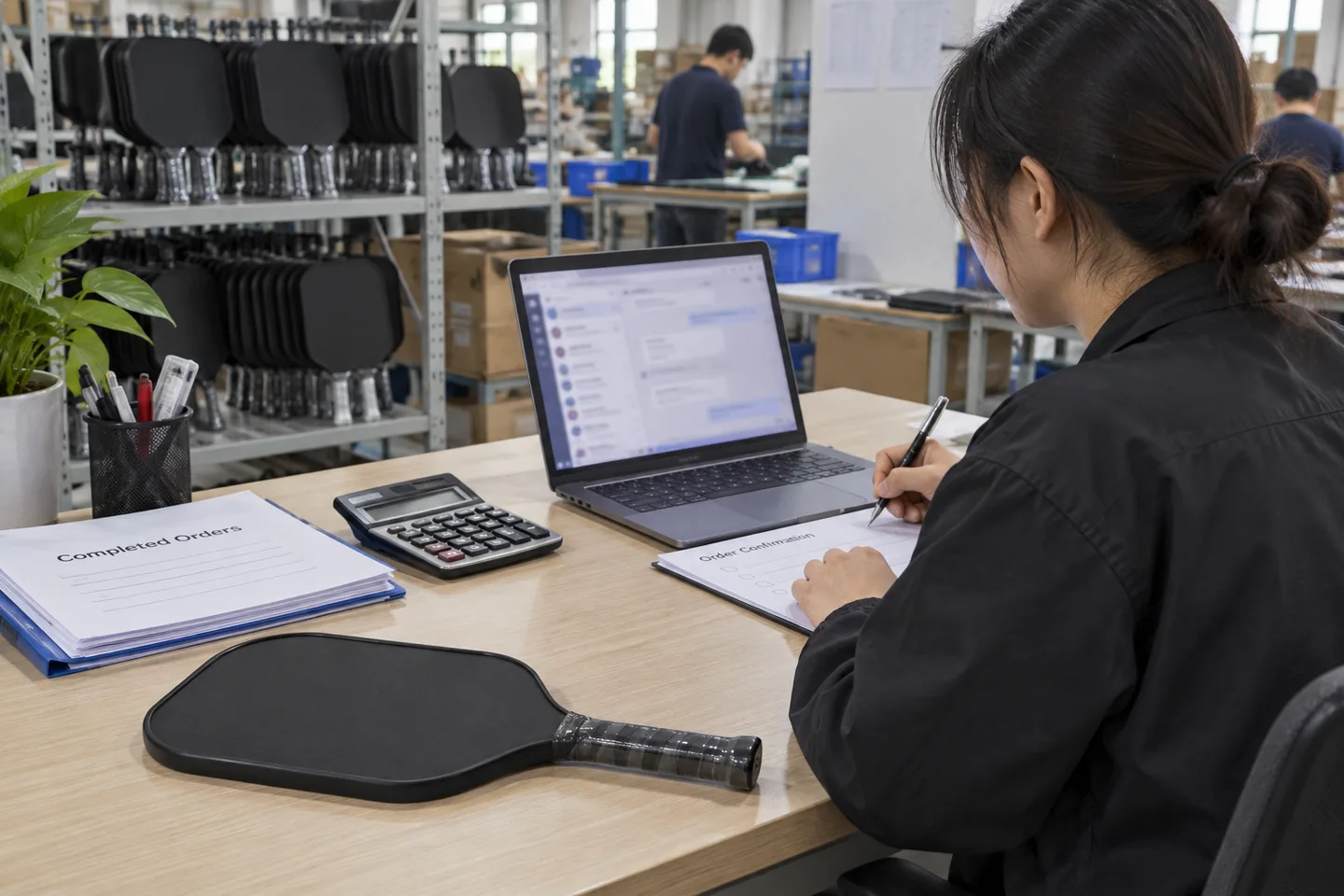
Make the approval specific
Save the reviewed materials and give a written approval that identifies the order, artwork version, and configurations. A useful message is: "I confirm the completed paddles shown for this order against our approved specification. Please send the balance invoice and confirm the shipment arrangements."
If a concern remains, say which item is still pending. Ask for clarification or an agreed correction and review the updated evidence before approving. Discuss the response to a failed review in advance; the deposit arrangement alone does not define refunds or remedies.
| Stage | Buyer action | What happens next in our usual arrangement |
|---|---|---|
| Order agreed | Confirm the specification and pay 50% | Production proceeds on the agreed order |
| Production complete | Review the completed-order materials | Resolve questions before approval |
| Customer confirms no issue | Pay the remaining 50% | We arrange shipment after balance receipt |
| Goods dispatched | Follow the shipment and retain the records | Check the delivered goods against the agreement |
Check the balance invoice against the deposit already paid and the agreed order total. Keep freight, insurance, or other agreed charges visible so the balance is understandable.
Confirm shipping responsibilities separately
Before releasing the balance, reconfirm the recipient, address, shipping method, charges, and expected dispatch arrangements. If your order uses an Incoterms® 2020 rule 2, specify the named place as well.
ICC explains that these rules allocate delivery responsibilities, risks, and costs. They do not set product specifications or payment terms. Those details still belong in your order agreement.
How Do I Follow the Shipment and Check the Delivery?
At packing, the link between the approved order and the cartons matters. I want the buyer to be able to reconcile the paddle versions and quantities with what is being dispatched and, later, what arrives.
After dispatch, retain the shipment reference and packing records. On arrival, check the cartons, count the goods by version, and compare the paddles with the approved order before putting them into stock.
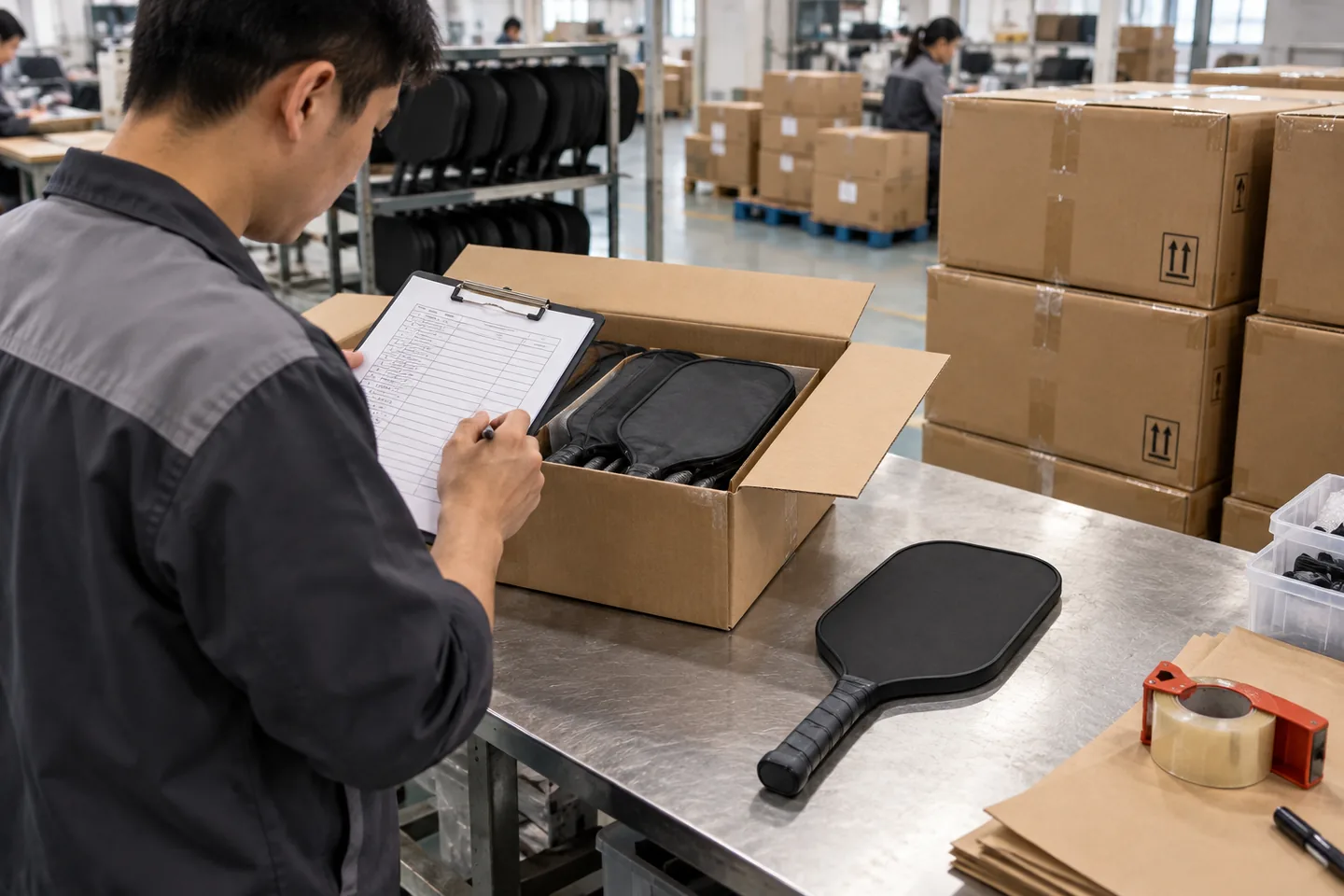
Keep the dispatch records together
Request the shipment reference appropriate to the transport method and follow the carrier's updates. A label being created is not the same as the carrier recording receipt of the goods.
The International Trade Administration's explanation of commercial invoices and export packing lists 3 distinguishes the sales document from the packing breakdown. Use matching descriptions and quantities to reconcile your order. Confirm destination-specific document requirements with your forwarder or importer.
Record which designs are in which cartons where practical. It is much easier to investigate a missing version when the packing record identifies it.
Inspect promptly after receipt
Photograph visible carton damage before unpacking. Check the delivered quantity and versions, then compare artwork, finish, grip, and agreed measurable characteristics with your reference. Keep photos or an unpacking video tied to the affected carton and paddles.
Report a specific difference promptly with the order reference, affected quantity, and evidence. Separate shipping damage, missing items, and product quality concerns so the right issue can be investigated.
SHUEN's currently stated after-sales provision is a free replacement of one new paddle for a quality issue reported within seven days of receipt. The definition of a quality issue, required evidence, freight responsibility, replacement process, and applicable order scope still need confirmation. Agree those details for your order rather than assuming a refund or blanket replacement policy.
Conclusion
Receiving acceptable custom pickleball paddles starts with a clear order agreement and continues through confirmation, shipment, and receipt. Our usual payment sequence is straightforward: 50% deposit, completed-paddle confirmation, remaining 50%, then shipment.
Use the confirmation stage to compare the actual order with your approved references. Resolve unclear details before paying the balance, and retain the records needed to check what arrives. That gives each payment and delivery step a clear purpose.
Plan Your Custom Paddle Order with SHUEN
Considering a custom T700 pickleball paddle? Send your preferred configuration, quantity by design, artwork or sample reference, delivery country and address, and the checks you want before balance payment.
Contact SHUEN to confirm the specification, 50/50 payment sequence, completed-order review, and shipping arrangements for your order.