The buyer scenarios below illustrate common decisions; they are not reports of named customer projects.
A new paddle outline can distinguish your brand, but cutting a private mold before testing the idea can commit you to the wrong shape. At SHUEN, I start the transition with a usable sample and specific player feedback.
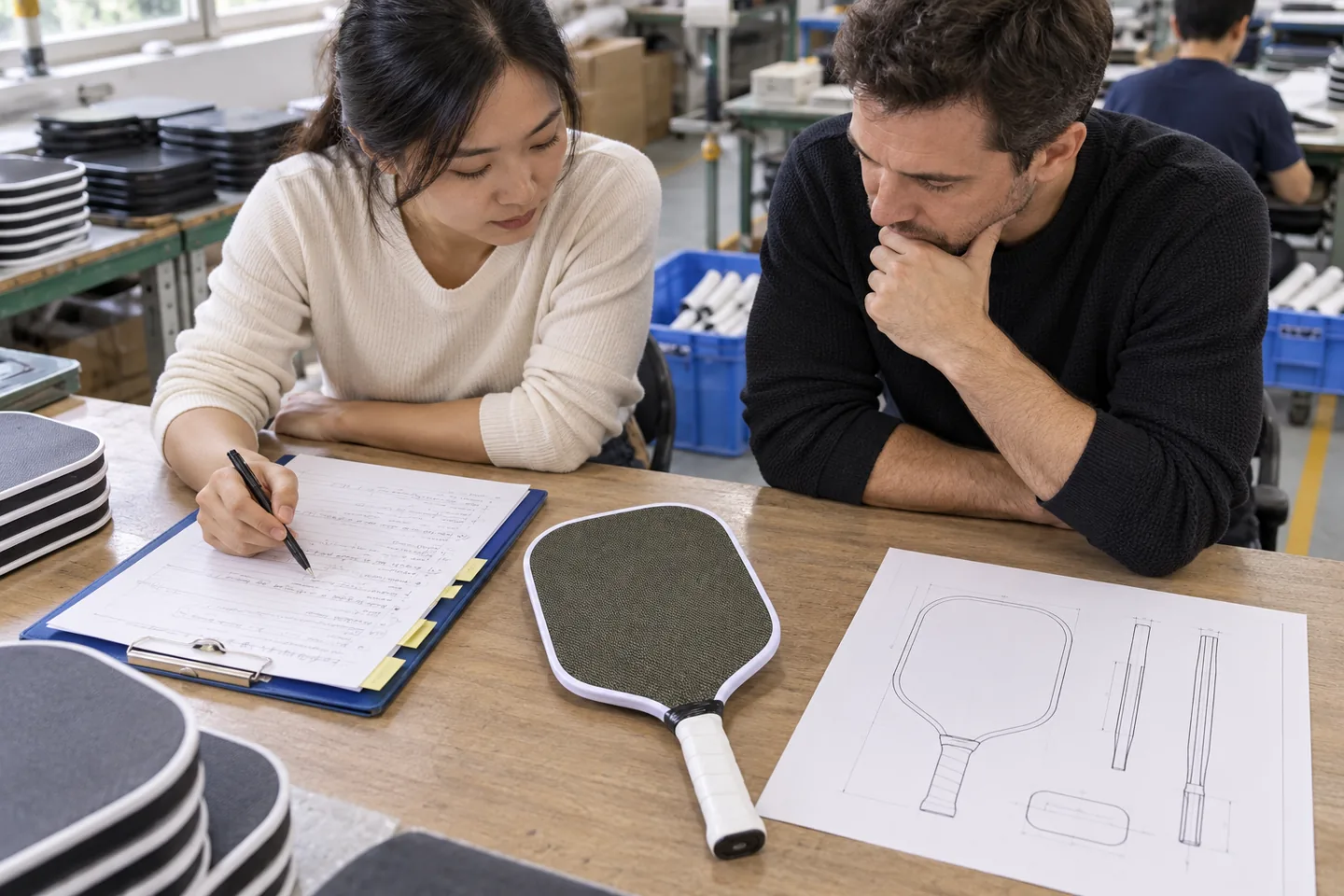
First test a paddle made with an existing mold. Decide whether a different outline is actually needed, ask experienced or professional players for specific feedback, and confirm the proposed drawing before committing to a private mold. Treat tooling approval as a serious decision: later changes can require rework or a replacement tool.
Below, I explain how to establish a starting sample, translate feedback into a shape brief, approve tooling and review the first private-mold paddle.
What Should I Learn from an Existing-Mold Paddle First?
The starting sample should answer a product question. I do not move to a private outline simply because an existing shape is also available to other brands.
Choose an existing shape with a defined core, face material and thickness, test that configuration, and identify what your target players actually need changed before developing a new mold.
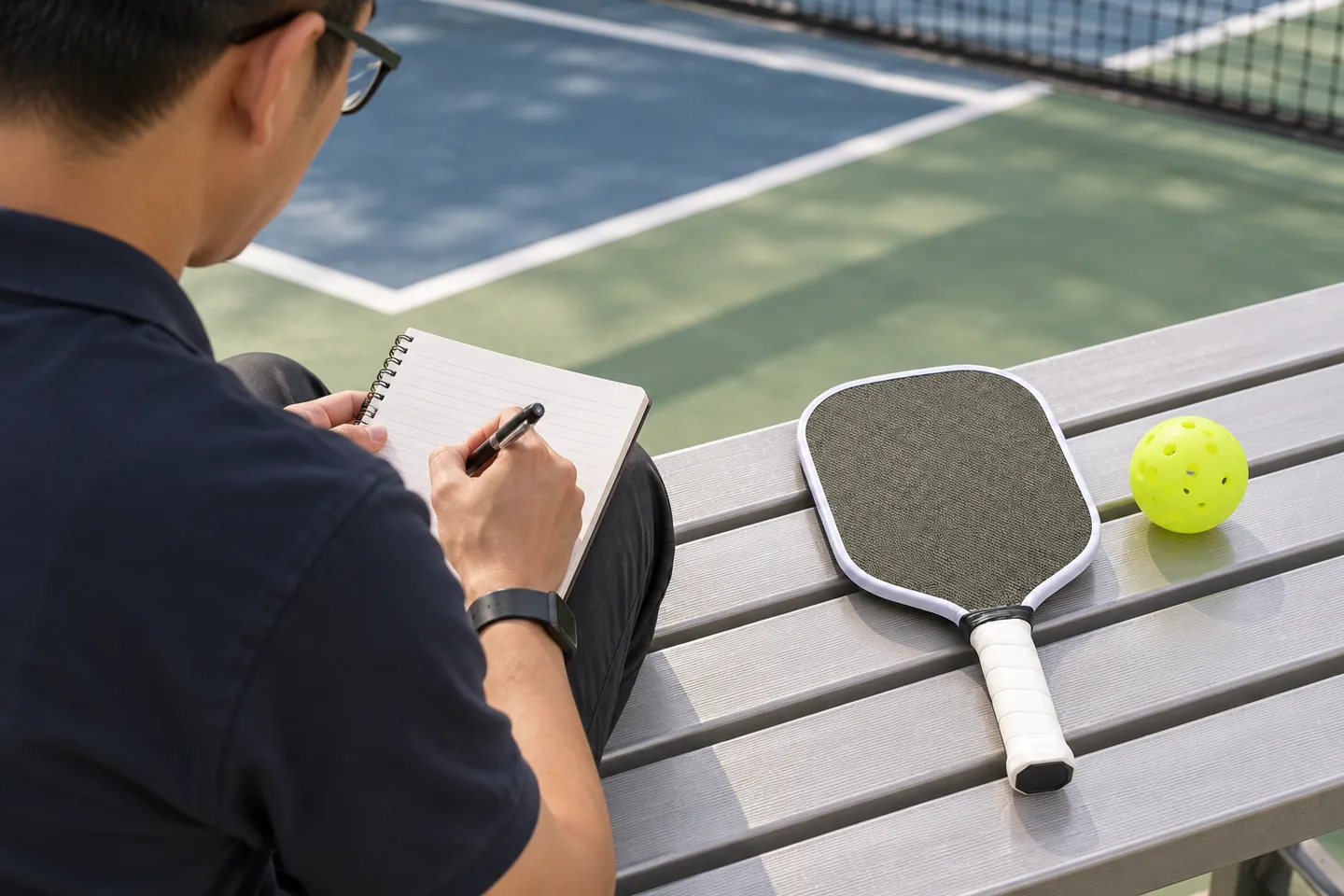
A product lead in Auckland, New Zealand, planning online sales and local event demonstrations asks: “Should our first paddle already have an exclusive shape?” I put an existing-mold sample ahead of that tooling decision and ask her to record handling concerns separately from the brand's appearance goals. The project gets a starting reference before paying for a new outline.
SHUEN offers eight base shapes, fifteen core structures and 14 mm or 16 mm options, with combinations confirmed for the project. An existing head-shape mold avoids making a new tool for that outline. It does not make samples, printing or separately tooled branded components free.
| Starting decision | What to record | Why it matters later |
|---|---|---|
| Existing shape | Model reference and dimensions | Defines the outline being compared |
| Core and face | Named configuration | Separates shape concerns from construction concerns |
| Thickness | Selected 14 mm or 16 mm version | Keeps the test reference identifiable |
| Player feedback | Specific concern and playing context | Gives the proposed change a purpose |
| Brand appearance | Artwork and component preferences | Identifies changes that may not need a new head-shape mold |
For a T700 option, begin with our custom T700 pickleball paddle. The Toray T700S data sheet 1 gives fiber background, but the complete sample is the reference for evaluating the paddle. A material name does not tell you whether the outline suits your players.
How Do I Turn Player Feedback into a Private-Shape Brief?
“Make it more professional” leaves the designer guessing. I ask which part of the existing paddle creates a difficulty and what the player wants to do differently.
Ask experienced or professional players to test the starting sample, translate their comments into specific design requests, and distinguish outline changes from core, surface or grip changes before drawing the private version.

For an Australian brand owner reviewing professional-player comments, the request is: “Can we gain more room for the second hand without changing everything else?” I mark the handle area on the drawing and list the construction items intended to stay the same. The proposed revision addresses an identifiable handling question instead of becoming a completely different paddle by accident.
Professional feedback helps define the direction. It does not replace feedback from the intended customer group. For a New Zealand brand selling through events and an online store, compare the comments with the players you expect to buy the product. Do not conclude that a shape works for all club players because one strong player prefers it.
| Feedback | Clarification to request | Development action |
|---|---|---|
| “The handle feels crowded” | Which grip and hand position? | Review the relevant handle dimensions |
| “The paddle feels difficult to move” | Which shots and comparison sample? | Review handling and the proposed build before blaming the outline |
| “We need a recognizable look” | What must differ physically? | Separate artwork changes from geometry changes |
| “The response is too lively” | Which sample and playing setup? | Review construction and response; do not assume a new mold solves it |
Keep each requested change traceable to a comment. Autodesk's drawing dimension instructions 2 explain how measurements relate to drawing geometry. Use that principle in the brief: mark the intended dimension rather than relying on a photograph with “longer” written beside it.
If the reason for a private shape is still unclear, continue the sample discussion. My recommendation is to decide what must change before committing the brand to the mold.
What Must I Confirm Before Approving the Private Mold?
A drawing can be revised much more easily than a finished tool. This is where I ask the buyer to stop treating the outline as a casual preference.
Confirm the final drawing revision, dimensions, intended construction, tooling scope, cost and permitted use before approving mold manufacture. Ask which later changes are feasible and what rework would require.
The New Zealand product lead now needs a different answer: “If player feedback changes after the tool is made, can we simply adjust the shape?” I keep that question in the tooling review and separate drawing changes made before manufacture from changes to an existing tool. Approval then means accepting the identified geometry and the agreed change process.
In practical terms, do not plan on freely changing a completed mold. Some changes may be possible, but their feasibility, cost and timing depend on the tool and the revision. A major shape change can require replacement tooling. That is why I recommend player input before the final drawing is released.
| Approval item | What to confirm in writing | Unclear wording to avoid |
|---|---|---|
| Geometry | Drawing revision and agreed dimensions | “Like the last picture” |
| Construction | Core, face, thickness and compatibility review | Assuming the previous build transfers unchanged |
| Tooling scope | What the quoted mold or tools include | “Everything included” without a list |
| Tool use | Ownership, storage and agreed exclusivity | Treating payment alone as a complete agreement |
| Changes | Review process and applicable charges | Assuming unlimited revisions after manufacture |
| Samples | How the first private-mold build will be reviewed | Treating mold completion as product approval |
Head-shape tooling, a branded rubber ring and a custom butt cap are different items. List them separately so the scope is visible. Keep the artwork handoff separate too: Adobe's Illustrator file-packaging guidance 3 explains how linked assets can accompany the document. A complete artwork package helps the design review, but it does not approve the tooling geometry.
How Should I Approve the First Private-Mold Paddle?
The first paddle from the new tool still needs review. A finished mold confirms that a tool exists; it does not confirm that the finished product suits the intended player.
Compare the private-mold sample with the approved drawing and starting sample, repeat the relevant player evaluation, and approve the accepted configuration and artwork before bulk production.
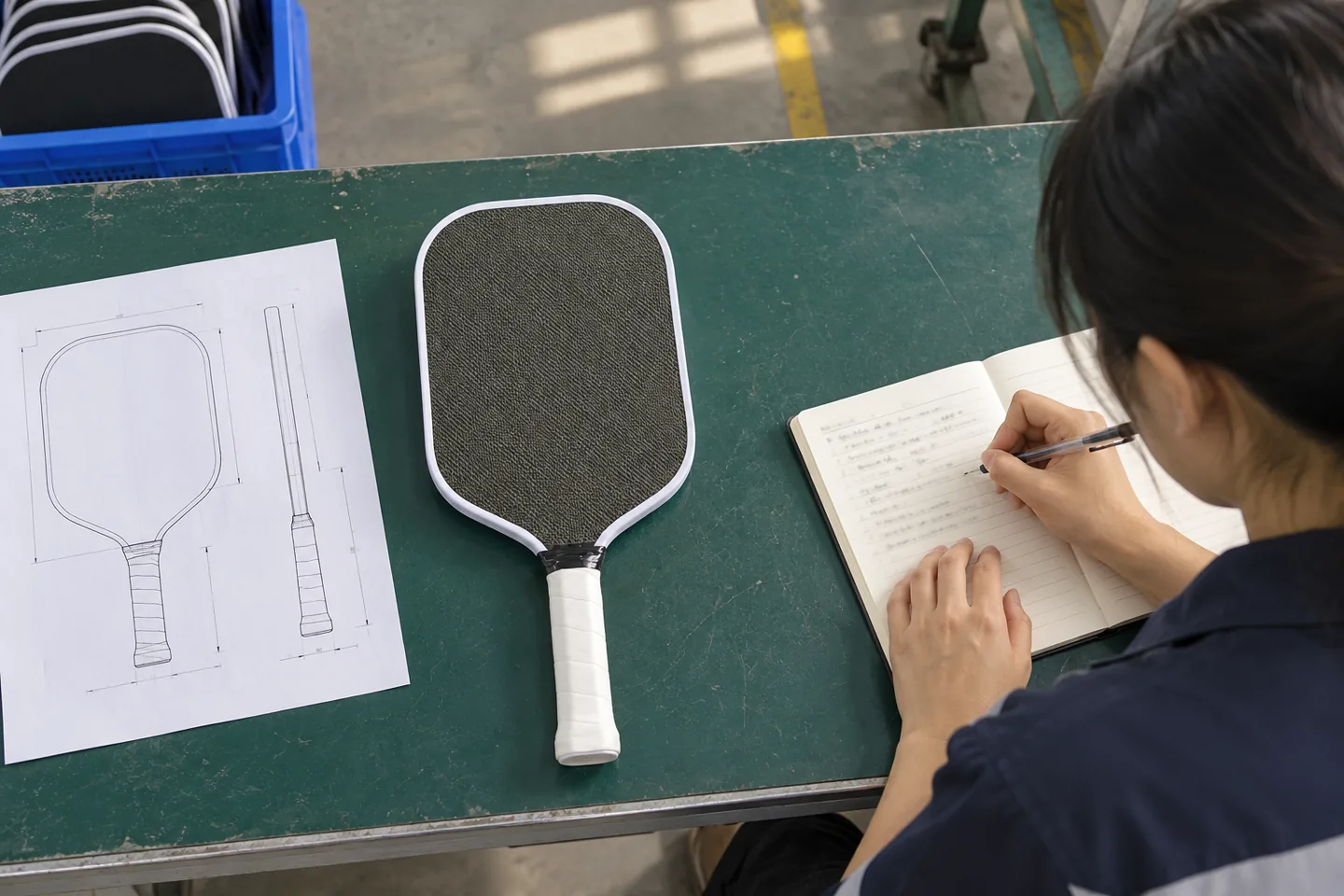
Record the outline, handle, surface, edge, grip and any agreed measurements. Check that the intended construction was carried into the new build. If the shape and material changed together, identify both changes; do not attribute every difference in handling to the mold alone.
Ask the players to return to the original question. Did the revised handle address the hand-position concern? Does the new outline suit the intended use? Keep comments with the private sample's identifier. A clear approval or specific revision request is more useful than a general “looks good.”
Our sampling-to-production guide explains the handoff from an accepted sample to production checks. A new configuration can also change sample planning, packaging fit and the requirements relevant to the branded model. Confirm those items for the project before promising a launch date.
Conclusion
Start with an existing-mold sample, decide what needs to change, and gather specific player feedback before approving a private outline. Confirm the drawing and tooling terms, then review the first private-mold paddle before bulk production. A private mold should follow a clear product need, not substitute for finding one.
Plan Your Move to a Private Paddle Shape
Review our custom T700 paddle as a starting option. Send your current shape reference, core, face material, thickness, player feedback, proposed outline changes and quantity. We can review the existing sample route and discuss the drawing and tooling scope for a private version.