Choosing OEM or ODM affects how much paddle development your brand still needs. At SHUEN, I first check whether you already have a defined structure or need help building the product from our options.
Choose OEM when your brand already has a mature paddle structure and wants us to manufacture the agreed design. Choose ODM when you have not developed a custom paddle yet: we can help define the shape, face material, core and surface design for your brand. Confirm the actual work and approval responsibilities whichever route you choose.
This guide explains how to assess your starting point, prepare an OEM handoff, develop an ODM brief, and confirm the sample and commercial scope before production.
How Do I Know Whether My Paddle Project Fits OEM or ODM?
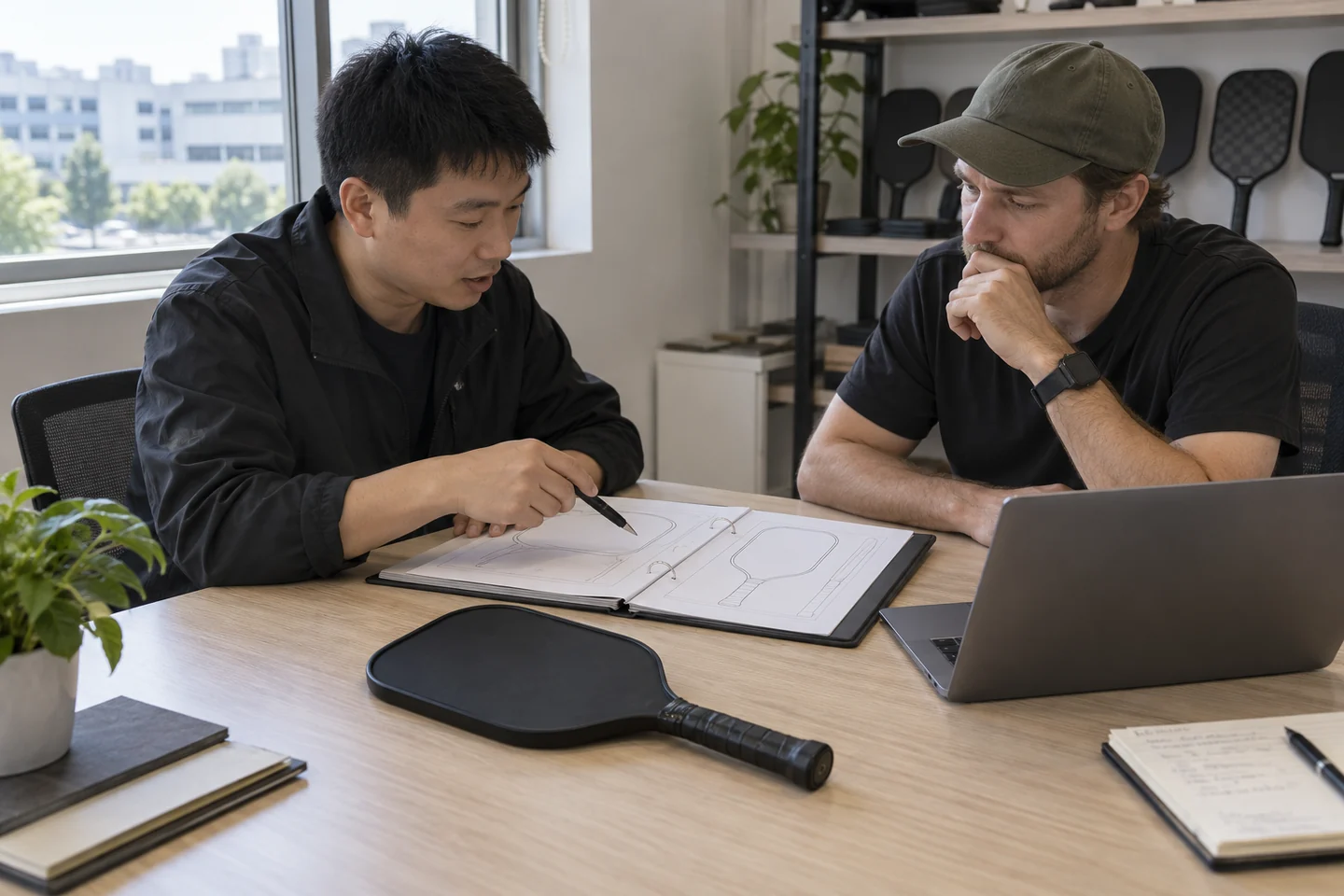
A finished logo does not tell me whether the paddle itself has been developed. I ask the buyer what is already settled and which product decisions remain open.
Choose the route by the maturity of your paddle structure. An established technical design points toward OEM; a brand idea that still needs its shape, face and core defined points toward ODM.
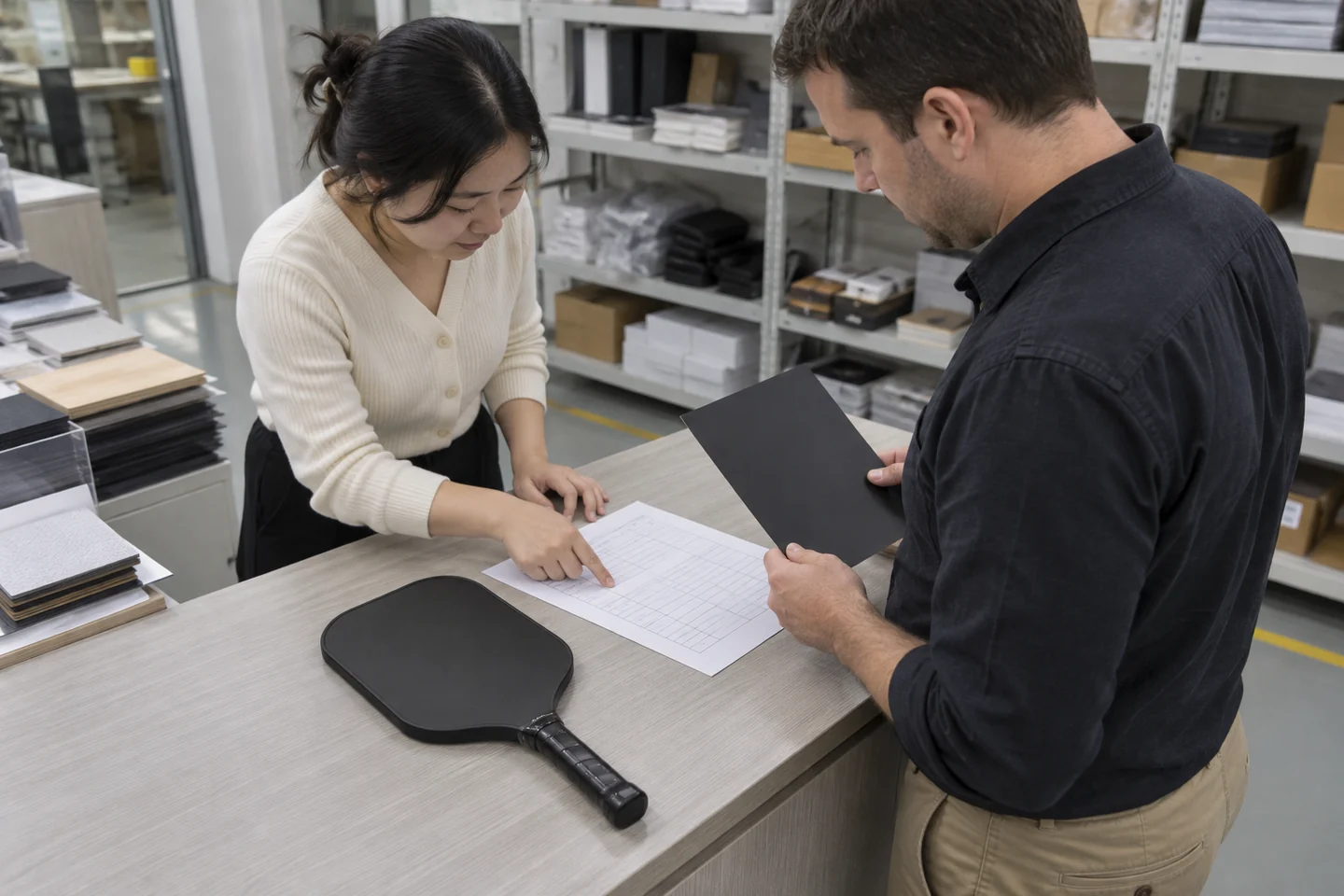
A sports-brand product lead in Christchurch, New Zealand, already sells other sports equipment and is preparing a first paddle range. He asks, “We have a brand and a color scheme; does that make this an OEM order?” I separate his existing brand assets from the undecided paddle construction. The discussion starts as ODM because the shape, face and core still need to be selected.
Describe what is complete
Send a short list of approved items and open decisions. “We have a tested structure, a drawing and a reference sample” describes a different starting point from “we want a carbon paddle for our next event.” I use that distinction to organize the work instead of choosing a label from the logo alone.
| Your starting point | Route to discuss | Work that remains |
|---|---|---|
| Mature paddle structure with technical records | OEM | Factory feasibility review and agreed production handoff |
| Brand assets with no paddle configuration | ODM | Shape, face, core and appearance development |
| Existing structure with requested changes | OEM with a defined development scope | Confirm which details stay fixed and which need new samples |
| SHUEN base configuration with brand customization | ODM | Select the build and confirm the brand design |
| Unclear or incomplete structure records | Clarify before confirming the route | Identify missing decisions and who will resolve them |
The words OEM and ODM help describe the starting point. The quotation should still name the actual work: configuration selection, artwork, structural changes, tooling, samples and production. If part of the design remains open, state it instead of assuming the label covers it.
What Should I Provide for an OEM Paddle Project?
For OEM, the concern is whether the factory can identify and manufacture the intended structure. I need the technical handoff to say more than “copy this paddle.”
Provide the mature design's specifications, drawings and relevant reference sample, then identify fixed requirements and proposed changes. We review feasibility and confirm the sample and production scope against those records.
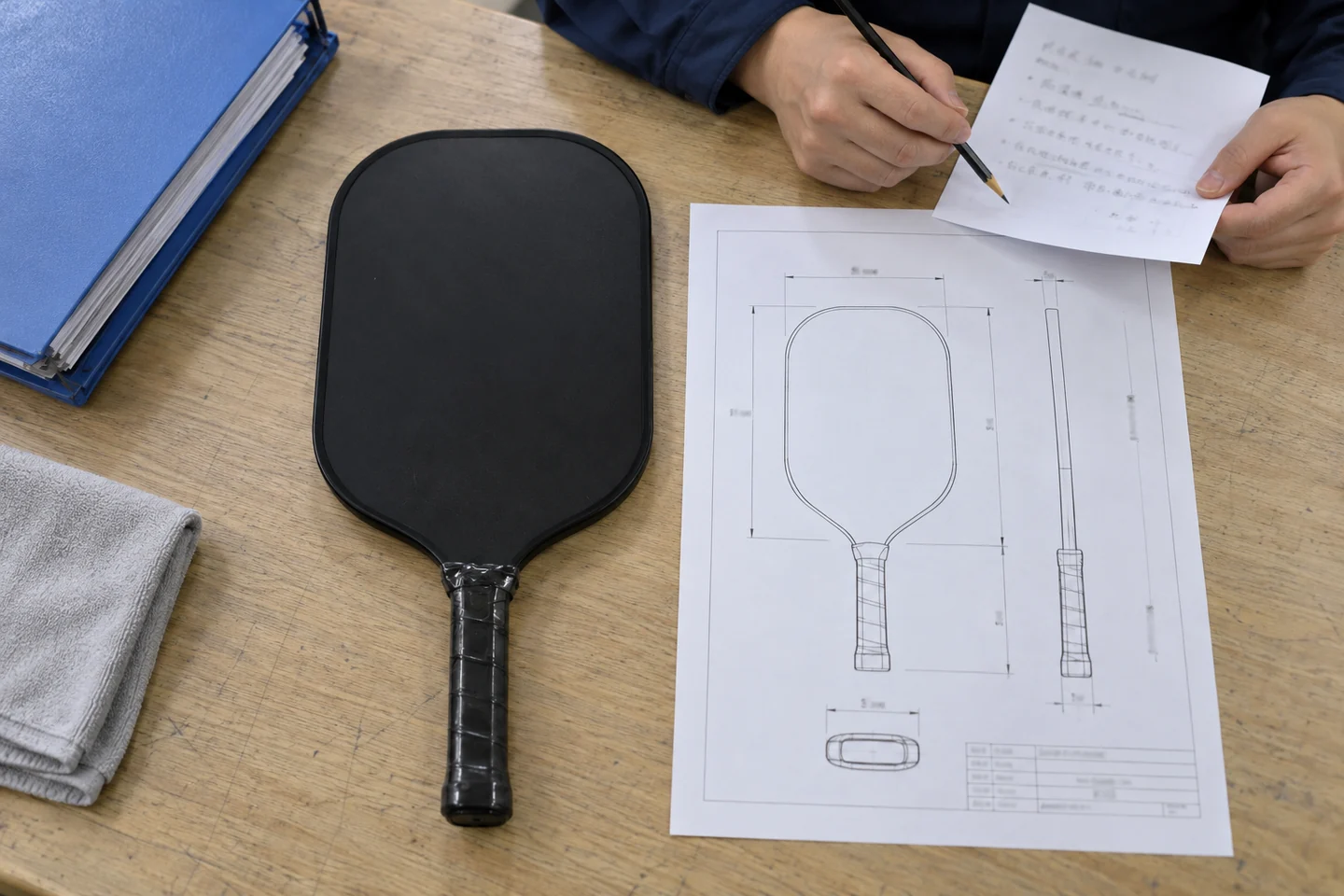
For a returning private-label operator in Auckland, New Zealand, the structure is defined but the next version uses new graphics. The buyer asks, “Can the build stay the same while we replace the artwork?” I list the retained construction and the new front and back artwork in separate fields. The handoff now identifies a graphics revision without quietly reopening the core and thickness.
Keep construction and appearance connected
Give the structure or model its own identifier. Record dimensions, face material, core, thickness and relevant assembly details in the technical brief. Include requirements that affect acceptance and identify how they are to be checked; do not assume the factory can infer a tolerance from a photograph.
For a T700 design, the Toray T700S data sheet 1 gives fiber information. It does not define the complete paddle construction. Our custom T700 paddle page provides a product entry point for discussing the material and configuration.
| OEM handoff item | Buyer provides | Factory and buyer confirm |
|---|---|---|
| Structure identity | Model reference and current revision | Which version is to be manufactured |
| Physical specifications | Shape, dimensions, face, core and thickness | Feasibility and agreed construction |
| Drawings and sample | Available technical drawings and reference sample | What each reference establishes |
| Artwork | Front and back files, logo and component choices | Approved layout on the specified shape |
| Changes | Explicit list of revisions | Effect on samples, tooling and the quotation |
| Acceptance | Required checks and agreed criteria | How the sample and production will be reviewed |
Adobe's Illustrator packaging guidance 2 explains collecting linked graphics with the artwork document. Share fonts only when permitted. A complete artwork handoff helps the designer preserve the approved appearance alongside the technical record.
A reference sample can support the review, but it does not automatically identify every hidden construction detail. Tell me which features are your requirements and what documentation supports them. We then discuss what can be produced and which details need confirmation.
What Can SHUEN Help Me Develop Through ODM?
For a first paddle line, the buyer often has a clear brand direction but several open product decisions. I work through those choices in an order that keeps the sample brief understandable.
Start with a SHUEN shape, face material and core, choose 14 mm or 16 mm thickness, then develop the surface design and component branding. ODM gives your brand a supported path from configuration choices to an approved custom paddle.
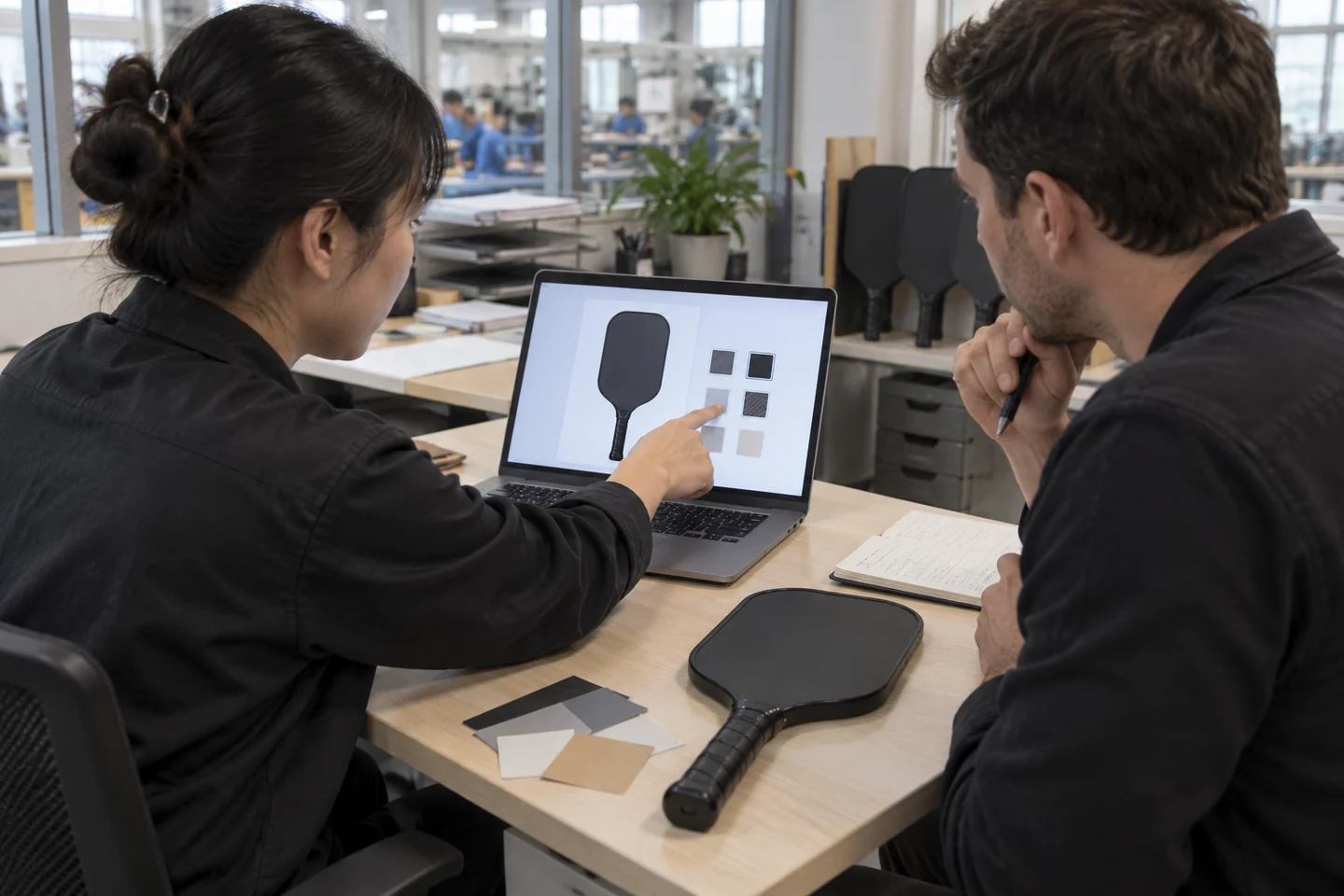
Build one identifiable configuration at a time
Choose the outline first so the artwork has a real shape to fit. Select the face and core together, with the thickness recorded for that version. SHUEN's main platform uses a 16 mm Gen5 PP honeycomb core and one-piece hot pressing; other available configurations are discussed for the project. We do not manufacture fiberglass or cold-pressed paddles.
| ODM decision | Starting input | Confirmation before moving on |
|---|---|---|
| Shape | Selected SHUEN reference | Outline and handle requirements |
| Face | Named material option | Material and surface request |
| Core and thickness | Core reference with 14 mm or 16 mm | Complete configuration for the sample |
| Surface design | Logo, colors and preferred style | Front and back proof on that shape |
| Components | Grip, edge, ring and butt-cap preferences | Included customization and any tooling scope |
| Sample | Accepted brief | Physical review and requested revisions |
If the shortlist includes aramid, our custom Kevlar/aramid paddle provides another entry point. Arclin's Kevlar material overview 3 identifies it as a para-aramid fiber. Use that information to name the material accurately; evaluate the finished paddle before making claims about its playing characteristics.
You do not need completed artwork to begin selecting the build. Send the brand material you have and explain the direction you want. We can help develop the appearance and confirm a producible layout before arranging the custom sample.
ODM can involve decisions about both the structure and the brand appearance. State which parts of our existing configuration you want to use and which need development. Changing a ring, butt cap or special structure may introduce tooling that needs its own quotation.
What Should I Confirm Before Approving Either Route?
The manufacturing mode cannot replace a clear agreement about the work. I want the sample, quotation and approved files to describe the same product before production begins.
Confirm the configuration, development responsibilities, artwork revision, tooling scope, sample review and order details in writing. Keep the accepted sample connected to the specification, whether the project starts as OEM or ODM.
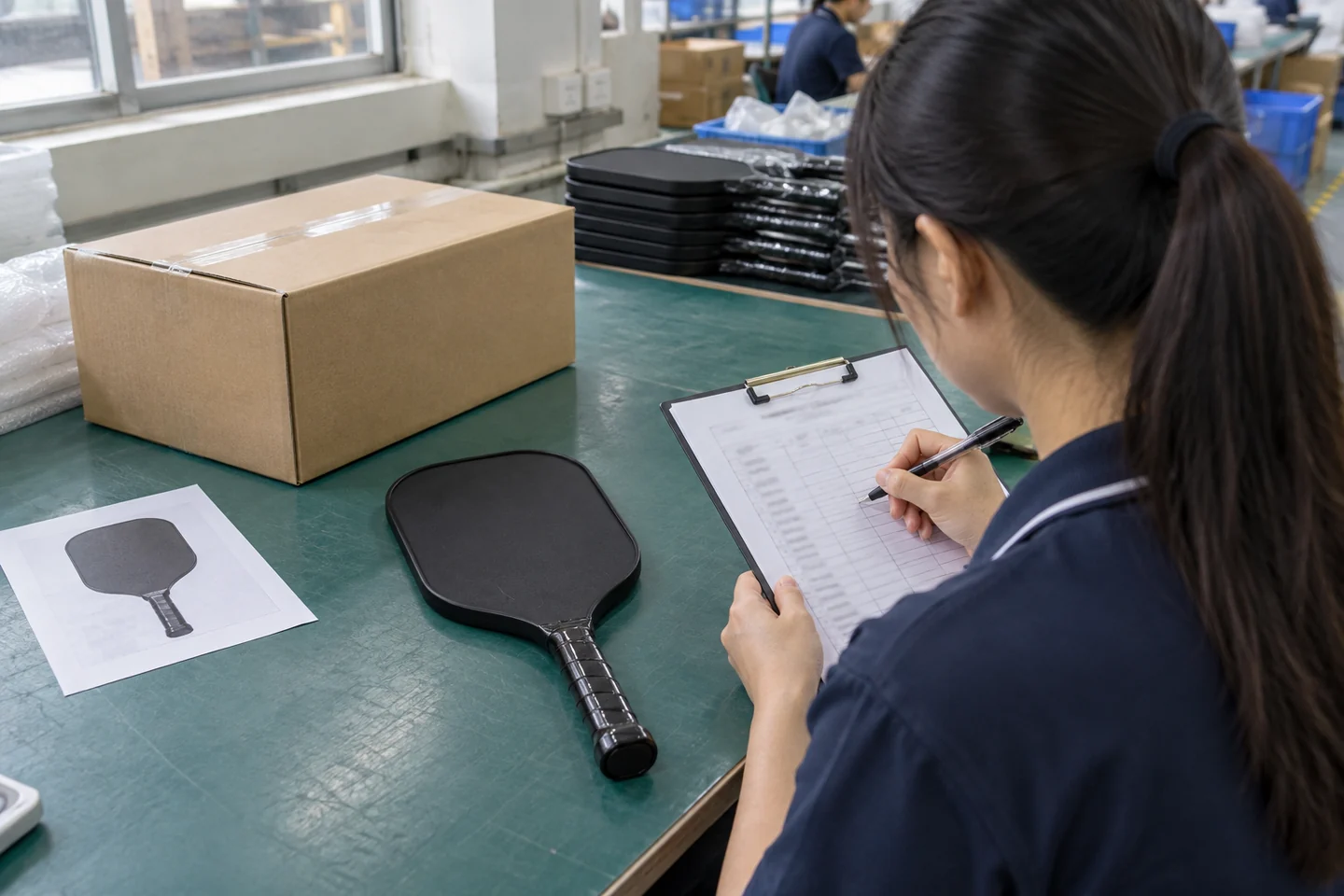
Make the scope visible in the quotation
Ask which development tasks and samples are included and which charges are separate. If you need a new component mold or a structural change, identify it before accepting the quotation. Record the quantity by design, packaging requirements and delivery destination, then confirm the shipment plan for the order.
Discuss how the files and any project-specific tooling will be used, stored and handed over. Do not infer ownership or exclusivity from the letters OEM or ODM. A brand-specific appearance and an exclusive structure are different requirements; say which one matters to your project and confirm the terms.
For a New Zealand launch, share the desired event or online release date early. The work required by your specific project determines the planning conversation. Neither OEM nor ODM alone promises a shorter development period.
Use our sampling-to-production guide to follow the approval sequence. Review the physical sample against the accepted configuration and appearance, record revisions, and identify the final version for production.
Conclusion
Use your brand's starting point to choose the route. A mature paddle structure suits an OEM manufacturing discussion. A first custom paddle project suits ODM support with the shape, face, core and surface design. In either case, define the actual work and connect the approved sample to the final specification.
Discuss Your OEM or ODM Paddle Project
Review the custom T700 paddle or custom Kevlar/aramid paddle. Send your existing structure and drawings if available, or your preferred shape, face, core and thickness. Add your logo, artwork status, quantity and delivery destination so we can discuss the appropriate development scope.