The buyer scenarios below illustrate common decisions; they are not reports of named customer projects.
A polished paddle render does not show whether a supplier can develop your product. At SHUEN in Dongguan, I look for the steps that connect a buyer's idea to a checked sample and clear production instructions.
Judge ODM capability through the complete development process: select the paddle shape, core and face material, turn the design into reviewable drawings, check sample videos, evaluate the physical sample's sound and response, and approve the agreed specifications before bulk production. A supplier should explain and demonstrate these steps.
Below, I explain what evidence to request at each stage, what a video can confirm, and how to connect sample feedback to the production decision.
Can the Supplier Turn My Paddle Idea into a Clear Specification?
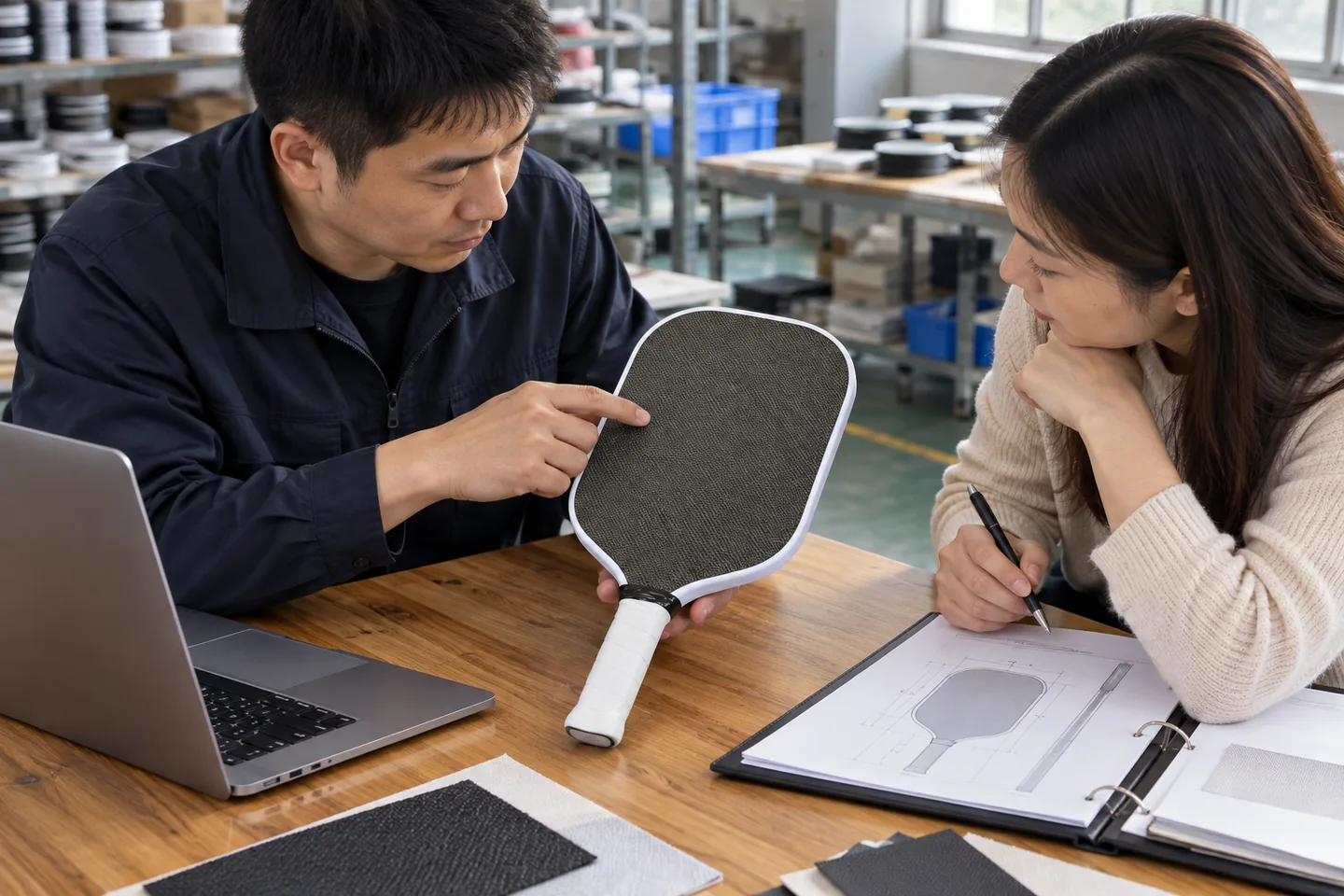
The first useful test is whether the supplier can make an incomplete idea specific. A catalog offers choices; development work connects those choices to your brief.
Ask the supplier to identify the shape, core, face material and thickness for your sample, explain any unresolved combination, and put the selected build into an identifiable drawing and specification.
For a product lead in Auckland, New Zealand, preparing a brand launch, the question is: “Can you develop this look without changing the paddle we want players to test?” I separate the appearance request from the physical build, mark the selected shape, core and face, and put the open artwork details on a revision list. The sample direction is clear even while the graphics are being finished.
Look for a usable development record
SHUEN offers eight base shapes, fifteen core structures and 14 mm or 16 mm thickness options. The available combinations are confirmed for each project. Our main platform is 16 mm Gen5 PP honeycomb with one-piece hot pressing; we do not manufacture fiberglass or cold-pressed paddles.
Those choices do not remove the need for an exact configuration. Start with a model reference, name the core and surface, and distinguish a selected option from a new development request. You can begin a sample discussion with the shape, core and face selected; a finished logo is not a prerequisite for that discussion.
| Development item | Evidence to request | What it helps decide |
|---|---|---|
| Shape and dimensions | Named outline and agreed measurements | Which physical model is being developed |
| Core and thickness | Structure reference with thickness | What the sample is built to represent |
| Face material | Specific material and surface reference | Which surface will be reviewed |
| Artwork | Front and back proof on the selected outline | Whether placement matches the chosen paddle |
| Open questions | Written list of unconfirmed items | What must be resolved next |
Autodesk's drawing dimension guidance 1 shows how measurements attach to drawing geometry. For your project, request readable dimensions on the actual outline rather than accepting an attractive picture as a technical drawing.
What Should I Check in Design Drawings and Sample Videos?
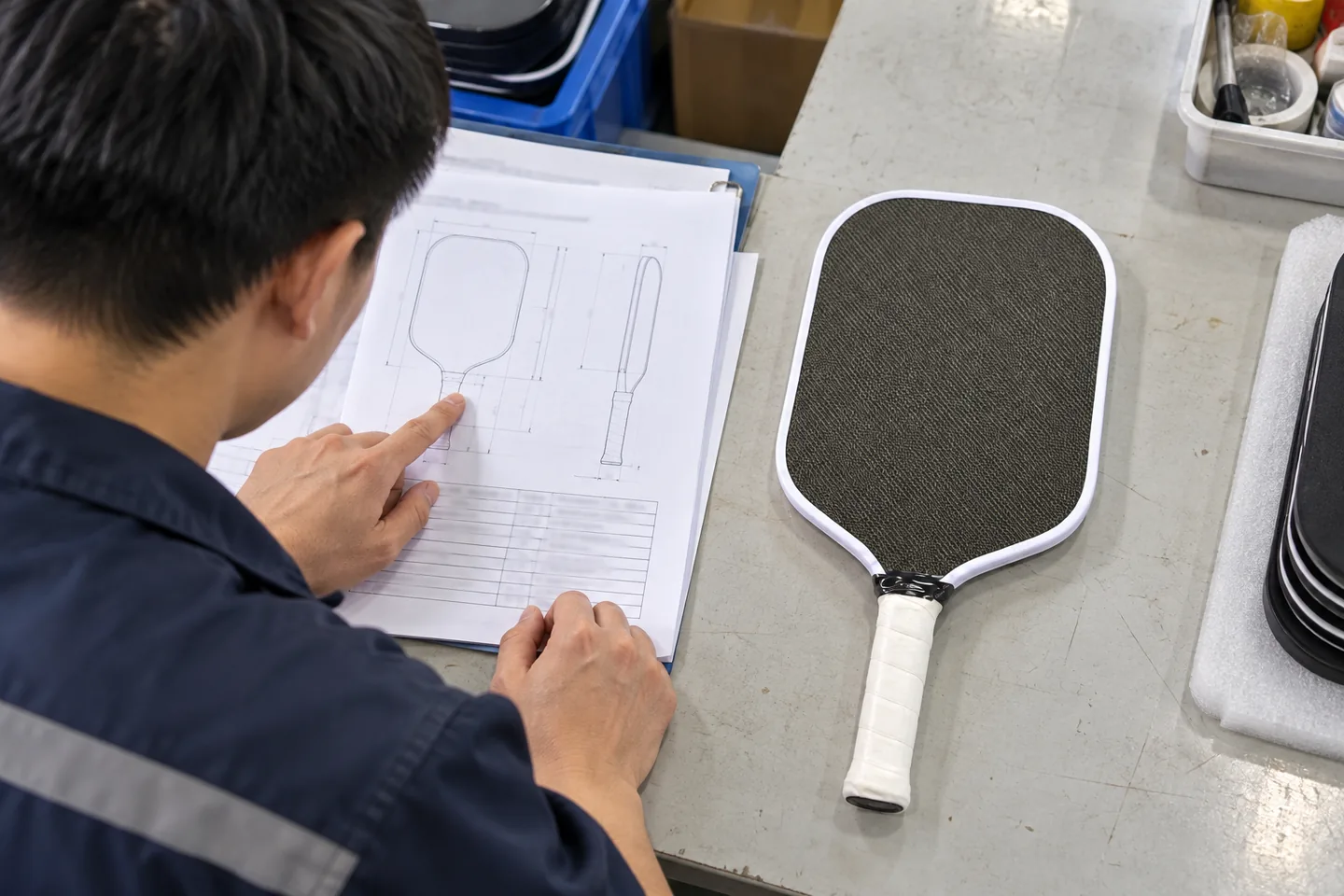
I review the drawing before judging a sample photograph. Otherwise, a visually tidy paddle can be mistaken for the version the buyer actually requested.
Check the selected outline, front and back artwork, component choices and revision identity in the drawing, then ask for a video that clearly shows the corresponding sample. Record changes before approving the next stage.
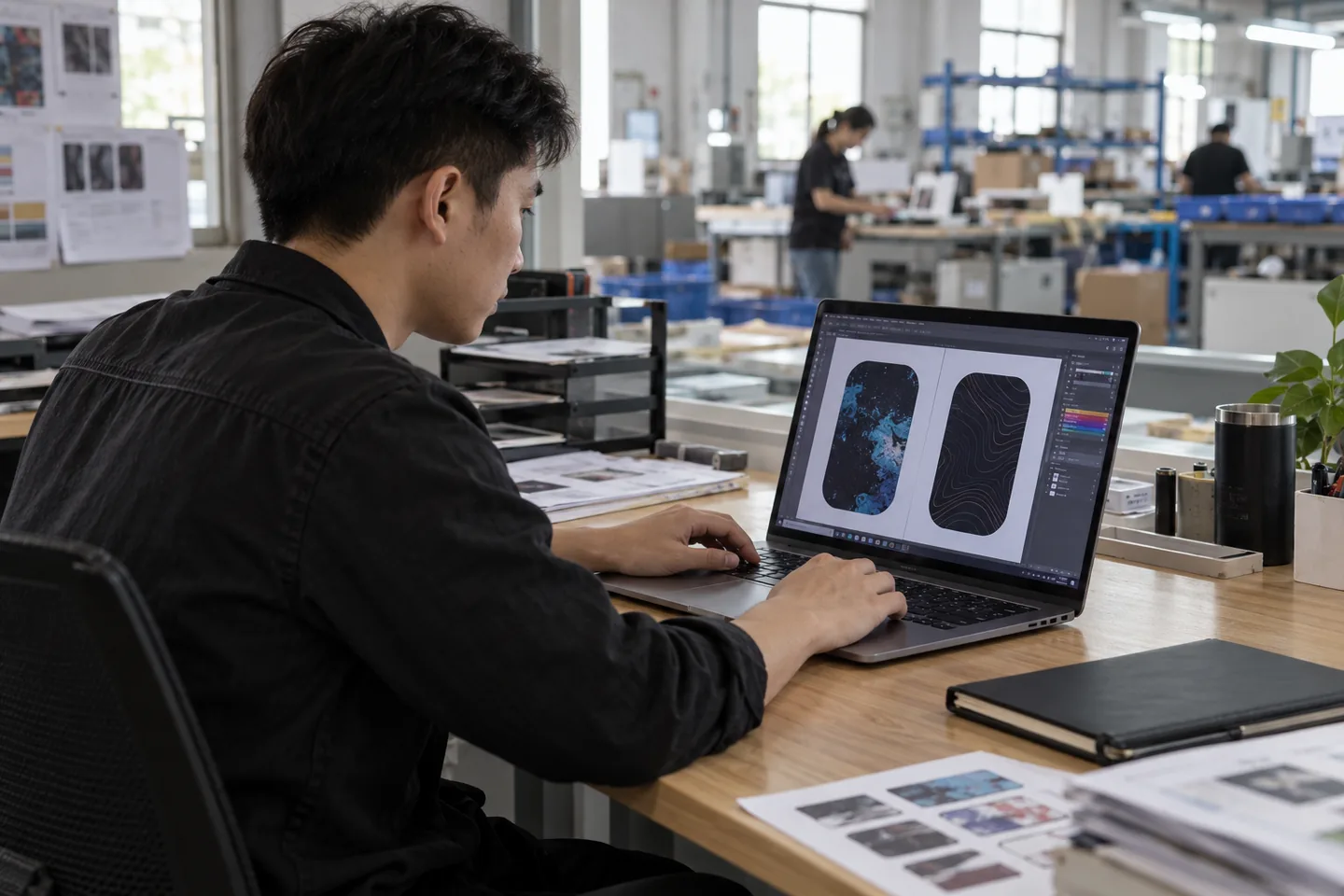
A Canadian retail buyer comparing a dark design proof with a sample video has a different question: “Is the edge color wrong, or is it just the camera?” I request a closer view under ordinary lighting and separate the edge-color reference from the face artwork. The review now names the detail requiring confirmation rather than reopening every design choice.
Keep the drawing and sample identifiable
Send the editable artwork and a viewable proof together. Adobe's Illustrator packaging instructions 2 explain how linked artwork assets accompany a file. Check font-sharing permissions with your designer; the handoff should not depend on missing files.
| Review stage | What I ask to see | What remains to confirm |
|---|---|---|
| Drawing review | Outline, artwork orientation and file revision | Physical appearance on the sampled build |
| Sample video | Both faces, edge, grip and the sample identifier | Details the camera does not resolve |
| Revision review | Changed item and updated reference | Whether a revised physical sample is needed |
| Design approval | Accepted proof linked to the selected build | Physical sample performance and acceptance |
A video supports communication. It does not prove every dimension, hidden layer or performance characteristic. Ask the supplier to explain what the video demonstrates and what requires a measurement or physical review. Keep the file revision beside the sample identifier so two similar-looking versions cannot be mixed up.
How Should I Evaluate the Physical ODM Sample?
A sample lets you move from appearance to use. This is where the buyer's intended player and the factory's agreed checks need to meet.
Review the physical sample against the specification, listen for unexpected changes during play, assess its response and handling, and record feedback alongside agreed measurements and test criteria. Sound and feel are useful feedback, but they are not certification tests.
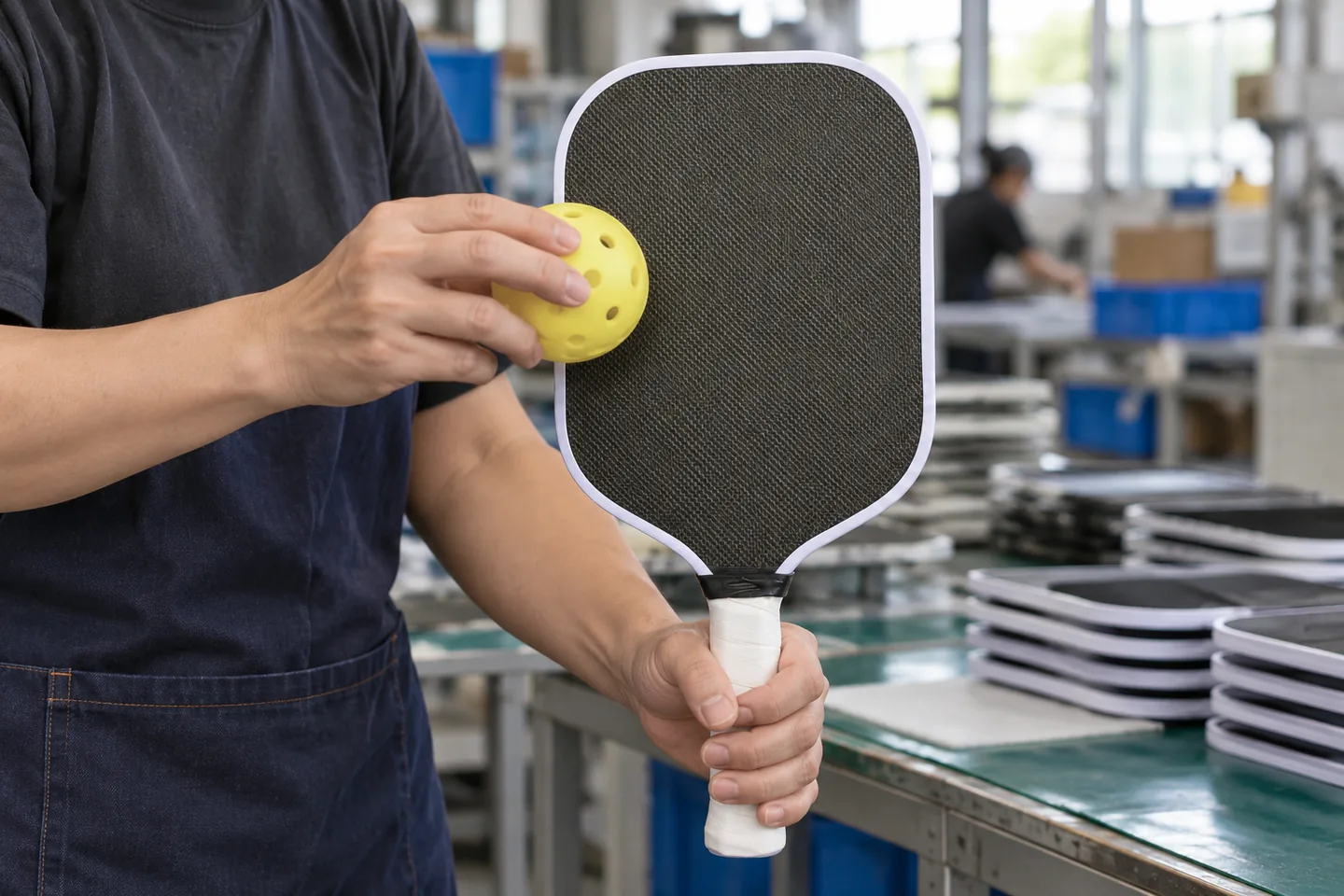
For the New Zealand product lead, “the response feels too lively” is feedback to investigate. I ask which sample was used, which shots produced the concern, and whether the setup changed. I keep the player's comments with that configuration so the next revision addresses the identified concern rather than changing several materials without a comparison.
A tap or impact sound can help describe a concern. Microphones, balls and the playing setting affect the recording, so I do not approve a paddle solely because a video sounds reassuring. Physical review should include the surface, edge, grip, visible condition and the measurements agreed for the project. If something is unclear, return to the reference and ask for the relevant check.
When discussing our custom T700 pickleball paddle, distinguish the fiber identity from the finished build. The Toray T700S data sheet 3 describes the material, not your paddle's playing response. SHUEN has supporting T700 sourcing documents; the sample still needs its own evaluation.
What Must Be Approved Before ODM Bulk Production?
The last test of ODM capability is whether the supplier can preserve the accepted version when development ends. Approval should point to a physical reference and its documents.
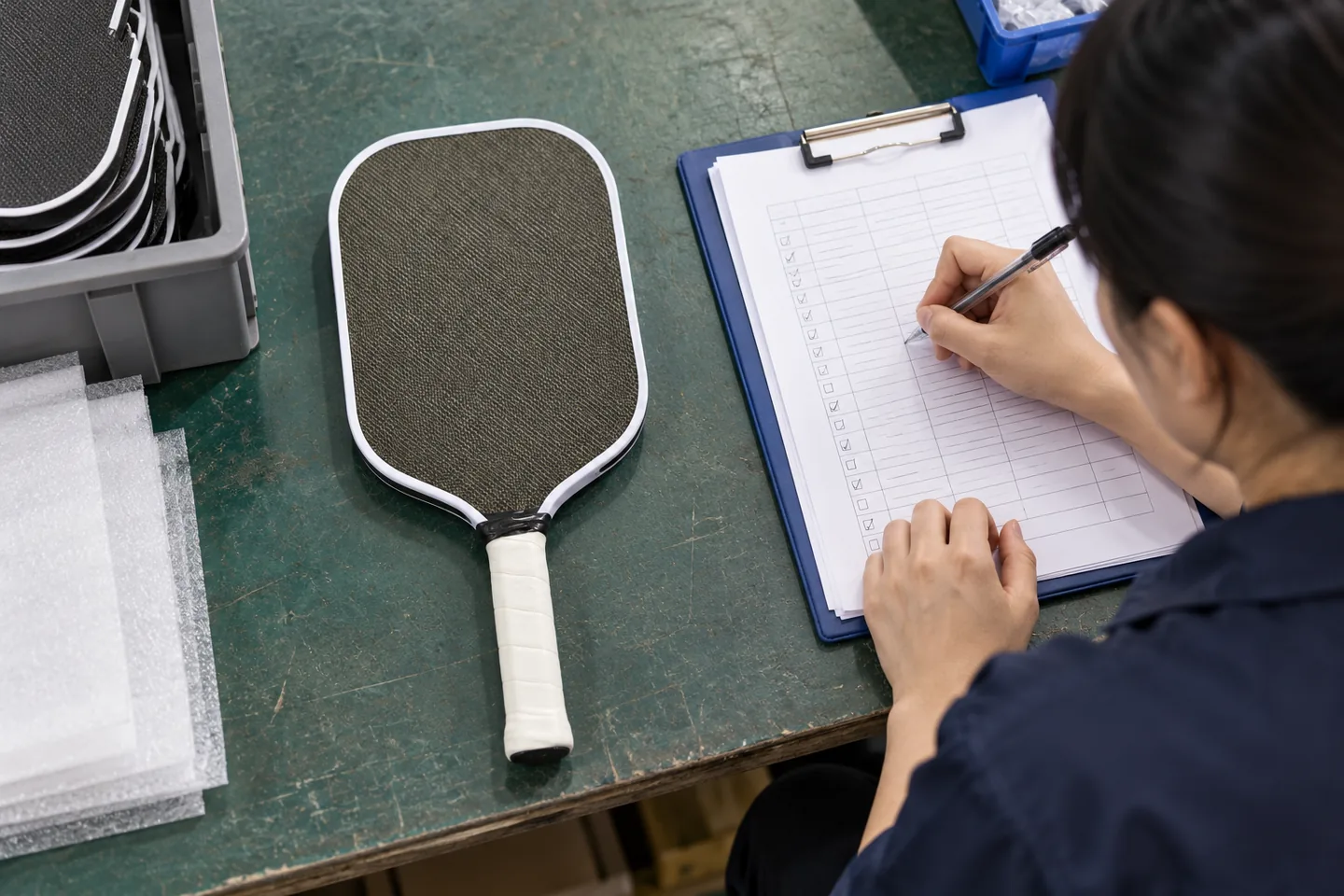
Approve the sample identifier, configuration, artwork revision and agreed acceptance criteria together. Ask how these references carry into production and inspection, and resolve remaining changes before authorizing the bulk run.
| Production handoff | Record to preserve | Question to resolve |
|---|---|---|
| Accepted sample | Identifier and retained reference | Which sample is the production standard? |
| Construction | Shape, core, face and thickness | Has anything changed since sample review? |
| Appearance | Artwork revision and component references | Which exact proof is approved? |
| Inspection | Agreed checks and acceptance criteria | What evidence will be provided? |
| Order details | Quantity, packaging and destination | Are these included in the confirmed plan? |
SHUEN's quality staff individually perform performance checks and mark finished paddles before shipment. Confirm the checks and acceptance details needed for your order; do not infer an undisclosed tolerance or official certification from that internal process. If a specific competition approval is needed, verify the branded model separately.
Our sampling-to-production guide connects specification review, physical samples and production checks. A capable supplier should show how that sequence applies to your project, including how feedback is recorded and which changes require another review.
Conclusion
Judge ODM capability by the connection between each stage: configuration, drawing, sample video, physical evaluation and production approval. My priority is a supplier that can turn your feedback into an identifiable revision and preserve the accepted version. Attractive artwork is only one part of that work.
Review Your ODM Paddle Development Plan
Start with our custom T700 paddle. Send your selected shape, core, face material, thickness, available artwork, intended players and quantity. List open questions so we can discuss the drawing, sample review and next approval step.