Sending a supplier your artwork should move your paddle project forward, not leave you wondering where the files will appear next. I take that concern seriously. A friendly promise is less useful than agreeing exactly what we must keep confidential and how the information may be used.
We normally define a customer's confidentiality requirements in the contract or a separate non-disclosure agreement. Tell us which brand information, paddle-face designs and related design materials need protection, and how you want them handled. We can record those requirements in the contract and sign a dedicated confidentiality agreement when needed.
The useful question is not simply whether a supplier will sign an NDA. It is whether the agreement fits the information you need to share, the people who need it and the sample or production work you are authorizing. Here is how I separate those decisions before a design moves further.

What Information Should I Identify Before Sharing My Paddle Design?
A design folder often mixes material that is already public with information you are not ready to reveal. I separate those two before asking for the complete files.
Separate public product choices from confidential brand and design information. Identify the actual files, images and commercial details you want covered before sending the complete project folder.
Start with the part you do not want circulating
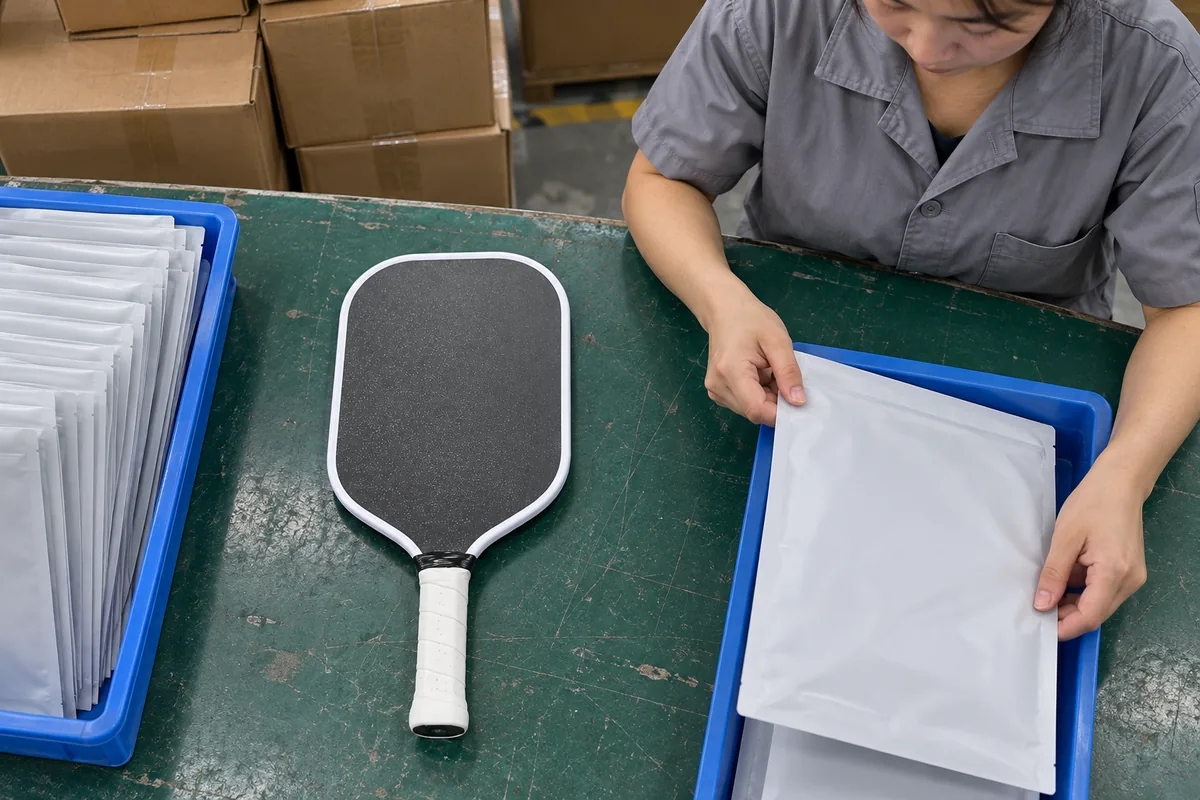
The logo was already public; the unreleased face artwork was not. A brand owner in Mexico raised that distinction with me in May 2026, before sending the editable file for a new paddle. He did not want his entire company folder forwarded just to establish whether we could discuss the build. I asked him to separate the ordinary configuration choices from the unreleased graphics and launch information.
His enquiry concerned 60 paddles in shape 007 with Silicon Carbide Grit faces and C02 Reinforced Honeycomb-Handle EPP–EVA Cores, at 16 mm thickness. We kept those choices in the product brief. He then identified the face artwork, alternate logo arrangement and unreleased launch sheet as the material to cover in the confidentiality discussion. He held those files back while we settled the proposed scope rather than treating a quotation enquiry as permission to circulate them.
That distinction matters even when all the files sit in one folder. The Silicon Carbide Grit paddle option is part of our public range. Your unpublished arrangement of graphics on it is a different subject. Name the information you want protected instead of describing everything as “my paddle idea.”
Describe the information, not just its file extension
A PDF can contain a harmless public catalogue or an unreleased collection. A photograph can reveal artwork, a sample label or a launch name. Your list should describe what is inside the file and why it matters to this project. Include paper proofs and screenshots if those are part of the proposed exchange; do not stop at the editable artwork.
Trade-secret protection 1 generally depends on the nature and secrecy of the information and reasonable measures to protect it. Writing “secret” on a file does not settle every legal question. It does, however, help begin a concrete conversation about access and handling. Ask your adviser which rights and contractual protections fit your material and intended markets.| Information in the project | Question to answer before sharing | Practical next step |
|---|---|---|
| Public shape or material option | Is this already in the supplier's range? | Keep it distinct from your confidential content |
| Unreleased face artwork | Which design and revision are covered? | Identify the file and a recognizable preview |
| Logo and brand information | Is it public, unreleased or supplied for a limited purpose? | State the permitted use rather than assuming it |
| Launch plan or sales document | Does production actually require this information? | Share only what the agreed task needs |
Keep ownership questions separate from confidentiality
Protecting secrecy and establishing rights are related, but they are not the same decision. Trademarks, patents and copyright 2 address different types of intellectual property. An NDA is not a trademark registration, and a supplier's signature does not establish that you own every element in artwork supplied by a third-party designer.
Keep your designer permissions and brand-rights questions with the appropriate adviser. For our discussion, tell us which material you are supplying and what you authorize us to do with it. A focused custom paddle brief can describe the build without including your whole business plan. This lets the manufacturing conversation begin while the sensitive material receives the attention it needs.
Should Confidentiality Go in the Contract or a Separate NDA?
An order contract may arrive later than the first sensitive design conversation. I want the protection discussion to follow the disclosure, not just the payment schedule.
Choose the document around the timing and scope of disclosure. We can write confidentiality requirements into the contract or sign a dedicated agreement; settle the relevant terms before relying on them to share sensitive files.
Match the agreement to the next exchange
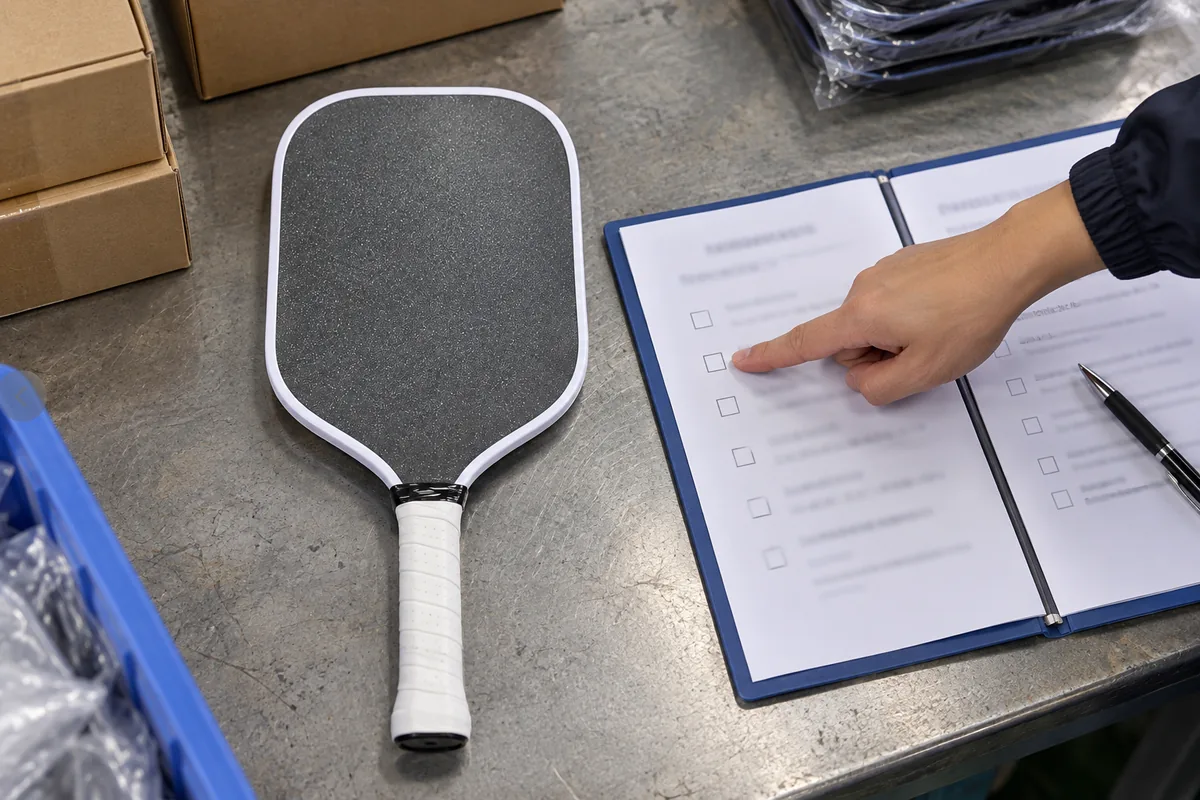
A buyer sometimes needs to show a confidential design before the supply contract is ready. I do not treat “we will add it to the order later” as an answer to that immediate concern. I suggest discussing a separate NDA for the early exchange, then making sure the later supply contract does not leave conflicting instructions. The buyer can decide what to release once the relevant agreement is settled.
The UK Intellectual Property Office's NDA guidance 3 emphasizes defining what is covered and the permitted purpose. For a paddle project, that purpose could be evaluating whether to develop the requested product, preparing an agreed sample or producing an agreed order. Do not leave those stages interchangeable if you intend different permissions for each.
A separate agreement is not automatically stronger because it has a separate title. A clause inside a contract is not automatically sufficient because both parties signed the order. Read the actual scope, the parties and the relationship between the documents. Have a qualified adviser review the legal wording and the law governing the agreement, especially when the project crosses borders.
Ask what the supplier may do, not only what it may disclose
“Do not show anyone” is only part of the discussion. If your concern is reuse or resale of the design, identify those activities expressly rather than assuming a secrecy label covers every possible use. Explain whether files may be used only for evaluating your enquiry or also for the sample and order you later authorize.
Confidentiality agreements 4 can address both keeping information confidential and preventing its misuse. I use that distinction to make the business question clearer: who may see the material, and for what work? Duration, exceptions, remedies and dispute arrangements still need agreement; do not invent them from a standard headline.| Situation | Document route to discuss | Point that must be clear |
|---|---|---|
| Early discussion before an order | Separate NDA | What the evaluation permits |
| Defined sample or supply project | Contract confidentiality provisions | Which material and work the clauses cover |
| NDA followed by a supply contract | Both, reviewed together | Whether later terms change or conflict with earlier terms |
| Information moving in both directions | Appropriate one-way or mutual structure | Which party owes which obligations |
Confirm the parties and responsibilities
A name in a chat is not enough to identify the contracting party. Check the legal business names and the people authorized to sign. If your brand business, design agency and purchasing company are different entities, explain the relationship rather than letting the supplier guess which one controls the information.
IP Australia's explanation of non-disclosure agreements 5 is a useful starting point for understanding their role when sensitive information must be shared. For your specific agreement, send your confidentiality requirements or proposed document for discussion. We can sign a dedicated agreement when needed, but that does not mean every proposed clause is already accepted before review.
How Can I Keep Design Files Controlled During Sampling and Production?
The signed document needs to make sense at the workbench as well as in an email. I look at where the information will actually travel.
Translate confidentiality requirements into agreed handling instructions for the people, files and physical samples involved. Share what each task needs, and distinguish manufacturing approval from permission to display or promote the design.
Follow the material through the actual work
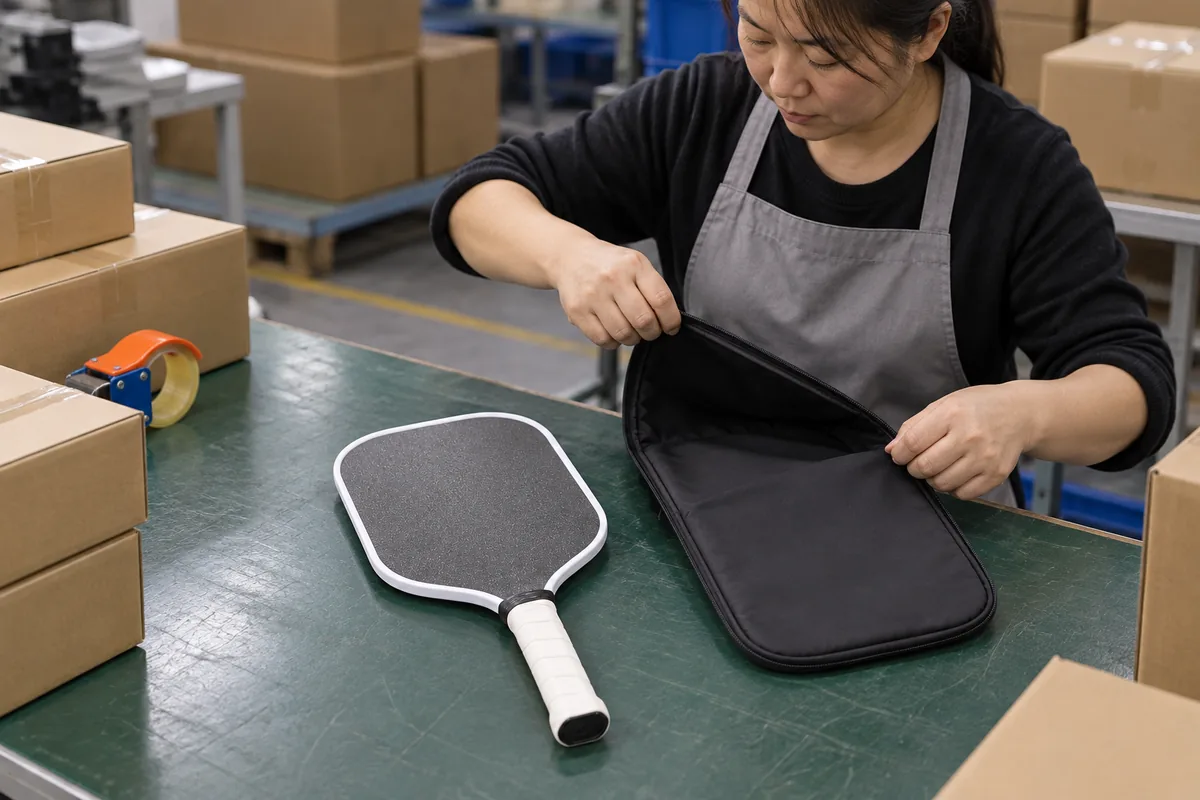
A buyer worries about the final paddle appearing in another sales presentation, but the first exposure can be much earlier: an artwork preview, a print proof or a workbench photograph. I ask where the sensitive design will appear during the requested work. That identifies the points to discuss instead of leaving “keep it confidential” disconnected from production. The next step is to agree how those particular files and samples should be handled.
Our manufacturing process includes different stages, and the information needed for artwork preparation is not identical to the information needed for packing. Discuss who needs access, whether any outside service is involved and which restrictions apply. Do not assume that a signed front-page document answers those operational questions by itself.
WIPO's trade-secret FAQs 6 describe measures such as marking confidential documents and limiting physical and electronic access. Choose measures that fit your project and confirm what will actually be followed. This is a discussion about practical requirements, not a claim that every factory uses the same access system.
Make sharing permissions match your intentions
If you send a shared folder, check its audience before you add the artwork. A public link is a different decision from access granted to named people. Avoid putting unrelated designs for other launches into the same folder merely because uploading everything is easier. That increases the material to manage without helping the supplier make the current sample.
Google Drive's guidance on stopping or limiting sharing 7 explains how access and sharing settings can be controlled. Whichever service you use, understand the available settings and their limits. Revoking a link does not tell you what happened to a copy already downloaded; agree the required handling of copies instead of relying on a button as the entire confidentiality plan.
| Project item | Handling question to agree | Why it matters |
|---|---|---|
| Editable artwork and proofs | Who needs access for the agreed task? | Avoid unnecessary distribution of source files |
| Physical samples and rejected prints | How should they be stored, returned or disposed of? | Printed information exists outside the shared folder |
| Factory photographs and videos | What may be captured and sent, and to whom? | A progress image can reveal an unreleased design |
| Portfolio or social-media use | Is separate permission required? | Production approval should not be confused with promotion |
Avoid turning a production approval into a public release
When you approve the print layout, say what you are approving. A request to proceed with that sample should not be worded as an invitation to use your brand in a catalogue. If you want no portfolio use, no public sample display or no forwarding of project photographs, raise those requirements directly for inclusion in the agreement.
At the same time, give the factory a workable way to show progress to you. Ask for photographs of your item without unrelated customer material in the background. A close view of the relevant operation often answers your question better than a wide room tour. The point is to agree a useful communication method, not to stop all communication and discover problems only after the paddles arrive.
What Should I Agree Before Court Testing or Ending the Project?
The factory is not the only place a paddle design can become visible. I include sample handling and the end of the project in the same confidentiality discussion.
Decide who may see and photograph samples before taking them onto a court, and agree what happens to project files and physical materials when the work changes or stops. Keep suspected misuse separate from assumptions based on a similar-looking paddle.

A sample can reveal the design away from the factory
The Mexican buyer later wanted club players to try the proposed sample, but he still wanted the graphics kept out of public posts. I pointed out that a factory confidentiality agreement does not instruct every player standing beside a court. He narrowed the proposed session to selected participants and made photo-sharing expectations part of his test arrangements. That let him plan playing feedback without treating the sample as a public launch.
An outdoor session can expose both faces of the paddle during ordinary play, including a raised paddle in an overhead shot. Decide whether you are comfortable with that before inviting a group. Discuss whether an earlier evaluation should use a less revealing appearance, and confirm the sample specification rather than assuming a change is possible or free. The available paddle options help separate a build discussion from the timing of your brand reveal.
Plan the end before it becomes an argument
Projects change. A buyer can choose another build, delay a launch or stop after reviewing a sample. Ask what should happen to editable files, printed proofs, rejected graphics and retained samples in those situations. Return, deletion, disposal and permitted retention are matters to agree, including any necessary exceptions; do not assume a universal factory policy from a single sentence about confidentiality.
For original artwork, copyright protects expression rather than an idea alone 8 under the U.S. framework described by the Copyright Office. That distinction is useful when explaining the exact artwork involved, but your rights and enforcement options depend on the relevant law and circumstances. Keep your approved files and the agreement together so an adviser can understand what was supplied and authorized.
Respond to a concern with the exact material
If you see a paddle that worries you, preserve the relevant image, page address and date, then compare the specific artwork and brand elements. A common base shape or a similar color does not by itself establish that your confidential file was disclosed. Avoid sending an accusation built only around a broad resemblance.
I would rather receive the exact design reference and the use you are questioning than a long message saying “someone copied everything.” That makes it possible to examine the concern and respond to the particular material. If the issue is serious, involve your legal adviser and follow the agreed process. Do not treat this procurement checklist as a ready-made enforcement strategy or an assurance that disputes cannot happen.
Conclusion
Confidentiality works better when the protected information and the permitted work are clear before the files move. Tell us which brand information, paddle-face designs and related materials need protection, together with your handling requirements. We can record those requirements in the contract or discuss a dedicated confidentiality agreement. Then carry the same care into sample photographs, court testing and the end of the project.
Discuss Your Paddle Project With Rudy
Planning a custom Silicon Carbide Grit paddle? Send the proposed build, enquiry quantity and a list of the information you want kept confidential. Tell us whether you have an NDA for review before sending sensitive design files.
Rudy · Factory Partner
Email: info@shuenpickleball.com
WhatsApp: +86 137 1215 6638