
A coach can have beginners, regulars, and tournament players sharing the same cupboard. That does not mean the cupboard needs three prices and two face materials. When I look at a school order, I want to know which sessions actually need something the everyday paddle cannot deliver.
For routine school or academy training, I recommend Toray T700 carbon fibre faces. All T700 is a sensible first order. Kevlar or aramid usually costs more, so add it only in a small trial pool if a coach can name a specific need and a fair comparison shows it matters.
Here is how I would size the shared pool, judge the extra cost, compare samples, and decide whether any aramid paddles belong in the next order.
How Many Everyday Paddles Does the Academy Need?
A programme coordinator in Canada was worried that one face would leave the stronger players short. We discussed it in September 2026. She expected a full beginners' class and a small competition group to overlap on the same afternoon. She was about to split the equipment cupboard down the middle even though, in the first session, nobody had said what the two stacks would do differently.
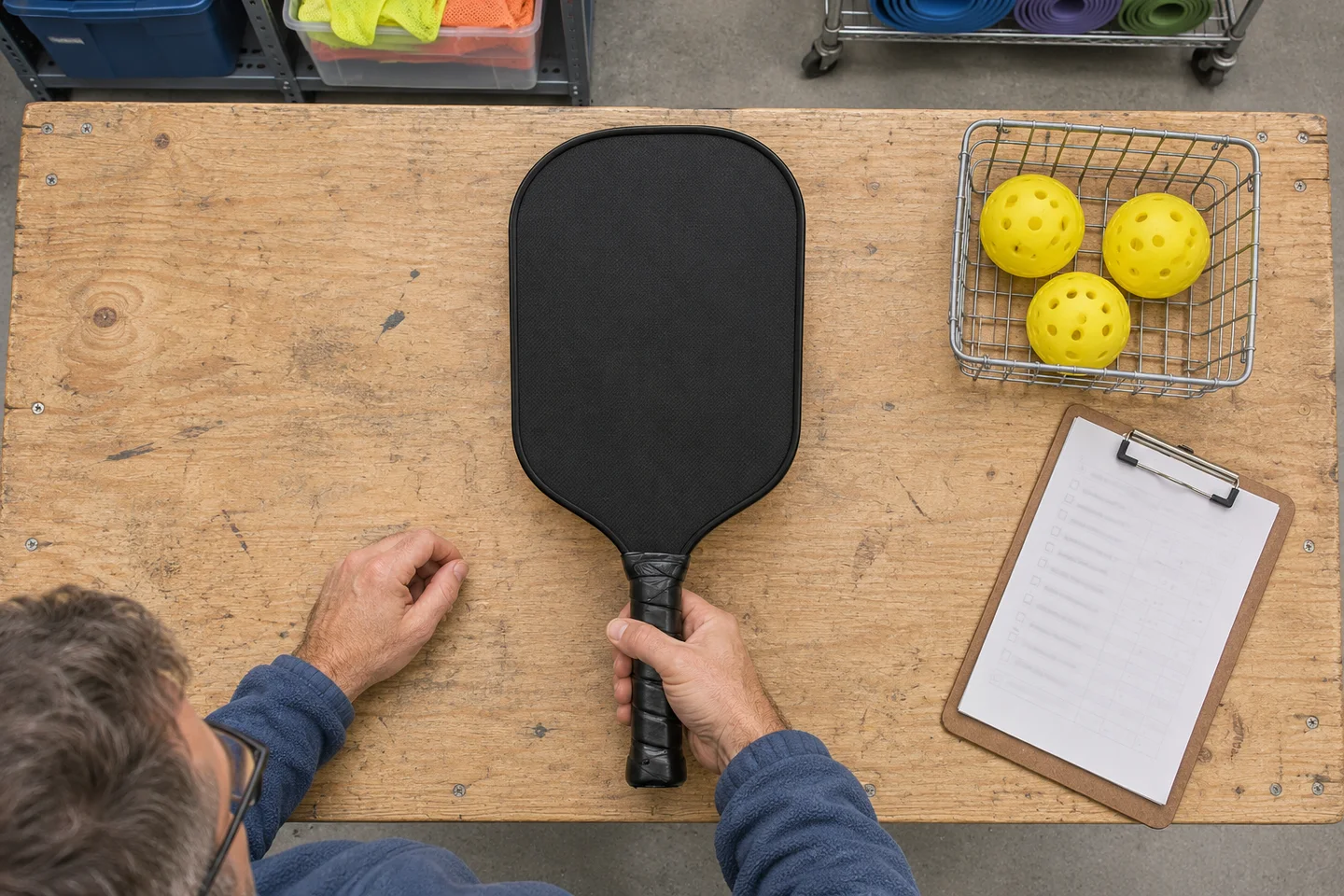
Size the shared T700 pool to the busiest regular session. Before reserving any aramid paddles, find out which players use the shared stock and which already bring their own.
Start with simultaneous use, not enrolment
I asked her to count shared paddles in players' hands at the busiest point of the afternoon. Then I asked how many coaches needed a demonstration paddle and how many spares the group wanted to keep available. A full enrolment list would have counted players who came on a different day and players who brought their own gear. A split by enrolment level would have put some of the pricier paddles in storage while a general class ran short.
The enquiry covered 24 paddles in shape 008, with Imported Toray T700 Carbon Fiber faces and a C04 TFP-Ring MPP–EVA Composite Core at 16 mm paddle thickness. We kept that as the routine quote. The coordinator decided to ask the competition coach to name a drill and the number of paddles it needed before adding an aramid sample line. That did not commit her to two materials or to a production order.
Take player level out of the material column
I take Sport NZ's distinction between foundation and competitive settings 1 as a reason to plan around what the session asks players to do, not as a materials chart. A beginner trying to get ten balls over the net and an experienced player working on the same control drill may both be well served by the same training paddle. If a junior struggles to hold it comfortably, review the fit of the handle and the finished weight before assuming a dearer face would help.
For a loaner rack, start with our custom Toray T700 paddle as a concrete configuration to discuss. Ask the coach to handle a sample before setting the standard for the entire cupboard. Use the same reference for replacements so a class is not left guessing why two paddles in the same training pool feel different.
| Session or allocation | What to count | Sensible starting point |
|---|---|---|
| Beginner and school PE groups | Largest number using school paddles at one time | Most or all of the everyday stock |
| Developing players | Shared paddles in overlapping drills, not every registered player | Draw from the same T700 pool unless there is a clear equipment need |
| Competition group | Only players who will borrow paddles, plus any coach-led comparison | Keep the routine pool intact; add trial units separately if justified |
| Coaches and spares | Demonstration paddles and a small agreed reserve | Allow for either in the baseline before splitting the order |
Put a number against each decision
If 18 students use equipment at once, two coaches need paddles and you allow four spares, that is 24 everyday paddles for the example. Change those inputs for your timetable. If the development and competition groups run at different times, you may be able to use the same stock. If they overlap, do not count the same paddle twice. I would rather see a buyer ask for three numbers that describe a busy session than buy one expensive paddle for every learner who might sign up later.
When Does the Aramid Price Premium Make Sense?
A buyer sees a higher price on a material name and wonders whether leaving it out will disappoint the top group. When I separate the two face options on a quote, I keep the base build visible and show the extra amount on its own. Otherwise the purchasing team can end up paying for a thicker core, different edge and revised artwork without knowing how much of the change was actually for the surface.
Ask for comparable quotes and pay the aramid premium only for paddles with a defined job. Do not turn it into a fixed percentage of the daily order.

Ask for a face comparison, not two unrelated builds
Toray identifies T700S as a standard-modulus carbon fibre 2; that datasheet describes the fibre, not the feel of every finished T700 paddle. The Kevlar trade name and fibre family 3 are similarly distinct from the performance of a paddle built from them. When a quote says only “aramid,” ask what face construction it actually specifies. Do not treat a named fibre and a vague weave description as interchangeable.
Our Kevlar and aramid paddle option is worth asking about if that face has a purpose in your programme. It does not have to displace the T700 line. Quote both with the same requested shape, core, thickness, handle, graphics and packing where practical. If a material change requires a different construction, identify the difference rather than presenting the pair as a pure face-only comparison.
Compare the money against the sessions it buys
I start with landed cost for the everyday pool and separate the face upgrade. The New Zealand Government Procurement guide's principle of value over the whole life of the purchase 4 is useful here: a unit price is not the only cost of assigning one material to a training programme. Two versions can mean separately stocked replacements, extra sample charges, and more checking at delivery. The result matters more when you will share the paddles all term than when one player is picking a personal favourite.
| Quote line | Request on the same basis | What it changes |
|---|---|---|
| Everyday T700 order | Quantity, approved build, artwork, packing, destination | Sets the cost of keeping every routine session supplied |
| Optional aramid sample | Sample quantity, named face construction, any differing components | Shows the price of learning before committing |
| Mixed order and replacements | Quantity and price by build; shipping terms, potential charges and repeat-order terms | Reveals whether keeping two versions has a worthwhile operating cost |
Calculate the proposed change without making up future savings
Suppose both builds are quoted on the same terms and the aramid line costs NZ$12 more per delivered paddle. Changing four of 24 to aramid would add NZ$48 if everything else stayed equal. Splitting the order evenly would add NZ$144. Those numbers are illustrative, not a SHUEN quote. Add any real separate sample or shipping charges to your own calculation; New Zealand Customs explains when import duty and GST may apply 5. If a supplier says the delivery terms already cover a charge, get that scope confirmed before comparing bids rather than adding the amount twice.
Put the difference beside a real choice. Would funding the extra face on all 24 paddles improve a regular class, or would that budget be more useful as adequate spares? With no named use for the extra face, I would keep the all-T700 quote separate and leave the premium line off the routine purchase.
How Can Coaches Tell Whether Learners Benefit From a Second Face?
A coach may prefer an alternative after a handful of returns. The students who use the loaners might not notice the same difference. If the preferred sample also has a longer handle and a different core, I do not ask a coach to assign its feel to the face material. I ask what the coach actually wants players to repeat on court.
Use a short comparison tied to one coaching task. Keep the builds and conditions comparable, then look for a difference players or coaches can repeat.
Make the decision about one task
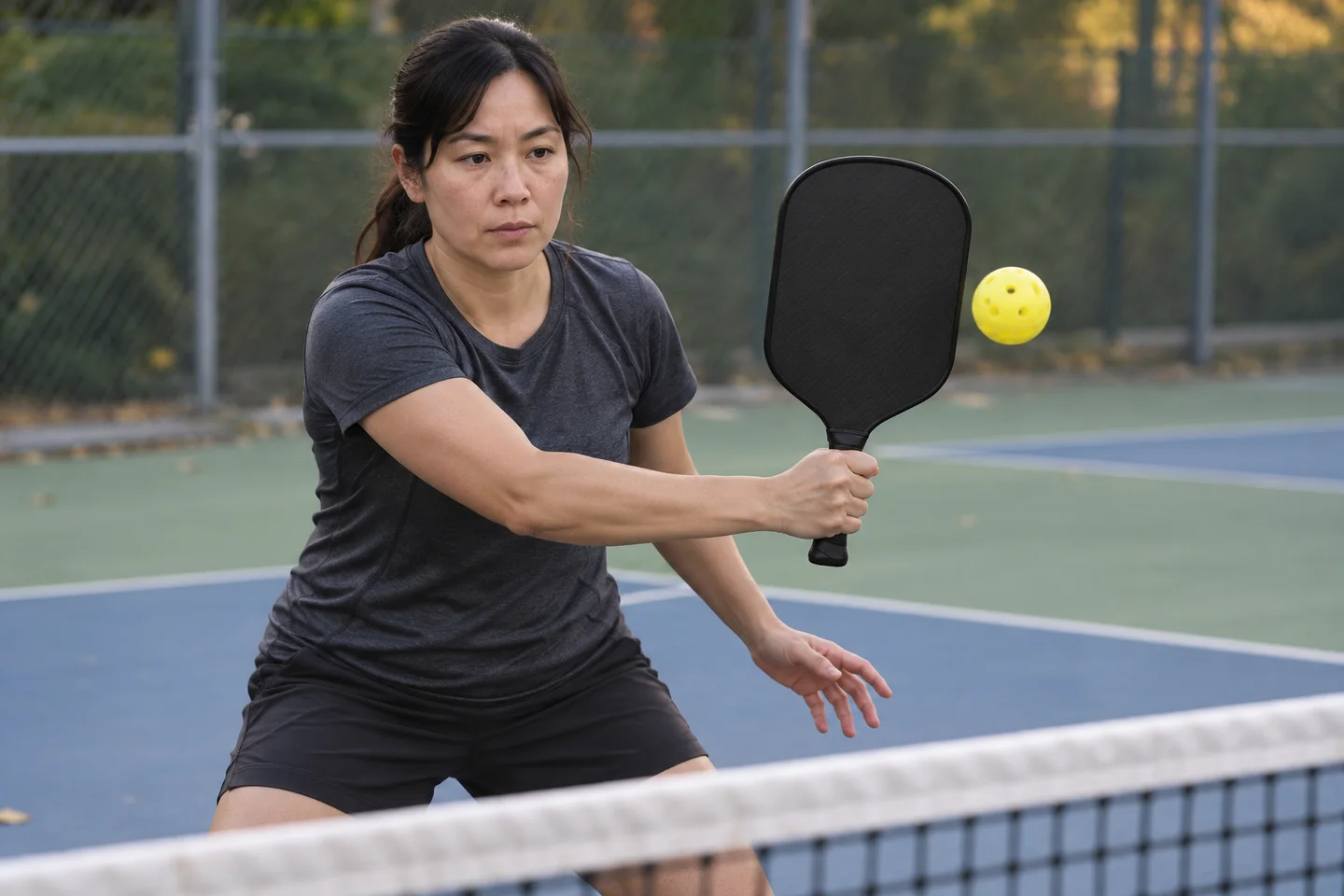
If the proposed use is an advanced block-volley session, test that task. A player can try a compact backhand volley with each sample against similar feeds and report which felt easier to place under the same conditions. The next player can start with the other sample. I am not looking for a universal winner. I want a coach to tell me whether the alternative gives this group something useful often enough to justify stocking it.
The principle of accounting for other factors in a comparison 6 is useful even in an ordinary session. Keep the ball and drill stable where you can and write down the material change you are trying to judge. The aim is a better order decision, not a laboratory test or a published result.
Build the baseline you will actually buy
Start with the ordinary training build, not the nicest unrelated demo in the coach's bag. In the custom paddle configuration options, shape, face and core are separate decisions. We can discuss samples that are as comparable as the construction allows. If face feel is the question, avoid moving grip size, shape, balance target and artwork at the same time unless there is a reason. Record any practical difference you could not hold constant.
If your competition squad will use equipment in sanctioned play, check the organiser's requirements before ordering for that group. The USA Pickleball rulebook and equipment standards 7 are a reference when the governing event uses them; they are not a certification claim for the sample or a blanket rule for every New Zealand school session.
Keep the outcome simple enough to use
I would ask the coach to note the session, the number of repeat users, and the one behaviour they could see more reliably. Sport NZ's emphasis on evidence and participant input 8 is a good reason to ask the learners who will actually use the paddles as well as the coach. If the feedback is mixed and the class runs fine with the baseline, stay there. If a small group consistently values the second build, keep it as a separate pool before changing the main order.
What Mix Should the Academy Put on the Purchase Order?
An unclear order sometimes reads like two interchangeable pools: some T700, some aramid, quantities to be decided. I would settle the everyday count first. If the coach can justify four trial paddles, put them on their own line rather than taking four paddles out of the main cupboard by default.
Put the full routine requirement on a T700 line. Keep any aramid trial on its own line, with its users and purpose defined before placing a mixed production order.
Protect the base pool before considering a split
A school that needs all 24 routine paddles at once does not cover that demand by ordering 20 T700 plus four demos that the coach keeps reserved. In that case 24 T700 remains the baseline. If an academy already knows it needs only 20 routine loaners and four more for an advanced option, it can consider 20 plus four after reviewing the sample. A split is the result of session demand and repeat use, not a rule that every school needs a premium tier.
| What the coach can show | What to put on the order | Next check |
|---|---|---|
| No separate training need has been identified | T700 only for the routine pool | Review learner fit and availability during the busiest sessions |
| A separate use is plausible but untested | T700 baseline; optional aramid sample line | Give one small group a defined trial task before changing the fleet |
| A group regularly benefits from the alternative | T700 baseline and a separately sized aramid pool | Check sustained use and replacement cost before increasing the allocation |
Write the specification so replacements make sense
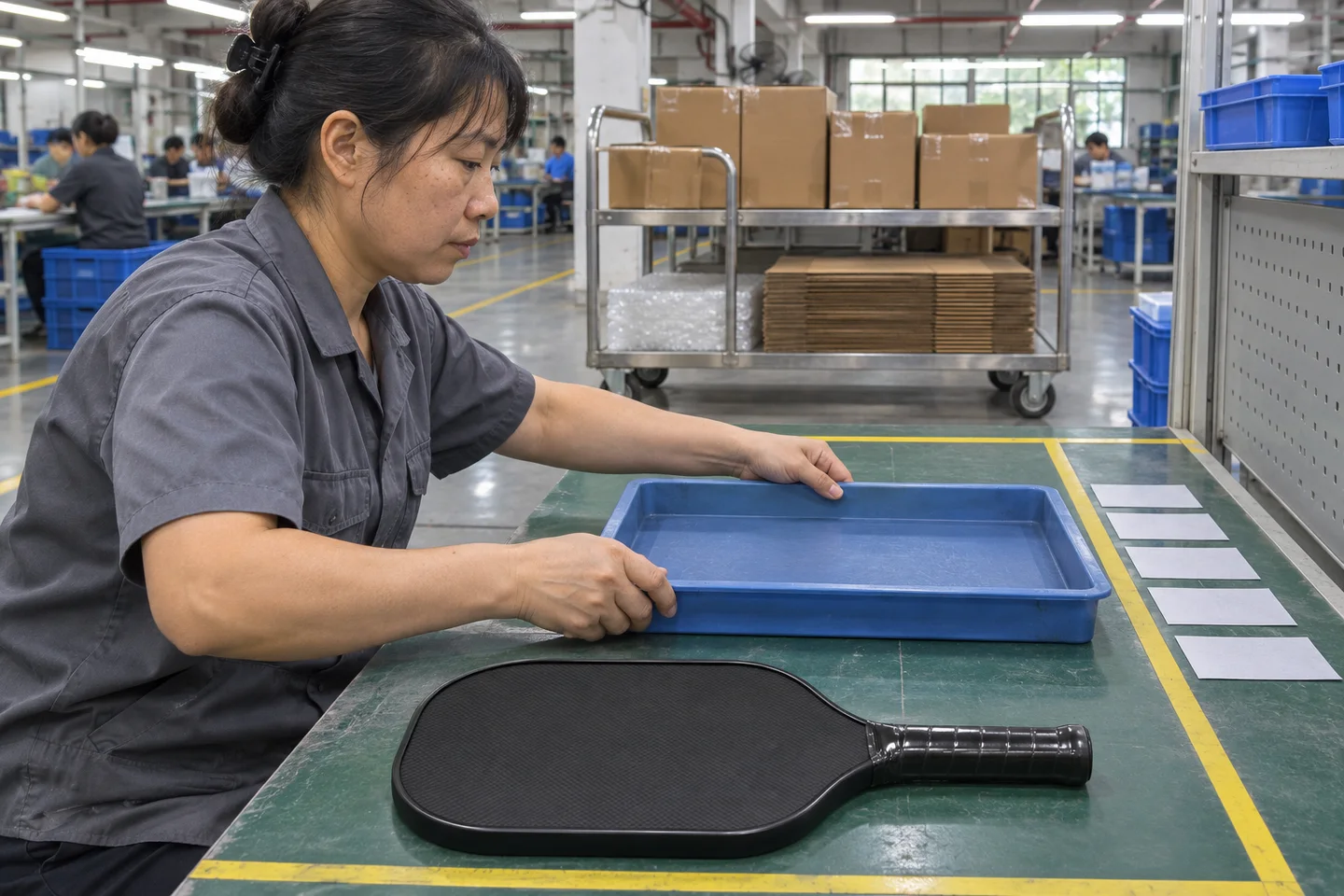
List each build with its own quantity and intended users. Include the face, core, shape and thickness, plus requested grip, weight range and artwork. Our guide to preparing a custom paddle brief is useful before the quote is updated. A distinct line gives us a clear basis for confirming what goes into each sample and gives the equipment lead something to check when they replace stock later.
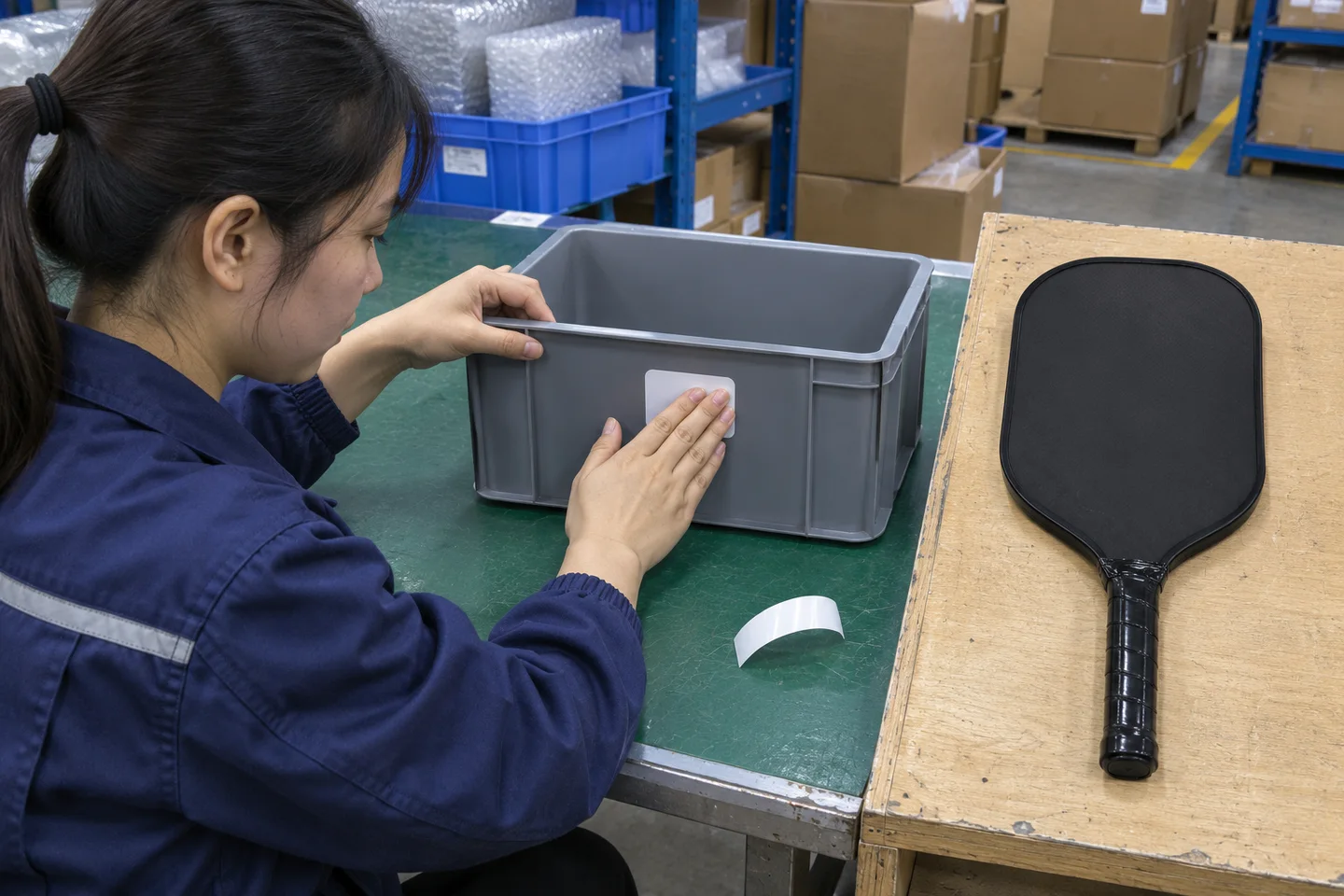
Keep a confirmed sample or a concise reference to the approved build, so a replacement request does not rely on a worn face or a remembered colour. Where aramid samples remain in a coach-only pool, mark them as such in inventory. Labelling the pool does not make the trial paddle better; it keeps it from disappearing into general circulation before anyone can judge whether the purchase was worthwhile.
Let the first term shape the reorder
A reorder is a chance to act on use instead of guessing twice. I would ask what ran short, which options were repeatedly borrowed for the trial task, and what the replacement quote looks like. If the optional paddles hardly came out, do not duplicate the original split simply because it was on the first order. If the advanced group uses them regularly and the cost remains acceptable, increase that line only by what the group can put into use. The better buy is the one that keeps learners playing without asking routine sessions to finance a face they do not need.
Conclusion
For ordinary New Zealand school and academy training, I would start with T700 throughout the shared pool. Aramid usually adds cost; let a specific coaching activity and a fair sample comparison earn it a small, separate allocation. Count simultaneous users, keep the everyday build funded, and let the next order reflect what the programme actually uses.
Planning a training pool? Send us the busiest session size, staff and spare requirements, delivery city, and your target face, shape, core, thickness and artwork. Tell us separately if a coach has a job for an aramid comparison sample.
Discuss a Custom T700 Pickleball Paddle · Consider a Kevlar or aramid comparison sample