
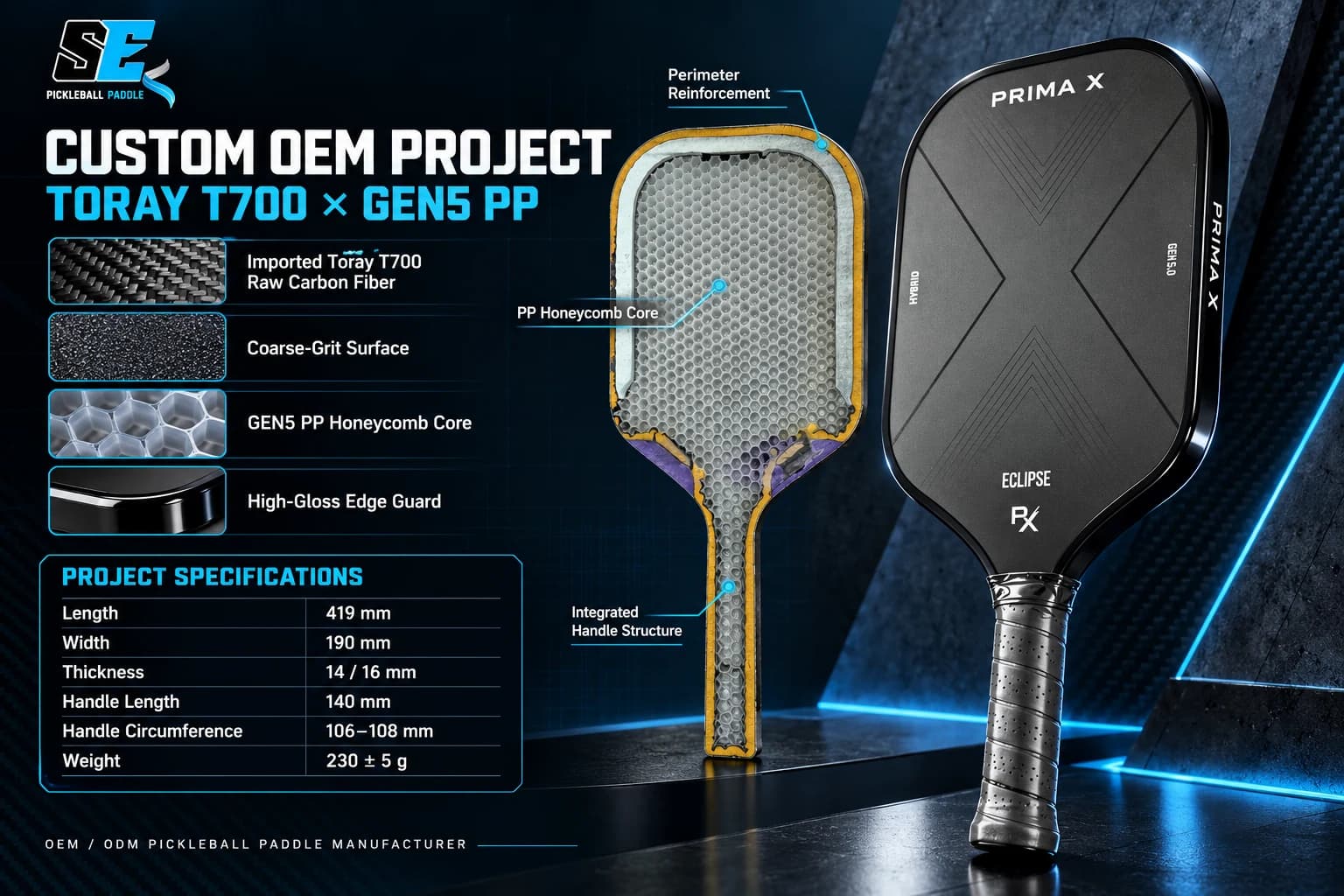
Two black-faced paddles can look similar in a small listing image while differing in core description, edge sheen, handle finish, and sample measurements. That matters when a brand wants a repeatable private-label specification rather than a one-off visual match.
This build records a Toray T700 face, a Gen5 PP honeycomb core, and a high-gloss edge. Its configuration overview lists a 419 × 190 mm outline, 14 mm and 16 mm thickness options, a 140 mm handle, a 106–108 mm grip circumference, and 230 ± 5 g. The real project close-ups show the glossy dark border and handle end. A buyer should confirm the core definition, choose a sample thickness, and approve the visible finish against a written standard.
The case is useful for a buyer comparing dark-edge alternatives, evaluating supplier evidence, or preparing a brief for a similar build. We focus on the recorded specification, visible details, sample checks, and questions that keep a quotation aligned with the intended paddle.
What is recorded in the T700 and Gen5 PP honeycomb configuration?
A product team can easily over-compress a brief to “T700, Gen5, glossy black.” Those words indicate direction, but they do not yet tell a supplier which thickness to sample, which geometry is fixed, or what “Gen5” means in the project record.
The recorded components are a Toray T700 face, Gen5 PP honeycomb core, and high-gloss edge. The overview lists the 419 × 190 mm outline, 14 mm and 16 mm thickness options, 140 mm handle, 106–108 mm grip circumference, and 230 ± 5 g listed weight. Ask for the exact core description and sample version before using those labels as a purchase-order specification.
Toray provides separate T700 carbon fiber data sheets1 for different designations and states that the published values are typical material properties. The project overview says Toray T700 without a more specific grade. For a buyer, that means the correct next question is about the exact material and supply documentation, not which data-sheet number to quote as this paddle's performance.
“Gen5 PP honeycomb” is the project's core name. It should be expanded in a production brief into the core design, selected thickness, and any permitted substitutions. Original research on polypropylene honeycomb sandwich panels2 examines how panel construction and layering affect bending behavior. Its specimens are not pickleball paddles. The buyer takeaway is simply that a core-family label is not a complete structural description.
| Attribute | Recorded case value | Approval decision |
|---|---|---|
| Face | Toray T700 | Confirm precise grade, weave or other material evidence if required. |
| Core | Gen5 PP honeycomb | Define project-specific construction and substitution rules. |
| Thickness | 14 mm or 16 mm | Select the first sample or request a controlled comparison. |
| Outline | 419 × 190 mm | Approve the drawing and measurement points. |
| Handle | 140 mm; 106–108 mm grip circumference | Specify finished wrap, end cap and measurement state. |
| Weight | 230 ± 5 g listed | Confirm a finished-sample target and weighing convention. |
| Edge | High-gloss | Set sheen, color and acceptable visual variation. |
Explore the wider custom paddle options if you are still choosing an outline or face direction. This particular case gives a defined reference for the next conversation, rather than a universal specification for every T700 paddle.
What do the genuine close-ups show about the finish?
Buyers evaluating a dark product often need more than a full-face image. Reflections at the edge and the shape of the handle end become obvious in hand but disappear in a small online photograph.
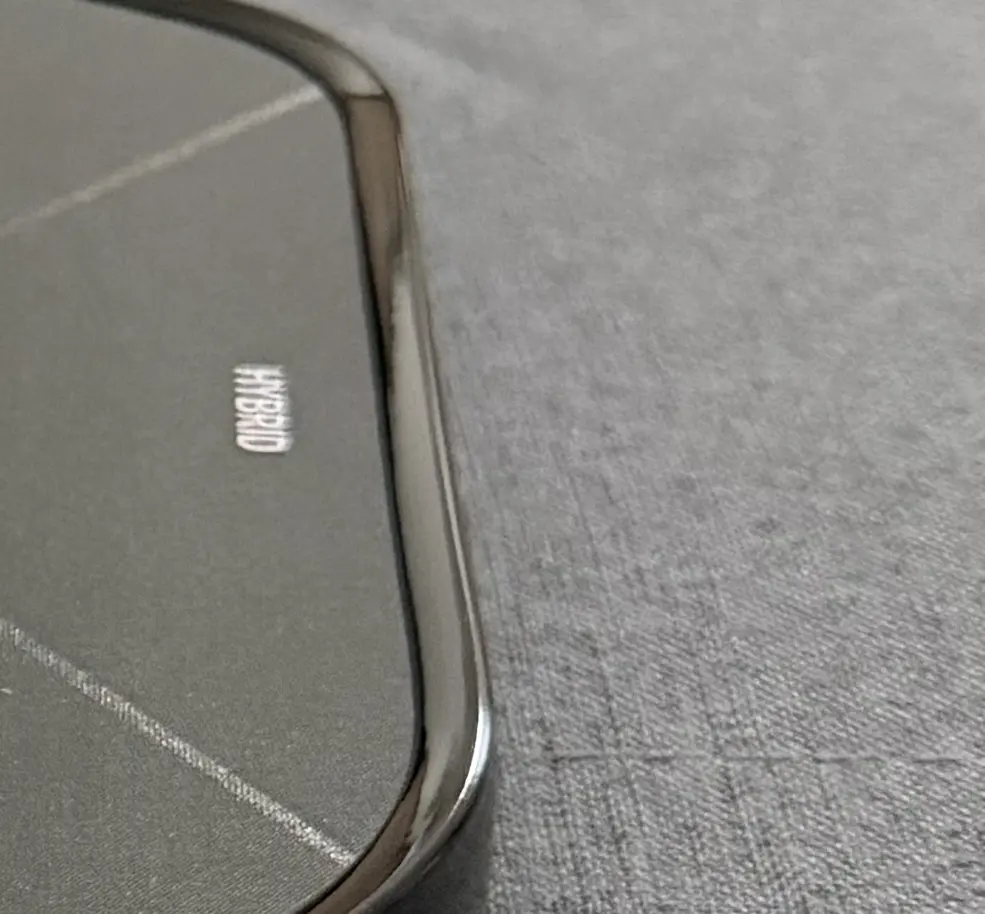
The project images show a glossy dark border next to the paddle face and a separate view of the handle end cap. They help a buyer discuss edge sheen, the face-to-edge boundary, and handle finishing. They do not show the internal honeycomb, material grade, measured dimensions, or a completed test result.
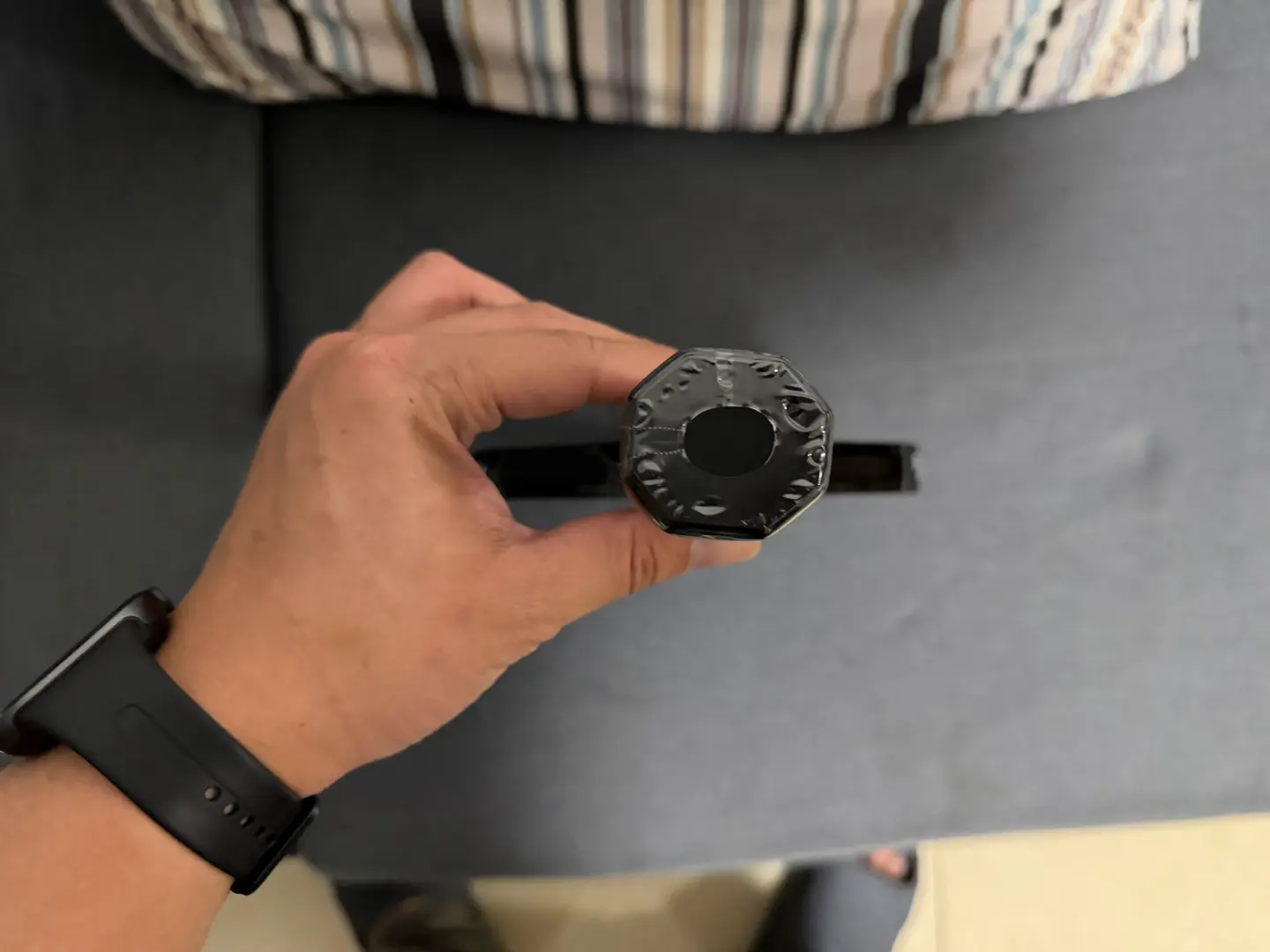
In the edge close-up, notice how reflected light changes across the border. A high-gloss finish needs a reference under a repeatable lighting condition so the supplier and buyer mean the same level of shine. In the handle-end view, assess the end-cap shape, how the wrap terminates, and whether the end finish aligns with the intended brand presentation. Ask for the two views together on the next sample, alongside a face-on image and a side profile.
For a private-label version, decide whether the end cap and grip should remain dark or pick up a color from your artwork. Ask to see both details on the same sample as the approved edge. That avoids comparing one version's handle with another version's face and gives your team a clearer record for repeat ordering.
If this finish competes with a metallic concept, compare it with the Toray T700 perforated EPP and gold-edge case. Keep the comparison limited to what each configuration records and each image visibly shows; a photograph alone cannot isolate how a core changes play.
How can a buyer verify the first sample before approving production?
A first sample is often reviewed by product, brand, and procurement colleagues at different times. A versioned checklist makes their comments comparable and makes corrections easier to communicate back to the supplier.
Identify the sample version, measure the finished paddle against the selected geometry, inspect the high-gloss edge under agreed light, and confirm the recorded face and core with the supplier's project documentation. Keep subjective play feedback separate from measured values. If formal approval is a launch requirement, plan that route for the exact finished version.

The overview lists a weight and dimensions, but it does not include a measurement log for the photographed paddle. Agree how to measure length, width, thickness, grip circumference and finished weight; note whether the grip and end cap were in place. NIST's dimensional-calibration paper3 explains why an uncertainty statement accompanies a defensible measurement. A sourcing team does not need a metrology laboratory for every sample, but it does need one method and one tolerance agreement.
| Review area | Buyer check | Evidence to retain |
|---|---|---|
| Selected configuration | Does the sample match the chosen thickness and recorded geometry? | Versioned drawing and measurements. |
| Face and core | Are the requested materials documented for this sample? | Supplier build record or agreed material document. |
| High-gloss edge | Is sheen consistent around corners and throat under the same light? | Sample photos and finish reference. |
| Handle finish | Are grip size, wrap termination, and end cap acceptable? | Finished sample and close-up views. |
| Claims | Which performance or compliance statements require separate testing? | Test or approval plan for the exact version. |
The USA Pickleball rules page4 links the current rulebook and equipment standards. It is the right reference when a buyer plans sanctioned-play claims; this case does not claim approval. Agree that requirement before packaging or launch copy is finalized.
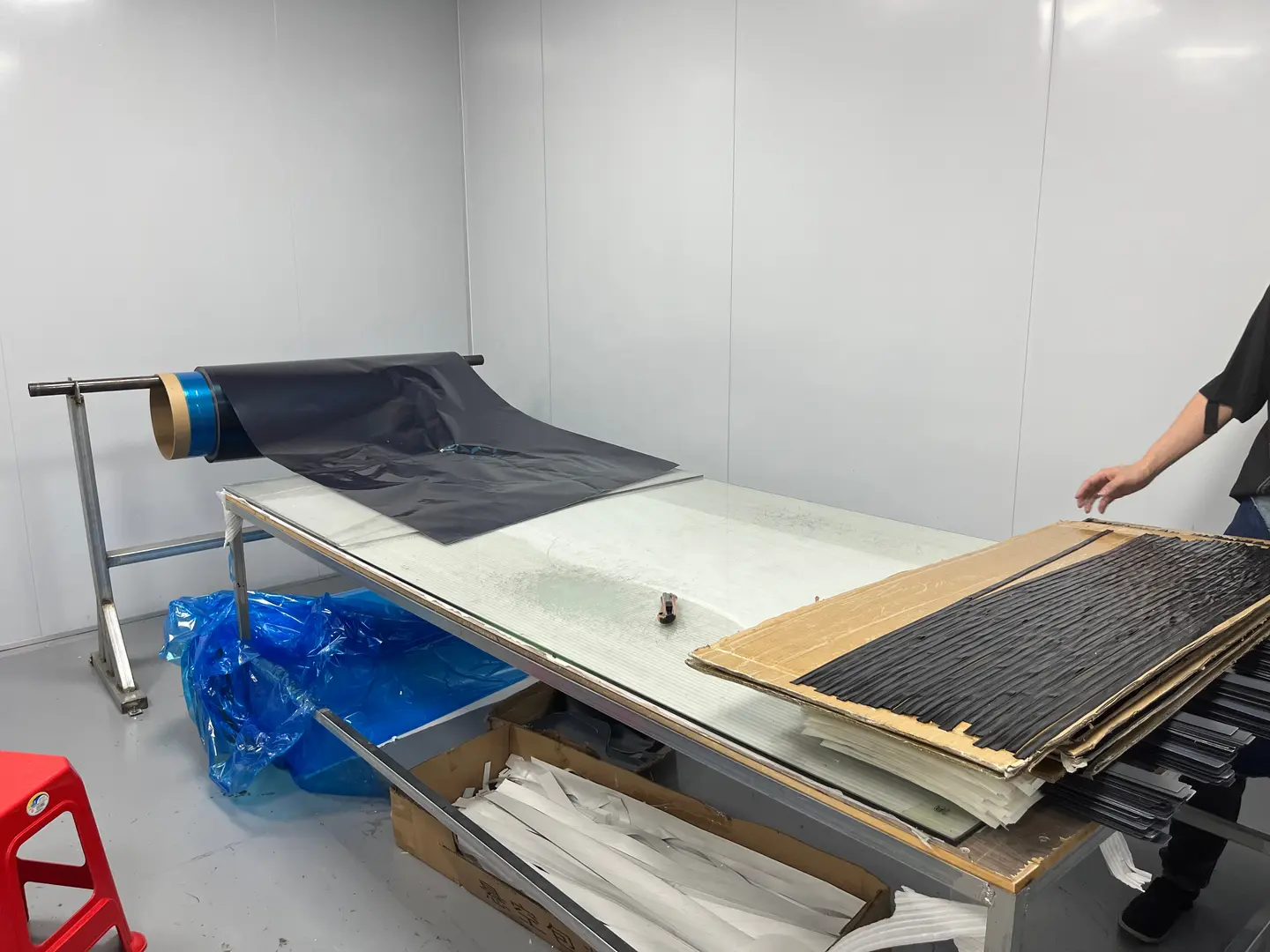
See the manufacturing process overview for how material preparation and pressing fit into a broader custom-paddle workflow. The process photos provide context; the approved sample and its build record remain the appropriate reference for this particular procurement decision.
What belongs in a brief for a similar high-gloss paddle?
A useful brief does not need to answer every engineering question in advance. It needs to show the buyer's priorities clearly enough that a supplier can return a specific proposal, instead of silently choosing among multiple interpretations.
Reference the Toray T700 and Gen5 PP honeycomb configuration, select the intended outline and thickness, state the finished grip and weight targets, and supply a visual high-gloss reference. Add your artwork, intended market, estimated order range, packaging needs, and decision date. Ask the supplier to identify any assumptions, proposed changes, and sample checks in its reply.
If the dark edge is meant to be visually subtle, say how wide it should appear from the front and what level of reflected shine you will accept. If it is meant to be a defining feature, provide an approved physical reference or controlled photo. Specify the end cap and wrap as part of the finished product. A change to any of these details may be visible to a buyer even when the face material name remains the same.
For the core, request the supplier's definition of “Gen5 PP honeycomb” rather than substituting a generic honeycomb description from another product. For the face, state whether the “Toray T700” designation itself is required and what traceability you expect. For shape and weight, decide which dimensions are fixed and which can be adjusted during sampling. This gives the supplier room to respond honestly about feasibility and gives the buyer a clear record of the trade-offs.
| Field | Provide now | Ask the supplier to return |
|---|---|---|
| Reference | This case and your finish example | A written interpretation of the requested build. |
| Construction | Toray T700 face, Gen5 PP honeycomb, selected thickness | Detailed material and core description. |
| Geometry | 419 × 190 mm reference, 140 mm handle, grip and weight targets | Drawing, proposed tolerances and measurement method. |
| Appearance | High-gloss reference, artwork, grip and end-cap direction | Sample and photo sign-off plan. |
| Project scope | Market, quantity range, packaging, timing needs | Quotation assumptions and any open questions. |
If a competition approval route applies, the USA Pickleball submission guidance5 explains that finished paddles follow a separate review process. Include that need in the brief; do not assume this documented configuration is already approved.
Conclusion
This case combines a recorded T700 and Gen5 PP honeycomb specification with genuine photographs of the finished high-gloss edge and handle end. Use both sources for the decisions each can support, then approve a versioned sample before treating the configuration as repeatable.
Considering a high-gloss custom paddle?
Share your target construction, thickness, shape, edge reference, grip details, artwork, and the questions your sample must answer.
Footnotes
- Toray Composite Materials America data-sheet index, used for the distinction between T700 material designations and typical material values, not finished-paddle performance. ↩︎
- Arbaoui et al., original experimental study of polypropylene honeycomb sandwich panels under bending, cited for general structural context only. ↩︎
- NIST publication on dimensional calibration uncertainty, supporting consistent measurement documentation. ↩︎
- USA Pickleball rules hub, current entry point for the rulebook and equipment standards. ↩︎
- USA Pickleball equipment-submission FAQ, describing the finished-paddle submission route; no approval is claimed for this case. ↩︎