Five paddles can feel like too many when you only want to try one, yet far too few when you want to compare several materials. I look at the first order as a small buying decision with a clear purpose: get enough useful feedback without turning an untested idea into stock.
Our minimum order starts at five paddles. You can play with one yourself and let other people use the remaining paddles to assess quality, feel and possible changes. Special materials can be mixed, provided the order totals at least five paddles and includes at least two of each special material. Trying Kevlar, titanium wire and emery together therefore requires two of each, or six paddles in total.
The number is only the starting point. Below, I explain how to count the minimum, allocate it between materials, put five paddles to useful work and decide whether a larger first batch is justified.
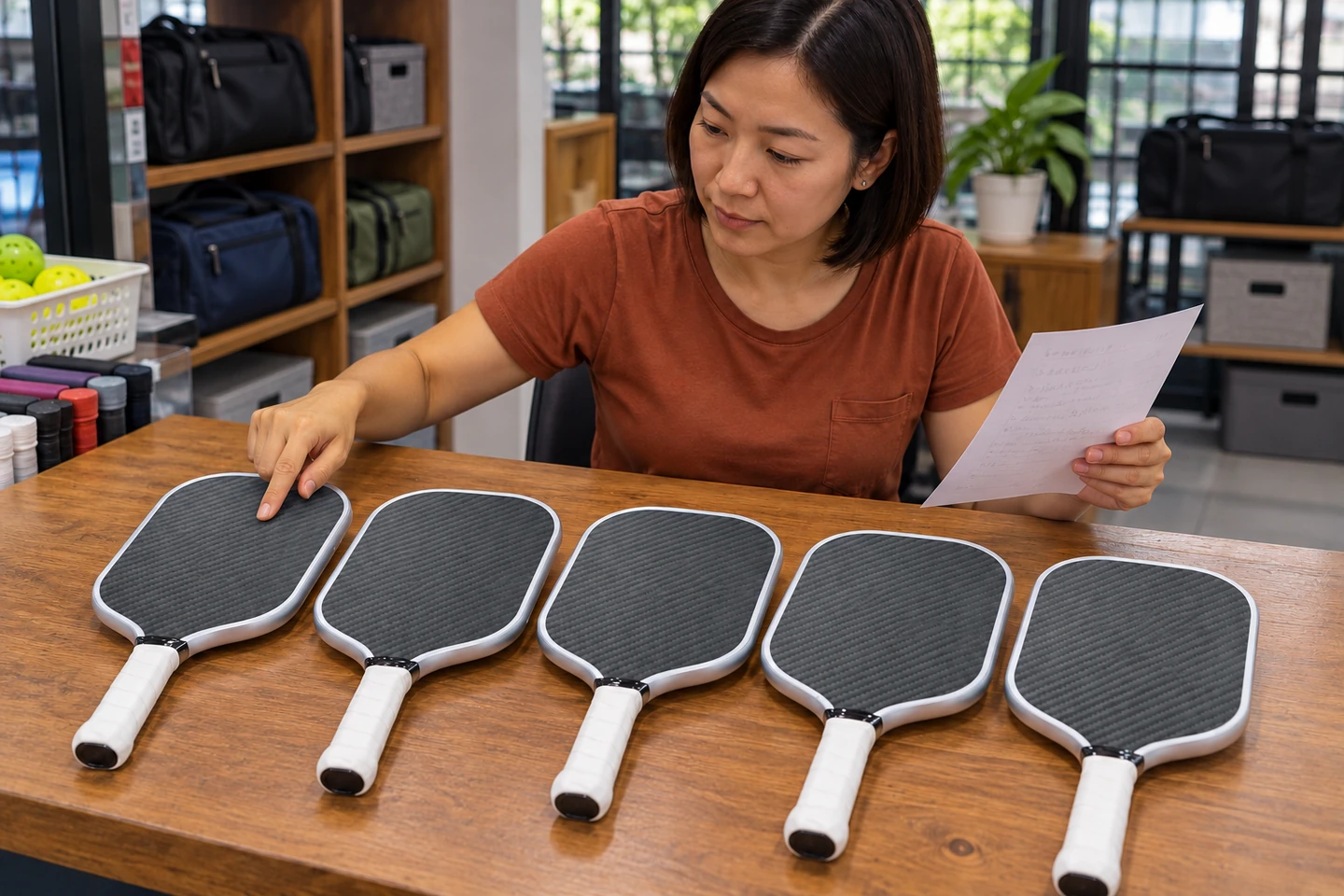
How Do I Calculate the Minimum for My First Order?
A first-time buyer needs to know whether “five” describes the whole order or five of every choice. I answer the total and the material split separately, because a correct overall count can still hide an unsuitable allocation.
Start with a five-paddle order total, then check that every special material included has at least two paddles. Confirm the actual models, designs and component requests alongside that count.
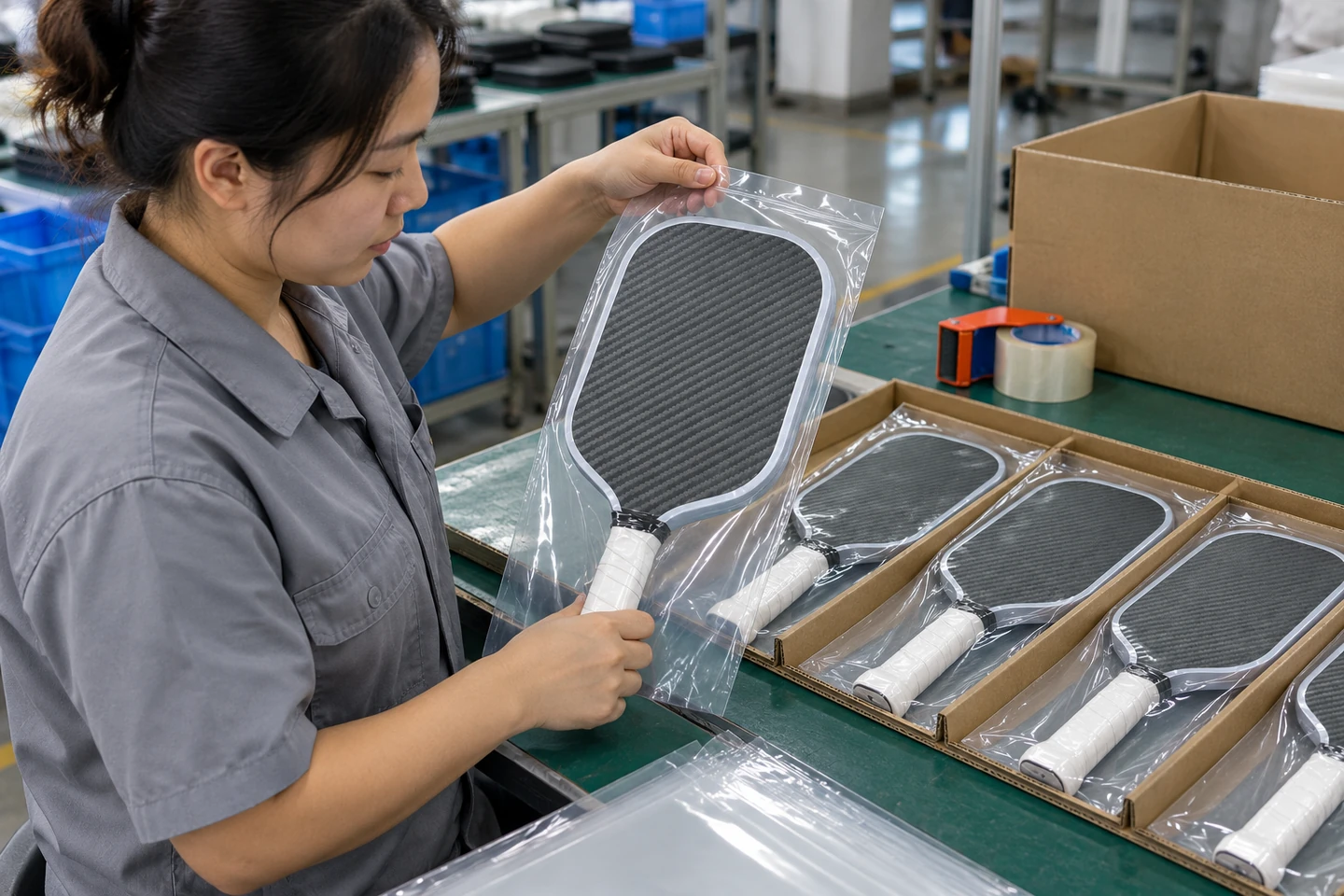
Separate the supplier's minimum from your preferred quantity
There is no single first-order quantity that applies to every paddle supplier. A minimum order quantity 1 is the supplier's smallest accepted order, and its conditions can include more than one threshold. Ask what the number covers before comparing it with another quotation.
For SHUEN, five is the starting total discussed here. That does not mean you must decide on a full retail launch immediately. It gives you a small batch to examine and use. Nor does “five” mean five unrelated private designs automatically share one setup. Send the intended configuration and artwork split so we can confirm the scope that the quantity describes.
The useful question is specific: can this list of paddles be made in this quantity? It is much easier to answer than a message that asks only for “your lowest MOQ” without identifying the product.
Make the first inquiry describe one complete build
In May 2026, a club buyer in Thailand asked about five paddles in shape 004, with Kevlar / Aramid faces, a C01 Interlocking EPP–EVA Dual-Density Core and 14 mm thickness. She wanted one for herself and worried that the other four would become unwanted stock. I explained how the five could circulate among her club's players instead of being treated as a retail launch. She chose to keep the inquiry at five of that one build and assign the other four to shared evaluation before discussing a larger order.
That choice kept the quantity useful without broadening the product question. The custom Kevlar / Aramid paddle provides a concrete starting product, but its face name does not replace the core, shape or thickness. These are configuration choices to confirm for the project, not a promise of a particular playing result.
Check the count before asking for the final total
I use a short count check while preparing the order discussion. If a buyer has five lines but each line represents a pair, the order contains ten paddles, not five. Conversely, five individual paddles do not satisfy a two-per-material condition if one special material appears only once.
| Quantity check | What to count | What it decides |
|---|---|---|
| Whole order | Every individual paddle | Whether the total reaches five |
| Each special material | Units using that material | Whether each selected special material reaches two |
| Model and appearance | The proposed build and design split | What the quotation must describe and confirm |
| Intended use | Paddles needed for your evaluation or customers | Whether the minimum is also the right quantity |
Confirm the last two rows rather than assuming they are settled by arithmetic. A suitable count still needs a clear description of what will be supplied, where it will go and which customization requests are included.
How Should I Divide a Small Order Between Special Materials?
The tempting allocation is one of everything. I would rather reduce the number of materials than give the buyer a mixed batch that cannot meet the stated minimums or answer a clear comparison question.
Allocate at least two paddles to each special material, then bring the order to five or more. Two materials can fit a five-paddle split of three plus two; three special materials require at least six.
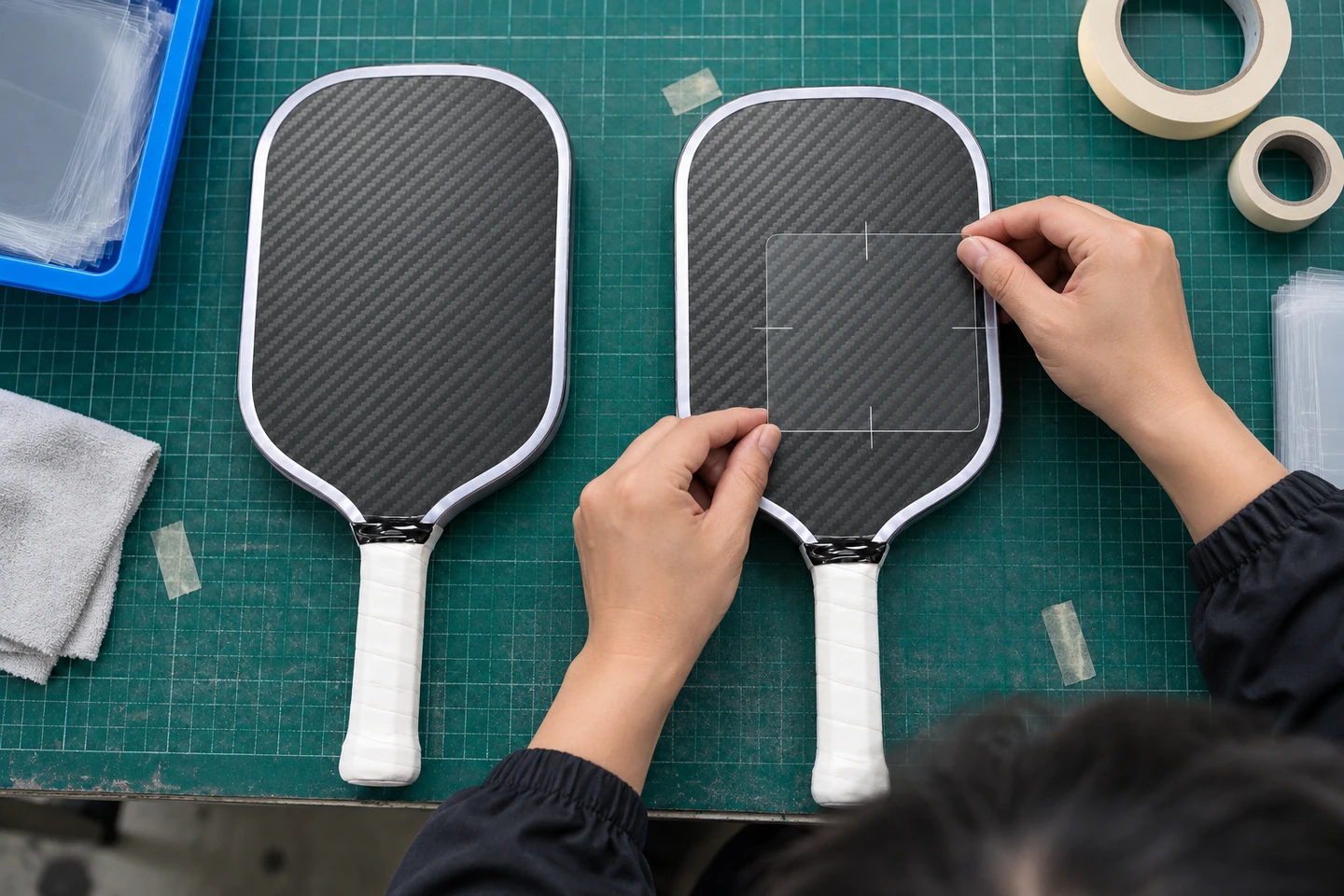
Count the material groups before choosing the extra paddle
At the sample planning bench, I separate a proposed five-paddle list into Kevlar, titanium wire and emery groups. The buyer wants all three materials but has allocated two, two and one. I move the single emery entry into a pair and show the resulting six-paddle total. Reducing the Kevlar pair would only move the shortfall elsewhere, so the choice is six paddles across three materials or fewer materials within five.
This is not a judgment about which material is best. It is a quantity decision. When two special materials remain, the fifth paddle can go to the material needing more shared use. There is no need to invent a third option simply to make the total look balanced.
| Materials requested | Allocation | Total | Quantity decision |
|---|---|---|---|
| Kevlar only | Five Kevlar | 5 | Meets the stated count conditions |
| Kevlar and titanium wire | Three Kevlar, two titanium wire | 5 | Meets both minimums |
| Kevlar and titanium wire | Two of each | 4 | Add one paddle to reach the order minimum |
| Kevlar, titanium wire and emery | Two of each | 6 | Smallest total covering all three |
| Kevlar, titanium wire and emery | Two, two and one | 5 | Increase the single material to two or remove that option |
These allocations describe the material count. The chosen shapes, cores, thicknesses and artwork still belong in the project discussion before the order is confirmed.
Keep a material comparison from becoming five different products
If the purpose is comparing faces, try to keep other choices consistent where the agreed builds allow it. Changing the core, shape and grip at the same time makes it harder to decide which feature caused a preference. Our paddle configuration library lets you identify those choices separately instead of naming only a surface.
NIST's explanation of single-factor experimental comparisons 2 shows the logic of selecting one main factor and varying the order of trials. For a small buying exercise, I use the simpler lesson: name the feature you are comparing and avoid changing everything around it. A casual playing comparison does not become a laboratory study because it uses that principle.
Choose materials for a question you actually need answered
Material names attract attention, but ordering every name is an expensive way to discover that your buyers only need one suitable product. Ask what you need to learn about each candidate and which alternative is credible for the product you intend to offer.
The material maker describes Kevlar as a para-aramid fiber 3; that identifies a material family, not how our finished C01 paddle will feel against a different build. I keep the specification and the playing judgment connected, without making a performance ranking from the names.
If the buyer mainly wants to evaluate the Kevlar configuration, five of that build may be more useful than a wider mix. If the decision genuinely involves three special materials, six is the honest starting count.
How Can I Use Five Paddles Without Buying Unwanted Stock?
Five paddles do not require five permanent owners. A small group can share them, repeat a session and return the same physical examples for comparison. The allocation should support the buying decision rather than become a giveaway with no feedback.
Use one paddle yourself and assign the others to a small, relevant group, with repeat use and a clear return of observations. Keep the goal on quality, feel and specific changes before expanding the order.

Give each paddle a practical job
For the Thai club inquiry, I draw up the intended use before expanding the quantity. The buyer is concerned that handing out four paddles will produce four brief compliments and no buying answer. I suggest one for her own repeated use, two for different regular players, one for a coach-led comparison and one kept available for swaps. She chooses that allocation so an unclear comment can be checked with another paddle rather than settled by guesswork.
This is one workable distribution, not a compulsory factory procedure. The buyer can lend all five, keep two in circulation or arrange a shared club session. What matters is knowing who will use them, why their experience is relevant and how the paddles return to the discussion.
| Paddle | Suggested use | Useful return to the buyer |
|---|---|---|
| 1 | Your own repeated play | A firsthand baseline for discussing the build |
| 2 | A regular intended customer | Specific handling and feel observations |
| 3 | Another relevant player | A second perspective, including disagreement |
| 4 | Coach-led shared session | Comparisons tied to recognizable playing situations |
| 5 | Swap and follow-up use | A way to revisit an unclear observation |
Ask for the same few observations from everyone
Keep the questions short enough that people actually answer. Does the grip feel suitable during normal use? Is there a visible finishing concern? What situation makes the paddle feel different from their usual one? What would they retain, and what would they change? Record which physical paddle they used, particularly if the order contains several materials.
ASQ describes a check sheet 4 as a structured way to collect observations. A short version helps the buyer compare recurring comments without turning the session into paperwork. Keep visible quality concerns separate from personal preferences; a disliked grip feel and a loose component call for different conversations.
Use the paddle specification checklist to connect the feedback to the shape, face, core, thickness and components actually supplied. Otherwise, a useful comment can become detached from the build that produced it.
Look for useful disagreement, not five votes of approval
The aim is not to prove that everyone likes your idea. Different intended users can expose a trade-off worth knowing before you order more. The SBA's guidance on direct customer research 5 explains why asking people directly can reveal reactions specific to a product and audience.
I ask the buyer to return the reasons behind preferences, not just a score. Five paddles provide an opportunity to learn, but they do not establish a statistical defect rate, long-term durability or market-wide demand. A first batch earns its place when it helps you choose the next step with less guesswork.
When Should I Increase the First Order Beyond the Minimum?
An extra paddle is sensible when it answers a real need. It is less useful when the only reason is that a larger batch makes the order look more serious. I want the quantity to follow the purpose, especially while the build is still being evaluated.
Increase the quantity when the material split requires it, simultaneous users need it or a defined commercial requirement supports it. Keep the order small when unresolved product questions are the main reason you are buying.
Add quantity to remove a genuine bottleneck
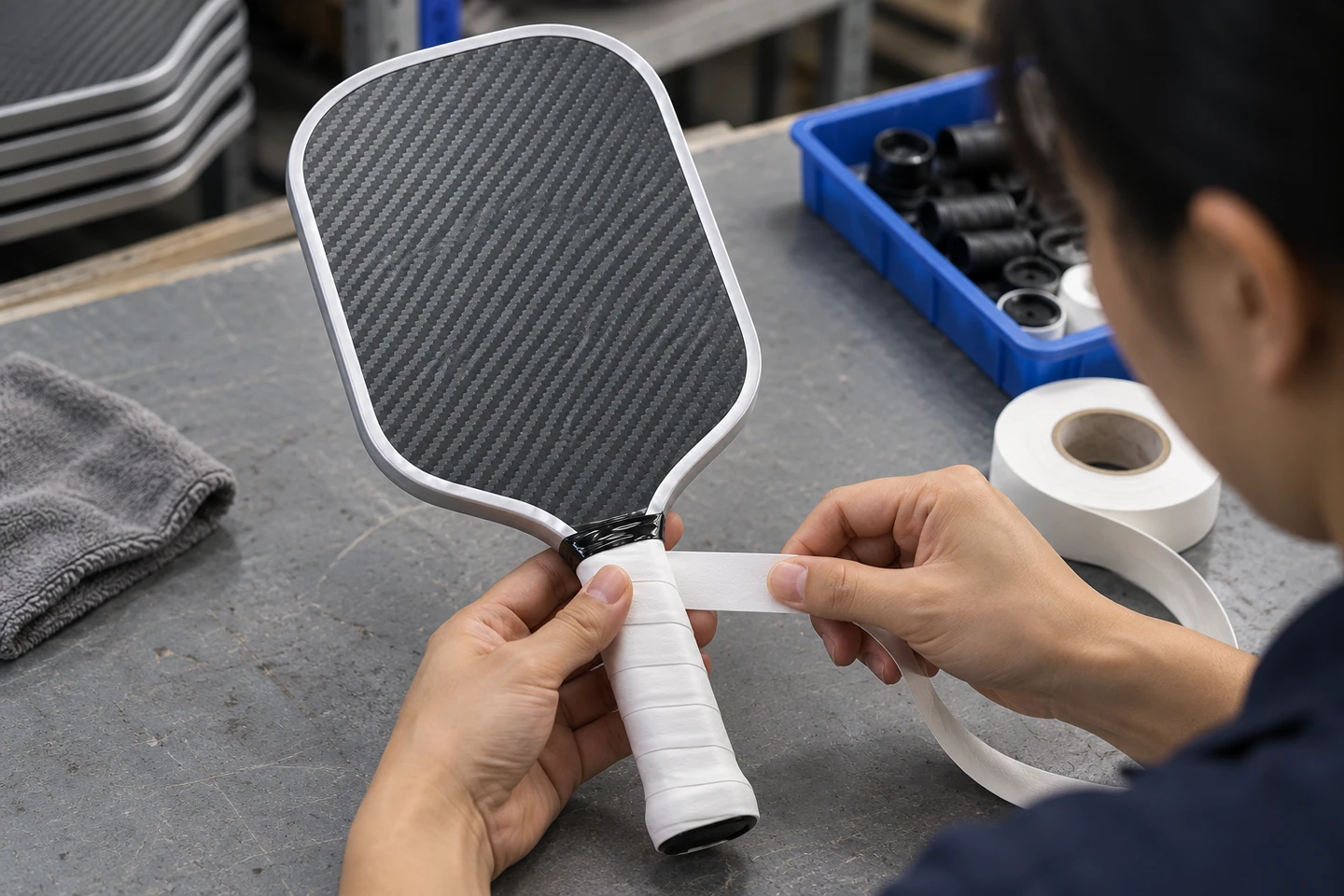
At the handle-work bench, I compare the selected grip with a requested alternative while reviewing the buyer's proposed increase. The buyer wants more paddles but has not decided which grip to keep. I separate a focused revision from a repeat of the current build, because producing more of the undecided version would spread the same question across more units. I recommend resolving the grip choice first, then increasing only the configuration the buyer intends to retain.
This is where ASQ's plan-do-check-act cycle 6 offers a useful principle: try a change on a small scale, review what happened and act on the result. More quantity is not a substitute for making the product decision.
A different situation can justify expansion immediately. Three special materials require six paddles under the stated rule. Two clubs using samples at the same time may need more than one circulating set. Name that requirement and work out the quantity it actually needs.
Compare the total commitment, not just the unit price
A lower unit price can still mean a higher cash commitment and more unsold paddles. Before accepting a larger batch, ask for the complete quotation for the proposed quantity, including the agreed customization, packaging and delivery. Compare the cash required now with what the extra units will do for you.
The SBA's discussion of cash flow and expense planning 7 emphasizes tracking money and costs. For this purchase, the practical question is whether the additional paddles leave enough room for a revision, delivery and the rest of the launch. Do not assume a volume discount, fixed freight saving or later refund unless it is included in your actual agreement.
Separate a larger trial from the first stock order
A larger trial supplies more evaluators. A stock order supplies customers. Those purposes may use the same build, but they need different quantity evidence. Confirmed customer needs, available stock and realistic replenishment requirements belong in the inventory decision; a few encouraging court comments do not replace them.
Australian government guidance on inventory management 8 centers on knowing what is on hand and what is selling. Apply that discipline before turning the trial into a larger purchase. Keep demonstration paddles separate from stock available for sale.
When the build is ready, connect the accepted sample with our sampling-to-production process. Identify what stays the same, what changes and how many of each version you want. The next order should reflect what the first five taught you.
Conclusion
Start with five paddles when that quantity answers your first buying question. Keep at least two of every special material, which makes three special materials a six-paddle order. Use the batch yourself and with other relevant players, collect specific feedback and decide what to keep or change. Increase the quantity for a clear allocation or commercial need, not merely because more paddles appear to make the project more serious.
Plan Your First Paddle Batch With SHUEN
Discuss the custom Kevlar / Aramid pickleball paddle. Send your preferred shape, core and thickness, the quantity of each material, artwork or branding requests, delivery destination and who will use the first batch. If you want three special materials, start the count at two of each and six in total.