One player calls the jolt on an off-centre hit useful feedback. Another puts down the same paddle because the jolt is all they can think about. When I hear both reactions, I want to know which one matches the customers you are buying for. A newer core number will not settle that, especially if the two samples arrive with different grips or face materials.
Compare what you feel on a clean hit, what reaches your hand on an off-centre hit, and how much depth you get at the same effort. Start with Gen 4 if you like a more direct response and don't mind some vibration. Start with Gen 5 if you want less of that sensation at the handle. The Gen 5 layout we are discussing adds carbon fibre in the grip area and along the two sloped sides below the throat to help reduce the vibration felt in the hand. Try both in a matched build before deciding.
The decision is not whether a buyer should stock whichever generation came last. It is whether one construction suits the people expected to use it. I use SHUEN’s C06 and C08 as the references here. Other suppliers may number generations differently. And even where the number is the same, I still want the core code, thickness and rest of the build on the quote.
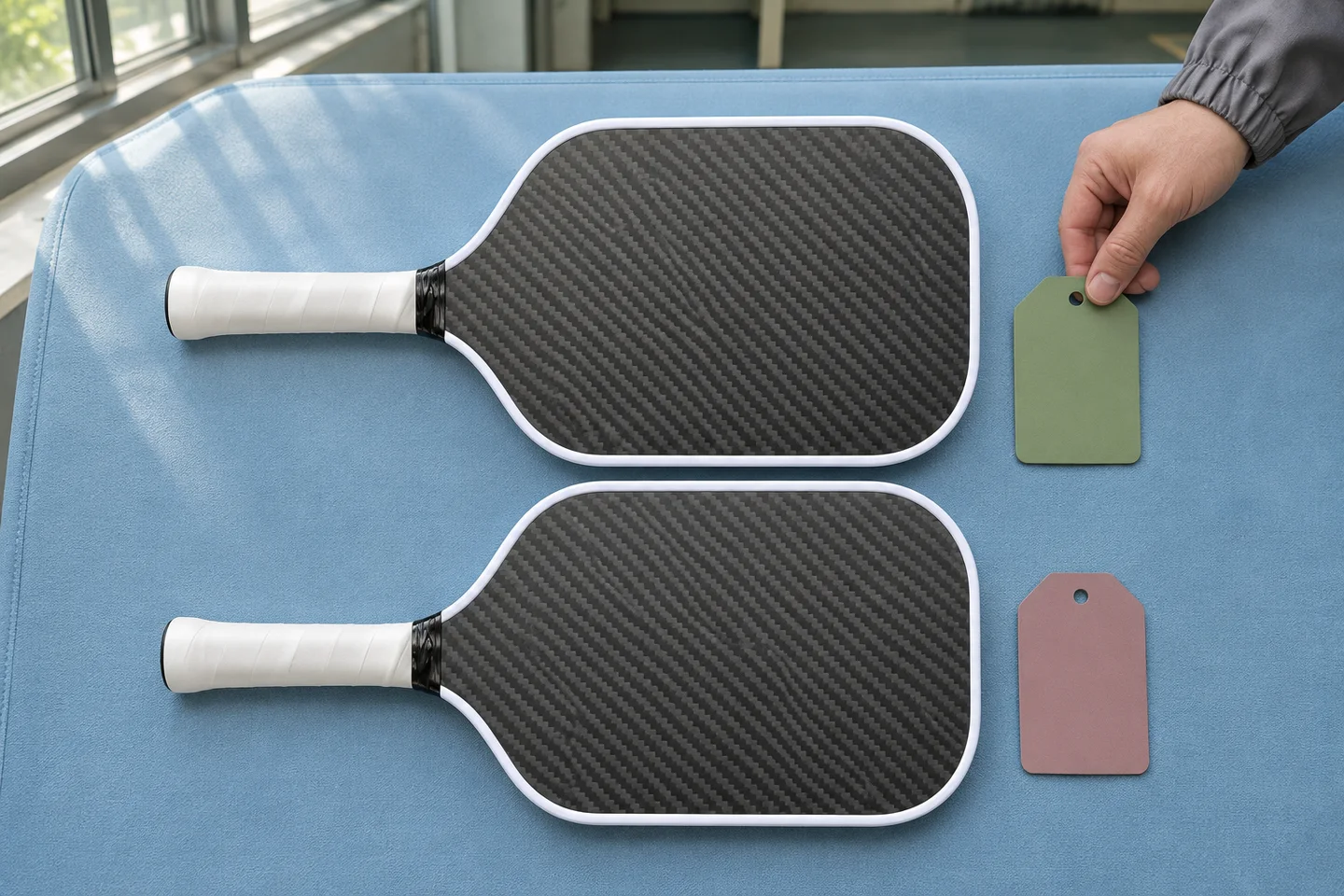
What Actually Changes Between C06 Gen 4 and C08 Gen 5?
The first thing I want to see on a quote is an identifiable construction, not a generation number on its own.
Compare the PP honeycomb base, the TFP shoulder layout and the location of the carbon reinforcement; then check that the offer names the actual core rather than merely the generation.
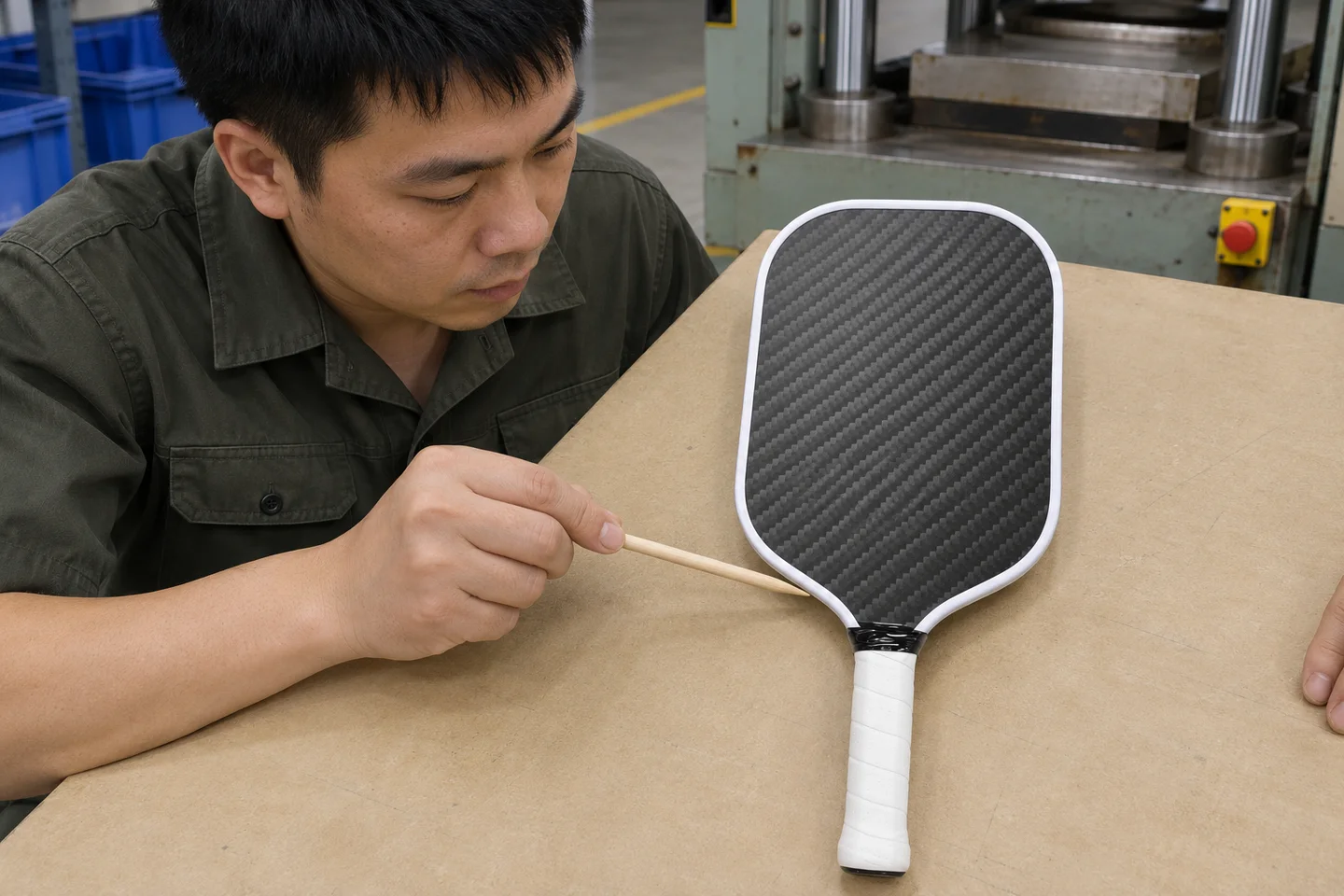
Read one construction from the throat out
Our paddle configuration catalogue identifies C06 as the Gen 4 TFP Shoulder-Damped Honeycomb Core. The PP honeycomb and its TFP shoulder sections matter because that is the build the buyer is agreeing to evaluate. This is not an undamped blank to which C08 simply adds every structural feature at once. If a quote describes C06 that way, I ask for the supplier’s actual layout reference before comparing prices.
C08 is the Gen 5 Carbon-TFP Reinforced Honeycomb Core. The carbon reinforcement at the grip and on the two sloping sides below the throat is the change I ask buyers to pay attention to. I describe it as a difference in what we are building and what the construction is intended to do. I do not turn it into a percentage reduction or a guarantee that any player will feel less vibration with any face, handle, grip or swing.
Put the two part names on the sample request
If an enquiry says “send me one Gen 4 and one Gen 5,” I reply with the exact codes and ask what else should stay the same. A simple line such as “C06 and C08, both shape 006, 14 mm, same 3K face and grip build” is enough to expose many accidental mismatches. When a change cannot be matched, record it beside the sample rather than quietly treating the two paddles as an isolated core comparison.
| Item to confirm | C06 Gen 4 | C08 Gen 5 |
|---|---|---|
| Core family | PP honeycomb with TFP shoulder sections | PP honeycomb with carbon and TFP reinforcement |
| Specific change to ask about | Confirm the exact C06 shoulder layout | Confirm carbon placement at the grip and both slopes below the throat |
| First feel question | Do players value direct response and tolerate the feedback? | Do players prefer a calmer feel in the hand? |
| Keep the comparison fair | Same face, shape, thickness and grip wherever possible | Same target build and comparison conditions |
Treat impact location as part of the question
A clean middle strike and a deflected hit toward a shoulder are different experiences. The work on tennis racquet sweet spots 1 in tennis separates vibration-related behaviour from other impact effects. That study is not a test of these pickleball paddles; it is a practical reminder not to judge a whole build on two balls caught in the centre. In a sample brief I name the types of contact we want buyers to compare, rather than asking which generation “feels better” in the abstract.
Which Feel Should My Customers Choose First?
I separate the response a player wants to keep from the sensation they want to lose. Those are not always opposites.
Use direct feel, depth at comparable effort and unwanted buzz as separate observations; start with C06 or C08 according to the response your customers actually value.
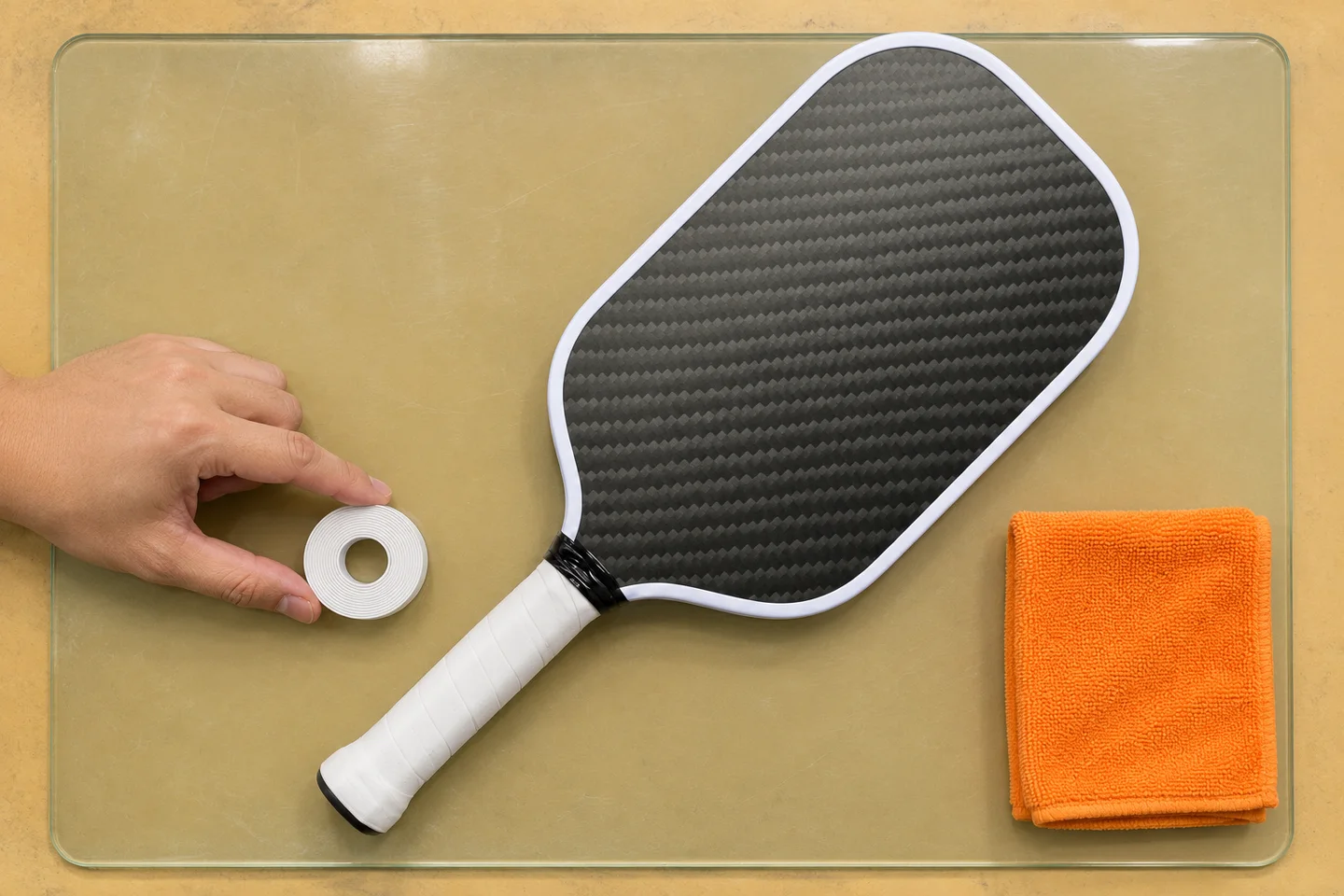
Hear the buyer’s complaint in their own terms
A small club-equipment buyer in the United States was not trying to make every ball come off softer. He wanted the sensation on quick blocks to settle down without losing the feel his experienced players relied on during a drive. In April 2026, I asked him to describe which of those reactions made players put the paddle down instead of just choosing the newer number.
He was discussing 12 paddles in total. The preferred evaluation build was 14 mm, shape 006, a 3K Carbon Fiber face and the C08 Gen 5 Carbon-TFP Reinforced Honeycomb Core, with a matched C06 comparison. I split the notes into quick-block comfort and drive depth. He kept both constructions in the request and chose those two tasks for the first club comparison. He did not settle a production order from a preference stated in conversation.
Do not read power straight from a hand sensation
When someone tells me a paddle feels lively, I ask where the ball landed when they tried the same shot again. If the paddle only feels more forceful but the ball finishes in the same area at the same swing effort, that's useful feedback, not evidence of extra power. If they repeatedly reach the intended depth with less effort, that is worth noting separately. Buyers who like pronounced feedback can still prefer C06 even when the two builds send a ball to comparable depth.
Research on wrist shock and racket vibration 2 in tennis illustrates why stroke conditions and measured response need to be spelled out. I use that as a reason to compare similar strokes in our evaluation, not to borrow a result for C06 or C08. A microphone or a bystander’s impression is a different check: pickleball impact and vibroacoustic testing 3 measured structural response and audible output on the models studied. I do not read the noise at the fence as a measurement of vibration felt in the grip.
| What the player reports | What I record separately |
|---|---|
| “That felt sharp.” | Stroke, contact location, hand sensation and whether it recurred |
| “It had more power.” | Intended landing area, observed depth and comparable effort |
| “It seemed quieter.” | Sound observation; do not substitute it for the player's hand feedback |
| “The off-centre block was easier.” | Contact location, grip familiarisation, ball outcome and repeated preference |
Set the fit before selecting the badge
For a brand selling to customers who actively seek a pronounced response, I would start the discussion with C06. For one whose testers complain specifically about vibration transmitted to the hand, I would start with C08. The custom 3K paddle provides a consistent face option for that conversation. You can choose another face, but then use the same face in both prospective builds if the purpose is to compare cores.
How Do I Make the Two Samples Comparable?
A buyer who changes the face and the grip with the core can learn which complete paddle they like, but not which change made the difference.
Match the build and test conditions, alternate the order, and separate centred strikes from slightly off-centre strikes instead of blending every impression into one number.
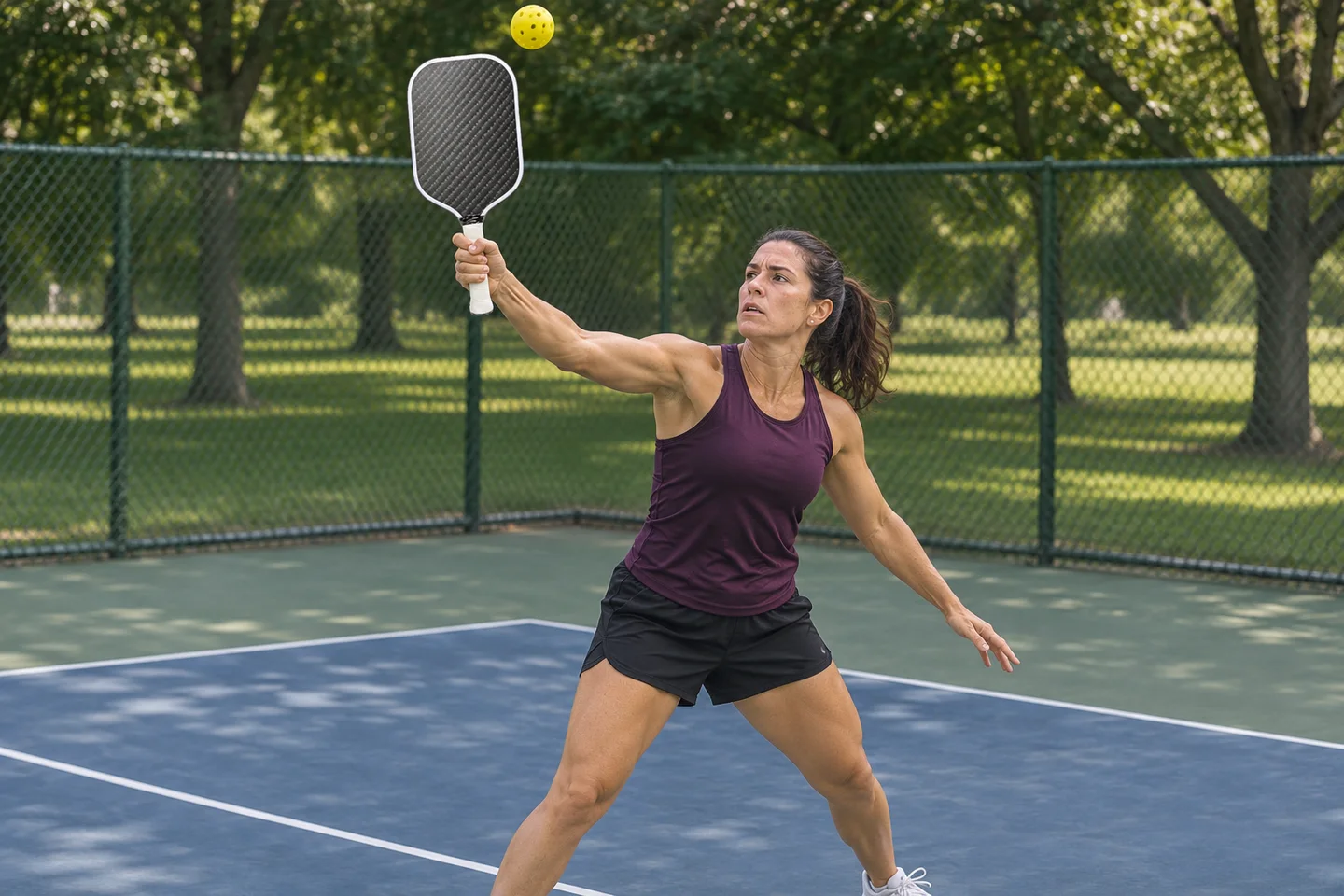
Match the paddle before the players arrive
When one unchecked sample comes in noticeably heavier in hand, I record its mass and balance as received and put it aside from a core-only comparison. That does not mean the sample is bad. It means a different weight distribution has already entered the question. I check the build sheet for shape, face, thickness, grip circumference and edge guard, then compare actual measured values where possible. If the builds cannot be brought close enough for the intended comparison, call it a comparison of complete products.
Start with the same ball type and reasonably stable court conditions. Warm up before scoring anything. If only one test window is available, switch between models within the same session rather than giving one paddle a fresh group and the other a tired group. The relevant idea in blocked comparison design 4 is to keep comparisons together within the conditions that would otherwise make them harder to interpret.
Give each paddle the first turn
If every player starts with C06, the first paddle can become the warm-up model by accident. I label the paddles neutrally on the storage sleeves and alternate who begins with which build. A neutral label does not guarantee blinding, especially if someone can identify the feel. It does keep the generation number out of the first conversation. The NIST guide to randomised designs 5 explains why run order should not be fixed by treatment when it can change the result.
For the court check, use a compact block first so the buyer can describe the immediate response, then a drive or return to compare depth and control. A two-handed backhand return is useful when the intended players actually hit it. Repeat on both paddles and ask where contact occurred. Do not intentionally hit severe mishits just to produce a strong difference. A slightly off-centre contact that happens routinely in play is more relevant to a buying decision.
Keep the bench and court evidence in their places
I use the bench to record size, weight and other checks that can be performed consistently. A player’s comments belong beside those records, not mixed into them as if they came from the same instrument. If the buyer wants instrumented vibration data, name the point of measurement, fixture or holding method, ball and contact location before setting an acceptance limit. A bare paddle clamped to a test fixture is not someone's real hand.
The paddle customisation guide is useful here because it shows which options can change at the same time. The buyer can choose a different grip or surface after selecting the core. I would just reconfirm the complete version before turning that result into a purchase specification.
What Should I Put on the Production Brief After Testing?
The right brief is the one that a colleague can use to recognise the approved paddle after the people at the test have gone home.
Name the chosen core, approved build and reference samples, and agree which checks belong in production before treating one test session as permission to release the order.
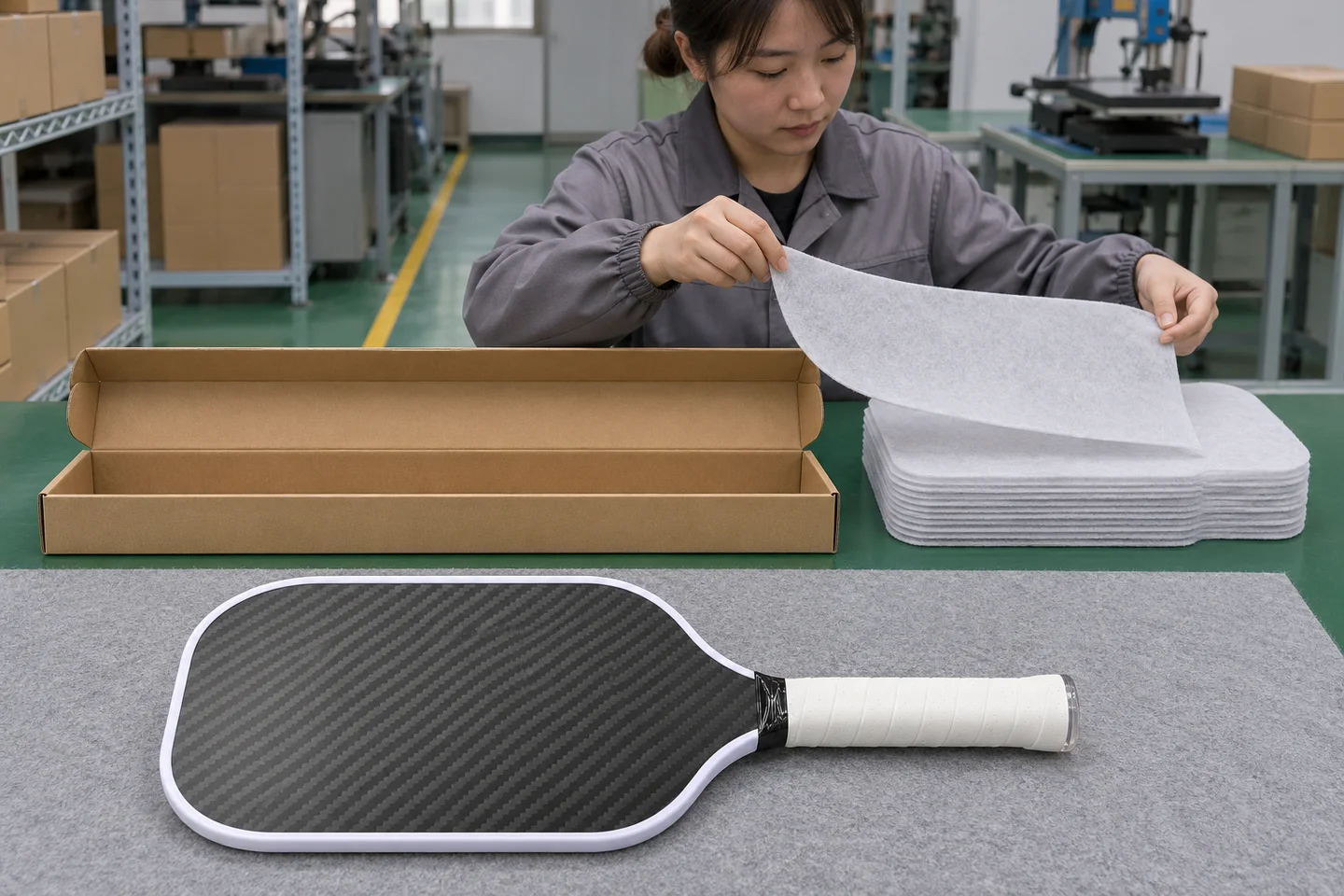
Hold open any real split in preference
When one group prefers the feel of C06 and another prefers C08's response in the hand, I do not average away the split. I ask whether both groups represent the buyers this product is for. If one group is not the intended customer, its view is still informative but should not decide the lead model. If both are essential, there is a reasonable discussion about two offerings. That is a business decision, not a finding that either combination improves performance for everyone.
| Trial outcome | How I would write the next step |
|---|---|
| Most intended players value fuller feedback | Put C06 and the exact approved build on the next sample or production brief |
| Most want less hand vibration with a usable response | Put C08 and the approved build on the brief, rather than only writing “Gen 5” |
| Preference changes with shot type or samples are mismatched | Keep both samples for a controlled recheck before committing the order |
| Both groups are important and preferences stay distinct | Treat them as possible separate offerings and evaluate scope before ordering |
Confirm the version readers and players will actually get
I retain a reference or arrange which reference the buyer will hold, then list the exact test build next to the intended production build. If the customer wants to move to a thicker version, add a heavier edge strip or change grip material at the same time, reopen the question of feel rather than inheriting the earlier comparison. Our sampling-to-production checklist separates approving a sample from handing over the final build.
Have a named person agree whether the first production units need a repeat side-by-side check. If no instrumented vibration method was agreed, the approval can record which sample was preferred and under what conditions. It should not set a numeric promise from a subjective comment. Published psychoacoustic research on pickleball sound 6 is about how people perceive aspects of pickleball noise; it gives the retail team another reason not to substitute an acoustic description for the hand feel that the players reported.
Keep competition approval separate from feel
If customers require an accepted tournament configuration, check the materials in the actual finished model and the applicable event requirements separately. The USA Pickleball equipment manual 7 is for equipment requirements, not a buyer preference test. The approved paddle list 8 lists entries by brand and model; a core code on a sample sheet does not establish that a private-label finished model appears there.
What I want from the purchasing brief is simply a decision that travels: which configuration was tested, what preference it served and which changes require a new look. That is stronger than a one-word generation upgrade on a line item.
Conclusion
I would sample C06 first for customers who like more immediate feedback and don't mind feeling the strike in the handle. I would sample C08 first for customers who want that vibration to be less noticeable. Judge both on the same face, thickness, grip and shape, and record depth and comfort separately. If a preference holds across the strokes your buyers actually play, put the exact code and approved reference on the purchase brief.
Planning a custom 3K carbon fibre paddle comparison?
Send your preferred shape, thickness and grip plus the shot and hand response you want to compare. Ask us to put C06 and C08 beside the same target build so you can decide what to test.