Five paddles sounds like an easy starting order until your shortlist contains three different versions. Can you buy two of one, two of another and just one of the third? I want that allocation settled early, because an order can reach five paddles and still fall short on one style.
Yes. Our minimum order quantity is five paddles in total, and you can mix different styles within that order, with at least two paddles per style. If you choose three different face materials, each needs at least two paddles, so the smallest order is six. List your shape, thickness and color combinations separately so we can confirm the style allocation.
The useful question is not simply whether mixing is allowed. It is which versions you want, how the two-unit minimum applies to each, what you need the small order to accomplish, and how the quotation preserves that mix.
What Counts as a Separate Style in a Mixed Order?
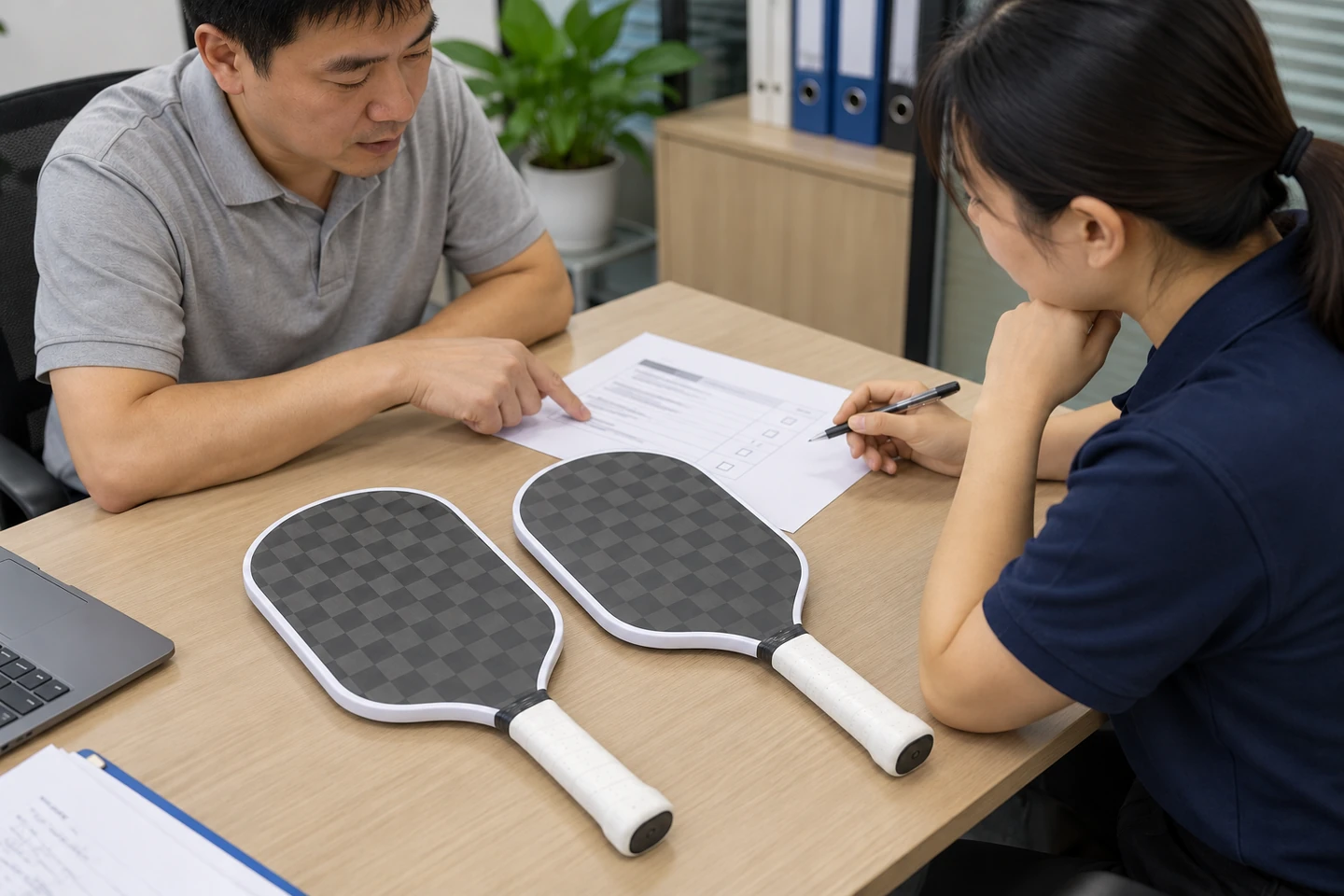
A buyer can call five paddles one collection while the workshop sees several different builds. We need the same meaning of style before adding the quantities.
Describe each distinct combination of shape, thickness, face material, core and appearance on its own line, then confirm which lines count as separate styles for the order. Mixing is allowed; an unnamed variation should not disappear inside the total.
Separate the changed feature from the shared specification
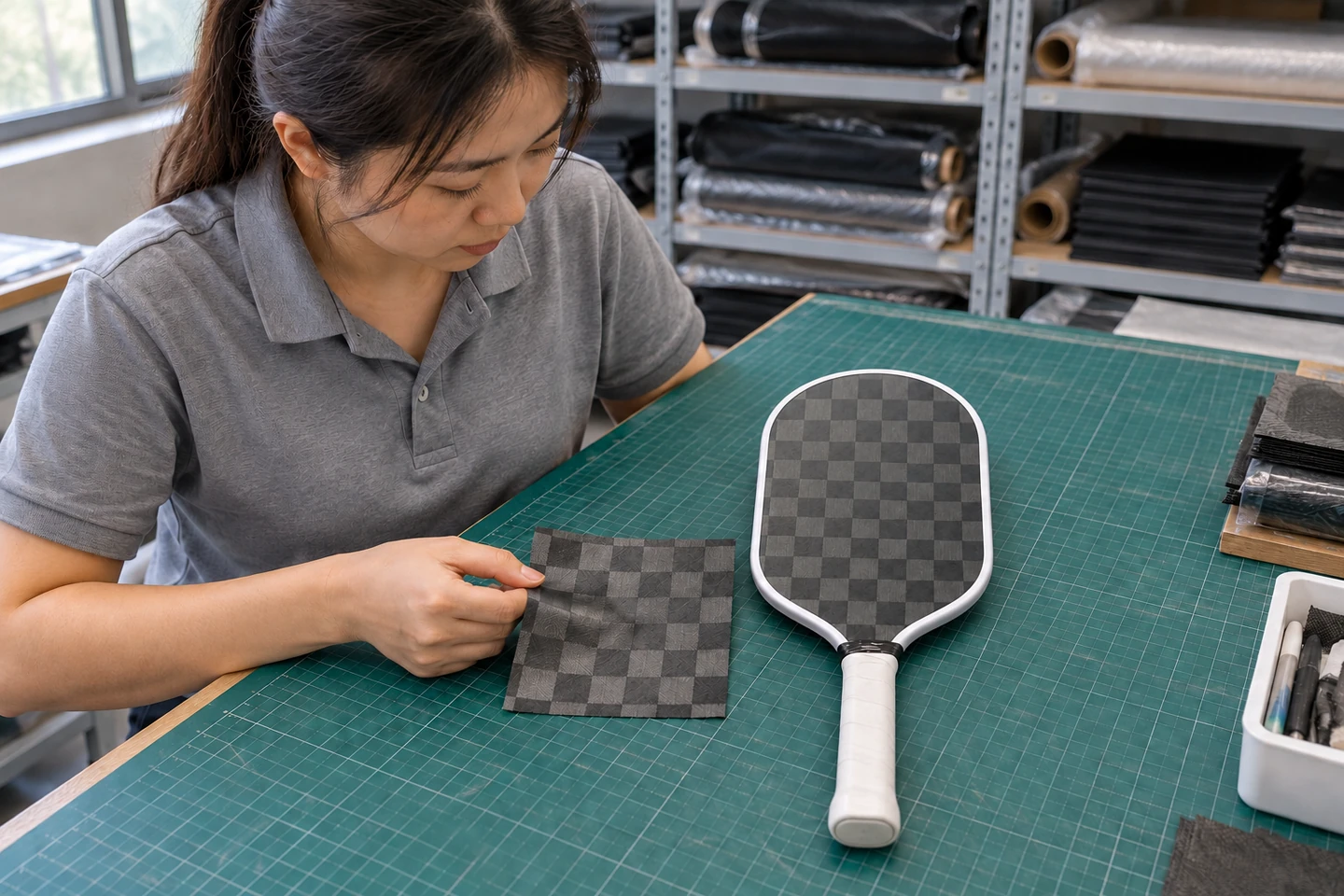
At the configuration bench, a request for the same paddle in another color can hide a second change: the buyer also wants a thinner version. I place the two specifications beside the selected sample and mark thickness separately from color. Those are different choices, so I keep both visible before allocating quantities. The buyer can then retain two defined versions or remove the change that does not matter, rather than discovering an extra style after approving the total.
For an 18K Carbon Fiber paddle, the face name identifies only one part of the build. Shape 005, a C10 Split-Handle MPP–EVA Foam Core and 16 mm thickness describe the configuration used here. The core is internal, so matching face photographs alone will not identify it. Keep the complete build beside the quantity even when several versions share that same core.
Retail systems make a similar distinction: product variants 1 represent combinations of option values such as size and color. For your factory enquiry, use that combination-based thinking without assuming a shop's product listing defines our manufacturing style count.
| Change under discussion | Keep visible on the enquiry | Decision before counting |
|---|---|---|
| Another shape | Shape ID and associated handle requirements | Identify the complete second build |
| Another thickness | Thickness for each line, not a shared heading | Confirm which units use each thickness |
| Another face material | Named face and the core retained or changed | Allow at least two for each material style |
| Another colorway | Face artwork and component colors separately | Confirm the colorway's style allocation |
Treat color as a specific production request
Blue can mean blue graphics, a blue edge, a blue grip, or all three. The available customization options separate these components. Tell us which part changes and which parts remain the same. A full recoloring of the paddle should not be inferred from a request for a different face logo.
For artwork, spot and process colors 2 are different color definitions, not interchangeable descriptions of a screenshot. Ask how your artwork will be reproduced and agree the relevant color reference. This does not assign a particular printing process or a setup fee to your project before we review it.
Keep the artwork and quantity connected
Send a separate front-and-back artwork set for each intended colorway. File names should connect the design to its order line, so a quantity cannot be assigned to the wrong version. If an Illustrator file uses a spot color, define the spot-color swatch 3 deliberately rather than leaving the printer to interpret an unnamed screen color.
You can discuss the mix while some artwork is undecided. Mark that field as open and show which quantity it affects. The goal is a usable enquiry, not a demand that every buyer arrive with a finished design package. Before an order is agreed, however, the versions and their quantities must describe the same intended paddles.
How Do the Five-Paddle Total and Two-Per-Style Minimum Work Together?
The total minimum and the style minimum answer different questions. Both must be satisfied by the same allocation.
Order at least five paddles overall and at least two of every style included. One style needs five; two styles can use a three-plus-two split; three styles need two-plus-two-plus-two, or six paddles.
Count the smallest line before accepting the total
A distributor in Mexico wanted to keep three material choices without paying for more paddles than necessary. During our discussion in May 2026, his first enquiry split five paddles into two, two and one. I pointed to the single-paddle line: reaching five overall did not satisfy the two-per-style minimum.
His main choice was shape 005 with an 18K Carbon Fiber face, a C10 Split-Handle MPP–EVA Foam Core and 16 mm thickness. He also wanted 3K and Kevlar / Aramid face versions on that same shape, core and thickness. I offered two clear enquiry allocations: keep all three materials at two each, or keep two materials at three and two. He retained the three-material shortlist and asked us to quote six paddles, two of each, before deciding whether to order.
That extra paddle had a clear reason. It completed the third style's pair; it was not an unexplained increase to the order minimum. Separating those two ideas makes the discussion easier for a small buyer who is trying to protect a limited starting budget.
Use the rule on the actual mix
For the quantity rule described here, the smallest total is the larger of five or twice the number of styles, provided every individual line contains at least two. The formula is a check, not a substitute for reading the allocation. An order of six split four-plus-one-plus-one still has two lines below the minimum.
| Proposed allocation | Total | Meets both quantity conditions? |
|---|---|---|
| One style: 5 | 5 | Yes, one style and five overall |
| Two styles: 3 + 2 | 5 | Yes, both lines have at least two |
| Two styles: 2 + 2 | 4 | No, the order total is below five |
| Three styles: 2 + 2 + 1 | 5 | No, the third style has only one |
| Three styles: 2 + 2 + 2 | 6 | Yes, each style has two |
| Four styles: 2 + 2 + 2 + 2 | 8 | Yes, each style has two |
Quantities do not need to be equal. After meeting every line minimum, place additional paddles where they have a purpose. A five-plus-two allocation may suit your intended use better than expanding both styles equally. Do not add another version merely to make the numbers look balanced.
Give each line an identity you can keep using
Use short identifiers such as A, B and C during the enquiry, with the full specifications written beside them. If these become retail products, unique SKUs for each product variant 4 help keep stock and sales records distinct. The temporary letters do not need to become your final retail codes.
Recount after any change. Removing a third material from a six-paddle enquiry leaves four if you simply delete its pair. You must then allocate one more paddle to a retained style to reach five overall. Adding a colorway also needs a deliberate allocation rather than a note saying that some can be another color.
Which Variants Deserve Space in a Small Mixed Order?
A small mixed order is most useful when every pair answers a buying question. More variety can also leave you with fewer opportunities to understand each choice.
Choose the variants that affect your next purchasing decision, and assign a practical role to their quantities. Use mixing to compare or serve defined needs, not to collect every available combination at once.
Decide what the first order must resolve
When a buyer wants three face materials, two thicknesses and two colors in the smallest possible order, I sketch the combinations before discussing a total. Buying every combination would create twelve styles and require at least twenty-four paddles under the two-per-style rule. I ask which decision comes first, because narrowing the first question can reduce the order without weakening the minimum. The buyer can keep a material shortlist now and leave the full color range for a later enquiry.
The paddle configuration library helps you identify available directions. It is not a shopping instruction to order the entire matrix. If your immediate question is which shape suits a retail project, keep the other choices as consistent as practical. If your question is which complete product to introduce, different builds can be considered, but the result belongs to the whole paddle rather than one isolated material.
A useful comparison starts with the objective and factors being investigated 5. For this purchase, translate that into one sentence: these pairs will help us choose a material direction, a complete build, or a color assortment. That sentence is more useful than adding options because the catalogue makes them available.
Give each pair a practical use
Two paddles of one style can support different uses: one can be handled on court while the other remains available for appearance discussion or product photography. Alternatively, two intended users can each work with the same specified version. These are allocation choices, not a claim that two paddles establish a statistical performance result.
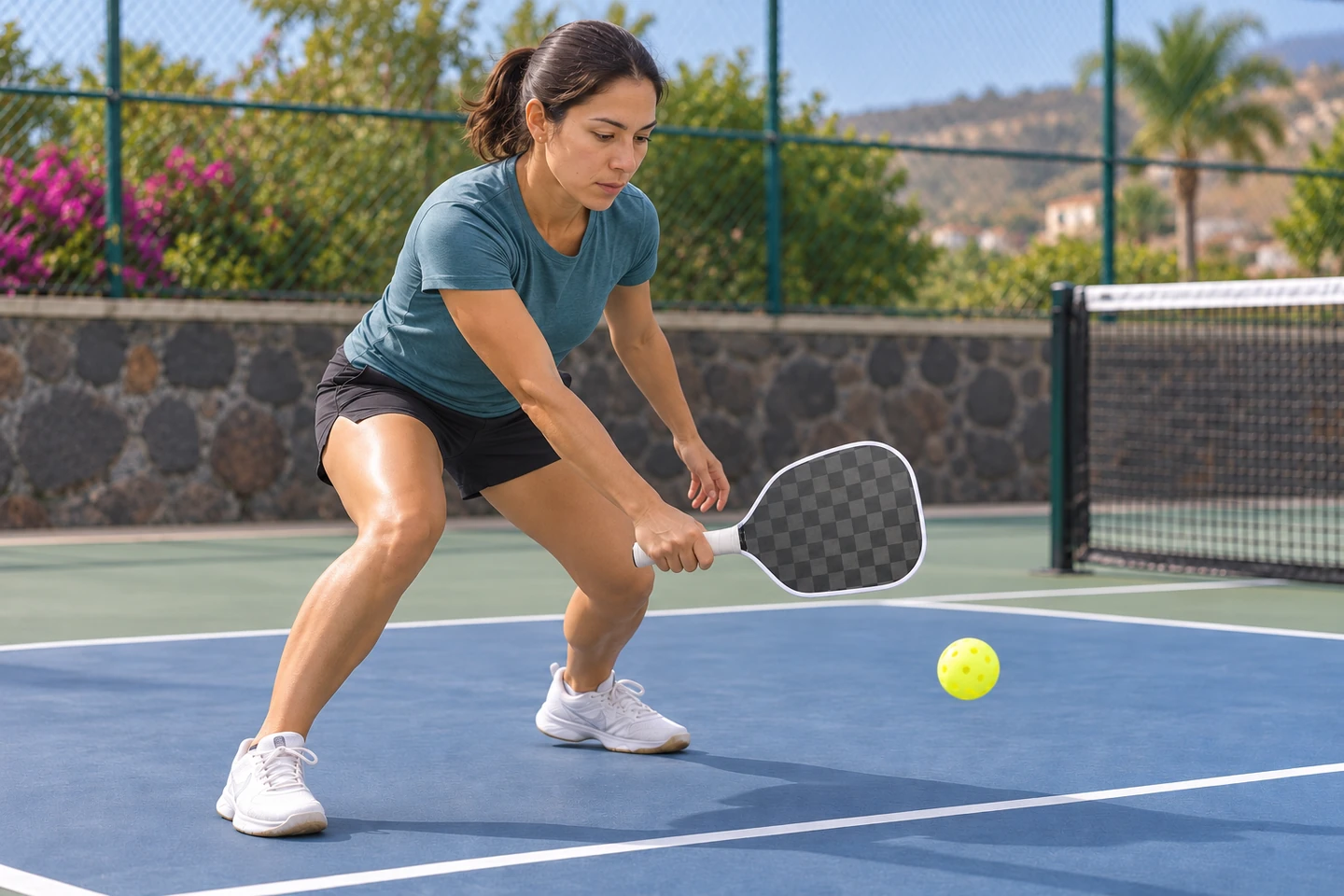
For the Mexican distributor's material shortlist, the pair structure kept every material represented equally in the enquiry. A player could use the selected 18K build for controlled backhand dinks while the second remained available for visual review. That activity helps decide whether the proposed quantity serves the evaluation; it does not create a promised spin, power or durability advantage for the material.
If the main purpose is retail assortment rather than evaluation, ask who will use or buy each variant. Two colors with no identified audience may tie up the same budget that could provide another unit of a useful build. Keep speculative options outside the first order until there is a reason to include them.
Allocate extra units without multiplying styles
The fifth paddle in a two-style order does not need to become a third style. Put it into one of the existing lines. It could support another intended player, an additional demonstration or a spare for the same review. Choose the use before choosing the quantity.
Likewise, a six-paddle order does not force three styles. You can order six of one or four of one and two of another. The minimum defines what is allowed; your buying purpose determines what is sensible. Keep later expansion open without promising a bulk order that you have not decided to place.
How Should the Quotation and Shipment Preserve the Agreed Mix?
A correct total on a quotation can still hide an incorrect assortment. The last check is whether the factory and buyer can both reconstruct the same order from its lines.
Confirm quantity and specification per style, show any separate development or branding charges clearly, and identify the agreed shipment contents by style. One order does not imply one unit price or one undifferentiated packing description.
Ask for a line-by-line commercial offer
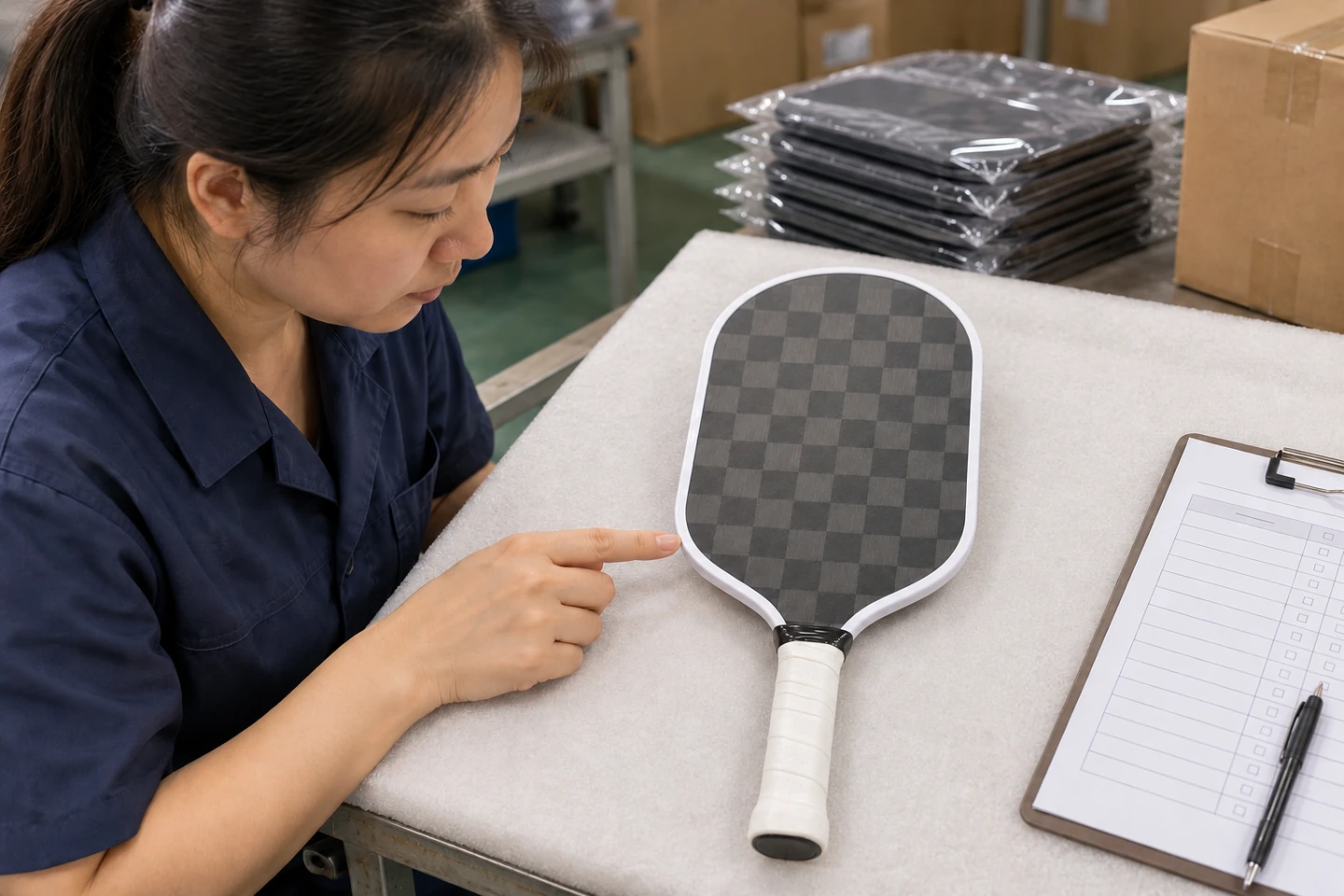
When a buyer requests a single price for a mixed order, I keep the style quantities visible and place any project-specific charges beside the work they cover. A material change or dedicated component tool should not vanish into a misleading average. I ask the buyer to compare the complete offer, so a lower headline unit figure does not conceal a different scope or an omitted cost.
No fixed price follows from the quantity examples in this article. Ask for the unit price of each confirmed build and the treatment of artwork, sampling, packaging and any tooling that applies. Custom logo rings and butt caps require dedicated tooling quoted for the project. Do not assume that ordering them with another style makes that work free.
| Confirmation item | What the quotation should identify | What the buyer checks |
|---|---|---|
| Style lines | Complete configuration and quantity per line | Every style has at least two; total is at least five |
| Pricing scope | Unit prices and separately applicable work | The same scope is being compared |
| Packing plan | Contents and identifiers for each style | The assortment remains distinguishable |
| Delivery basis | Destination, service and included charges | Responsibilities and total payable are understood |
Confirm shipping on the packed order
A mixed order may share a shipment, but freight still depends on the packed goods and chosen service. DHL's explanation of actual and volumetric weight 6 shows why a carton can be priced by the space it occupies as well as its measured weight. Do not assume one additional paddle has either zero freight cost or a fixed surcharge.
Ask what the delivery quote includes and who handles any excluded charges. Where a trade term is used, the agreed Incoterms rule 7 helps identify the delivery tasks, costs and risks assigned to buyer and seller. Confirm the named place and relevant scope instead of relying on the phrase shipping included. Timing is confirmed for the order and destination, not inferred from the small quantity.
Check the assortment before distributing the paddles
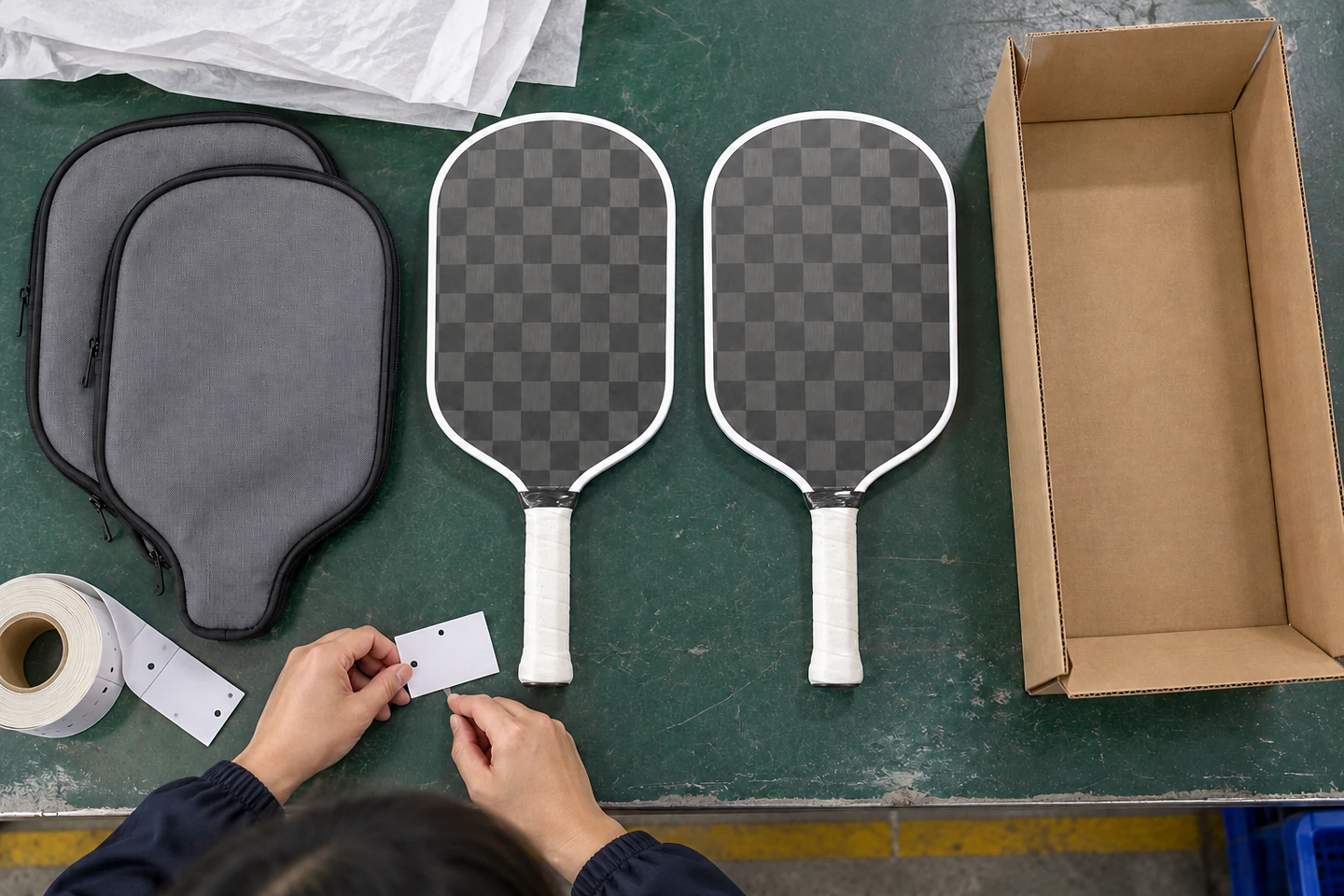
At receipt, compare style counts first, then the associated specifications and appearance. Five paddles in the box do not establish that the intended three-plus-two split arrived. Keep sleeves or tags connected to their paddles while checking, and avoid handing the whole set to different people before identifying which version each received.
A short receiving check sheet 8 can collect the count and visible observations for each line. Record a missing unit separately from a new color preference; they require different responses. Send the relevant line, photographs and affected quantity when something needs clarification.
Include the allocation in your custom paddle brief from the start. That lets the quotation, packing discussion and receiving check follow the same purchasing decision without making the paperwork more complicated than the order.
Conclusion
You can mix styles in one SHUEN order with a minimum of five paddles overall and at least two per style. Two styles can fit into five as three plus two; three different material styles need at least six as two plus two plus two. Define the combinations, give every pair a purpose, and keep the same allocation visible from enquiry through receipt.
Plan Your Mixed Paddle Order
Start with the custom 18K Carbon Fiber paddle and send the shape, thickness, face, core and colorway for each version you want. Add the quantity per style, artwork status, intended use and delivery destination so we can discuss the complete mix.