
The sample looks right. Then the first shipment arrives, and a few paddles feel noticeably different. The question I put to the buyer is not whether they trust their hands. It is whether we can trace those particular paddles back to the material that went into the press. If we cannot, even a convincing supplier explanation leaves the buyer guessing about what is in the rest of the shipment.
I ask for test reports tied to the approved specification, then draw paddles from the actual production lot before shipment and compare their results with the approved sample or a verified previous batch. A marked difference calls for investigation, not an accusation; similar results are not proof of the original fibre either. I check material lot numbers, purchase documents and production records before deciding whether to release the goods.
That distinction matters particularly on a repeat order. A brand can send the artwork back unchanged, accept a familiar price and still receive a lot made under a different revision. On mid- to upper-range OEM/ODM projects, we discuss T700, 3K and 18K carbon fibre, Kevlar or aramid, and options such as titanium wire, emery grit and silicon carbide grit. I keep those finish and appearance decisions separate from the fibre specified for the laminate. The scope here is 14 mm or 16 mm one-piece hot-pressed paddles, not fibreglass or cold-pressed products.
What Should I Lock Before I Approve the Sample?
When the quote uses a short material name, I want to know what the factory will actually order under that name.
Name the fibre and its construction separately in the approved specification, tie that revision to a physical sample and require written approval before a substitution.
Take the ambiguity out of the quote
A quotation that says only “3K carbon” leaves me wondering what the supplier thinks was approved. I ask for the fibre manufacturer and designation where those are part of the purchase, the fabric or prepreg reference, the visible weave and the planned construction. If the reply only gives the weave name, the order is not yet ready to release to production. That is a useful distinction even when two samples look identical on a desk.
The Torayca T700S data sheet 1 lists fibre type, filament count and sizing as separate parts of the product designation. The Kevlar yarn comparison 2 also compares two Kevlar yarns with different properties. I use the same distinction in a paddle purchase: a tow count or a visible weave is not a fibre grade, and the word “aramid” does not by itself specify a branded fibre or a particular construction. Whether those distinctions go on the retail box is a separate decision from whether they go on the purchase order.
Make one sample the physical reference
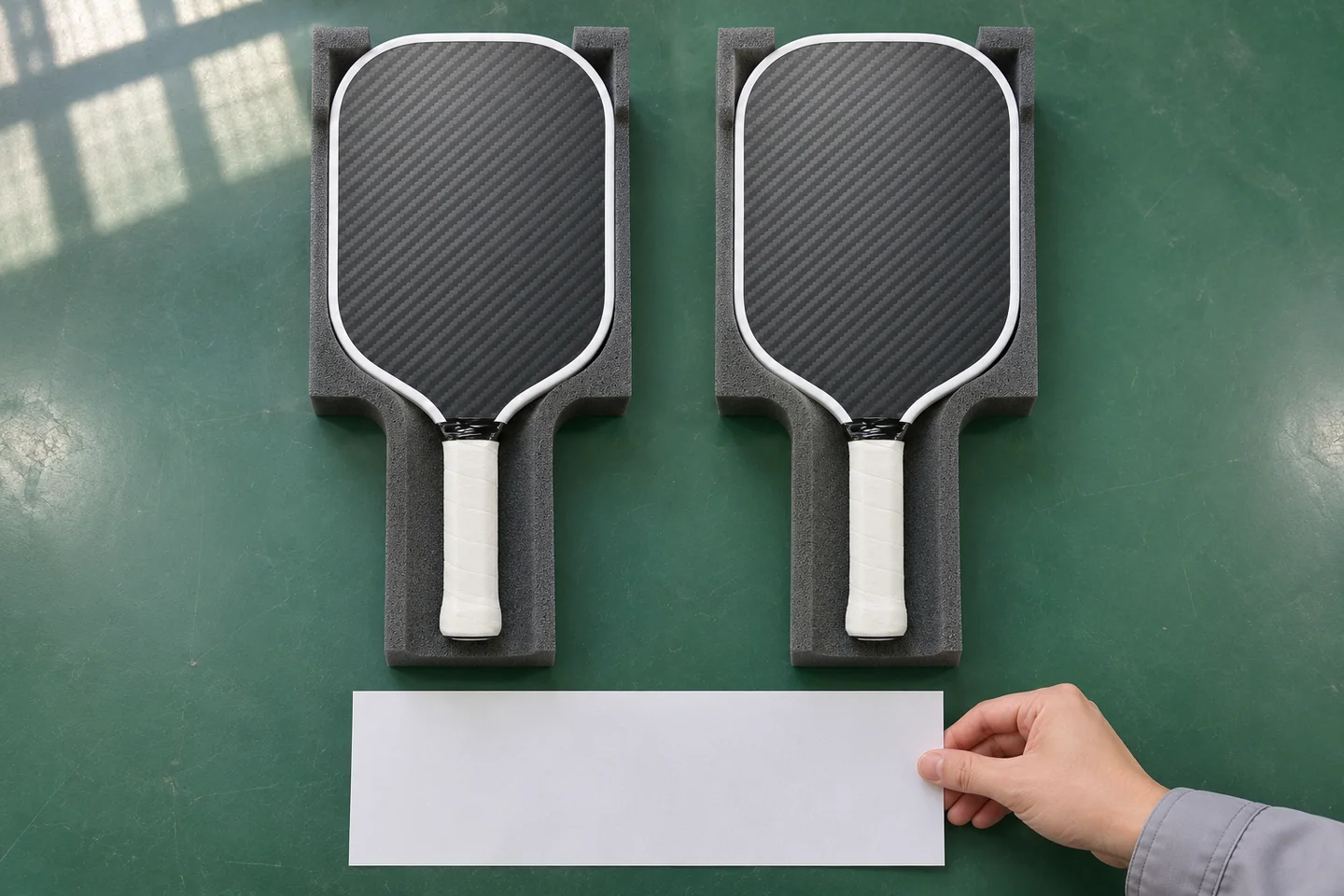
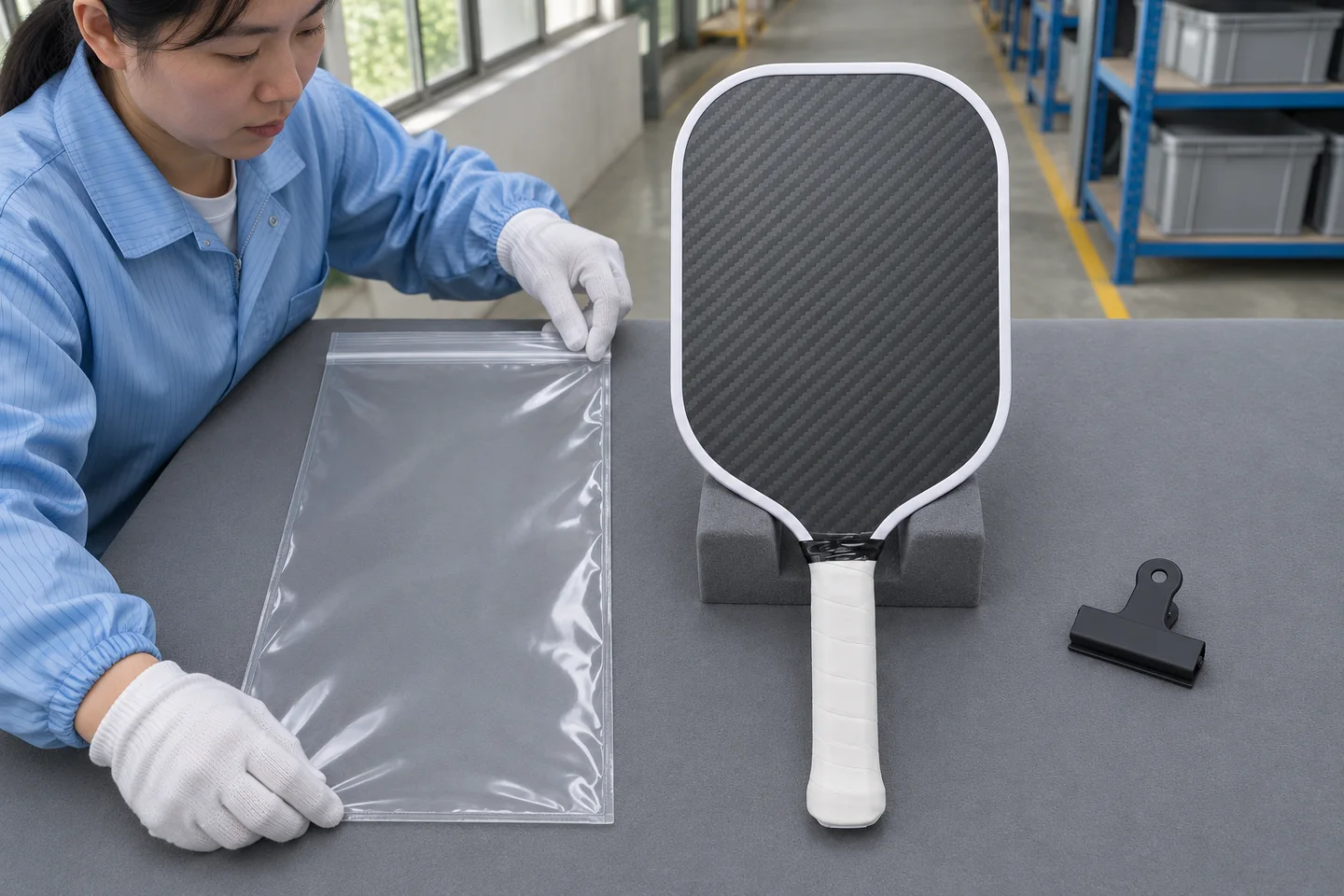
Put the accepted sample, its build sheet and the report agreed for comparison under the same revision. Keep a representative reference in a condition you can reproduce for checks. If you want the factory to retain a counterpart, decide how the two will be identified and who can open them. A well-used demo paddle may tell you what the club enjoyed, but it is not a fair reference for every measurement on a newly made product.
The custom Kevlar paddle page is an entry point for discussing the face, not a replacement for the selected material code, the lay-up and the approved sample. For this class of paddle, the two sides also need to name thickness, core, shape and finish. Those variables can affect later comparisons, including how the paddle feels even when its face fibre is unchanged.
| What to lock | What I ask the supplier to write |
|---|---|
| Face construction | Material designation, fabric or prepreg reference, approved lay-up and finish |
| Paddle build | Shape, core, overall thickness, grip and the agreed revision |
| Physical benchmark | Which sample is retained, who holds it and which baseline report describes it |
| Substitution | Who approves changes in writing and when new samples or reports are needed |
Decide what happens if the approved material runs short
I want to know in advance what the supplier will do if the mill shipment is delayed or the remaining material will not cover the full order. The workable answer is a stop and a request for approval, with the proposed alternative named plainly. That gives the buyer a chance to delay the run, approve a revised build after checking it, or reduce the quantity without taking an undisclosed material change.
Agree who receives the notice and make sure the instruction reaches production, not just the sales inbox. A revised label or a different batch of the same approved input is not automatically a downgrade. It still needs to be entered into the agreed records so later discrepancies can be traced instead of debated from memory.
Which Records Connect the Material Roll to My Paddles?
The hard part begins when a roll is cut into stacks that no longer carry the original label.
Ask for a documented connection from the received material lot through cutting and lay-up to the finished production range you intend to release.
Ask which roll went to the press
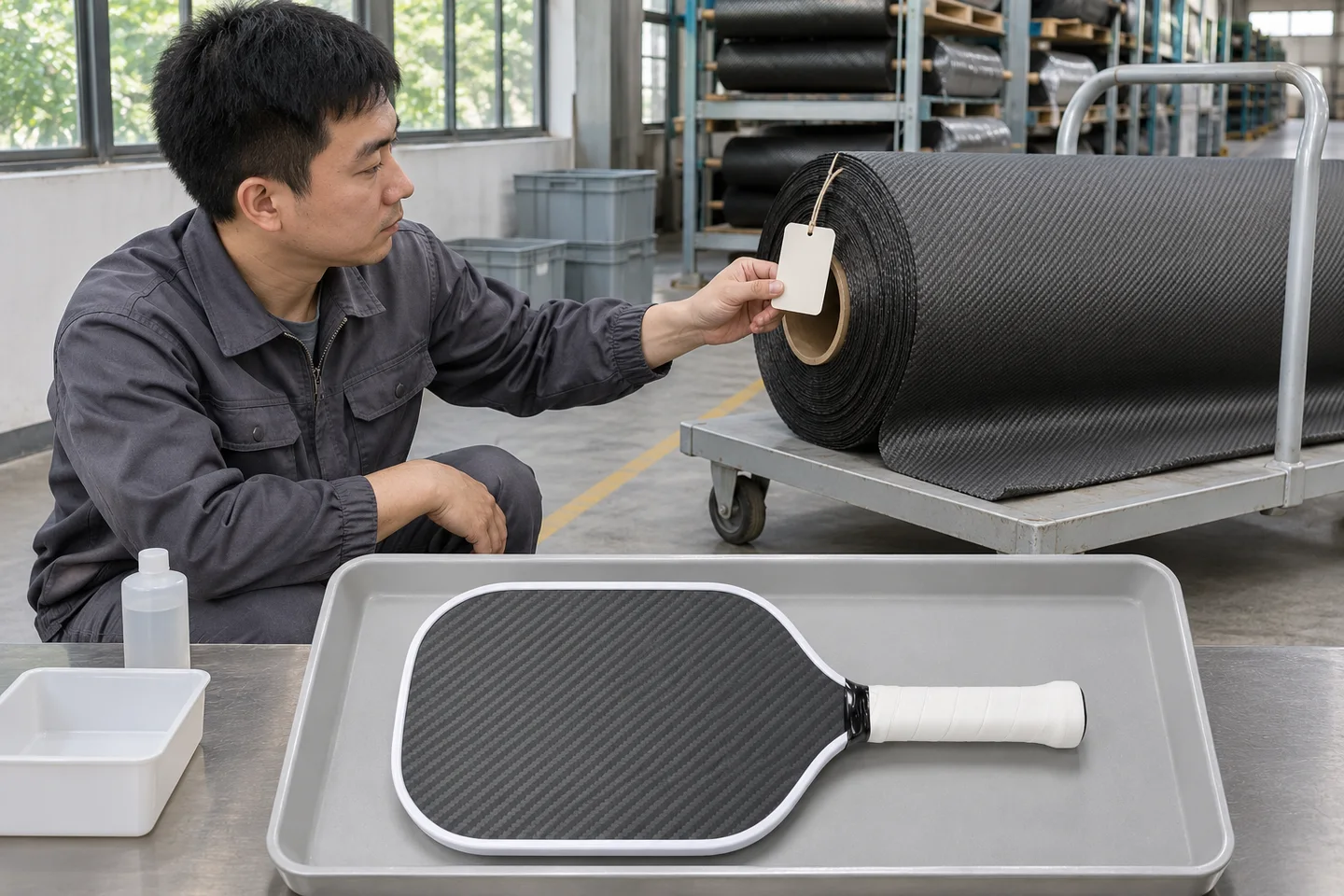
A buyer for a small brand in New Zealand noticed that a supplier could send a clean report without saying which roll fed the press. Her question was whether the report would still mean anything if a second roll went into the run halfway through. In May 2026, I asked her to separate the material evidence from the finished-paddle comparison so each could answer its own question.
She was considering 180 paddles. The discussion had reached a 16 mm shape 003 with a Kevlar / Aramid face and the C04 TFP-Ring MPP–EVA Composite Core. Her next step was to add a link between each input roll and the affected range of finished paddles to the proposed inspection brief. She also asked to keep the first and second ranges separate for any follow-up checks. The discussion was about how she would inspect an order, not acceptance of a shipment.
Follow the links between documents, not the logos
The starting evidence is a roll or material lot identifier on a receiving record, supported by a delivery note, purchase record or the material supplier's lot-specific paperwork. A manufacturer's technical sheet explains what a product designation means; it does not place that material inside your paddles. I ask to see enough of a purchase document to reconcile the parties, date, item and quantity. Sensitive pricing can be redacted without hiding the material code or preventing that reconciliation.
I then ask which material was issued to the cutting or lay-up stage and how it maps to runs, carton ranges or unit identifiers. The manufacturing process overview gives a buyer a useful way to locate those checkpoints from receiving to final checks. A cut stack should not become untraceable simply because the original roll label cannot travel into the press with it.
| Document or record | What it can establish | What it cannot establish on its own |
|---|---|---|
| Material data sheet | Meaning and typical characteristics of a designation | Which lot was delivered or used |
| Lot-specific supplier or purchasing record | Link between an identified material and a receipt | Which paddles use that receipt |
| Issue, lay-up and packing records | Which finished range the supplier assigns to a material lot | Whether a conflicting or incomplete mark is correct |
Treat a broken chain as unresolved
When a roll label and an issue entry disagree, I put them side by side and ask for the receiving, cutting and job records around the point where the mismatch appears. A clerical error can look like substitution until the rest of the sequence is checked. But if the link cannot be rebuilt, I do not treat a familiar sales invoice as enough to clear those cartons. The next step is to identify and segregate the affected range before a wider release decision.
For the retail team in New Zealand, the Commerce Commission's guidance on making accurate claims 3 is another reason to settle the evidence question early. The buyer needs reasonable grounds for a material claim when they make it. Wording that implies a specific manufacturer or grade should not go live simply because it appeared on a draft purchase order.
How Should I Compare the Bulk Lot With My Approved Sample?
I do not use a hand-picked sales sample to decide whether packed goods are ready to go.
Draw units from the actual finished lot, use the same written method against the approved sample or a verified prior batch, and record differences as signals to investigate.

Decide who draws the samples
When the supplier offers a paddle from the showroom, I decline it as a shipment sample. I ask the buyer or their inspector to draw from the defined lot and record which cartons and production ranges were represented. If the supplier cannot isolate an input-lot change, widening the selection across ranges is a better next step than asking for another hand-picked paddle from the same carton. The NIST handbook 4 describes lot acceptance sampling as drawing randomly from a lot to help make the disposition decision.
Agree sample count, selection rules and any locations that must be covered before inspection. Where the parties use ISO 2859-1:2026 5, be clear which attributes are pass/fail checks under the chosen plan. An attribute inspection alone does not authenticate a fibre grade. Do not quote a generic sampling level as though it meant the same thing for a missing label, a failed thickness requirement and unverified material identity.
Make the comparison repeatable
Compare the same model, nominal thickness and build whenever possible. Set out which instrument and fixture you will use, what you will record and how samples are conditioned. Mass and thickness often make useful starting checks. If the buyer also requests stiffness, deflection or rebound comparison, agree the setup, the locations that matter and the action to take on a noticeable shift. Put the reference through the same method so old reports are not being compared to new data from a different fixture.
A short court session can put a player’s concern into words. A controlled crosscourt forehand volley may reveal a difference worth repeating on the bench, but the ball, player and conditions are too variable to decide fibre identity. The sampling-to-production checklist is useful for keeping the sample approval and later production check distinct.
Reserve specialist testing for a defined question
If a comparison result changes enough to cross the agreed investigation trigger, I first rule out the sample mix-up, setup change or build difference that could explain it. A laminate is more than the fibre visible at the surface. Core, resin, ply orientation and process variation can all influence the finished paddle. Similar results can also hide changes. Neither direction gives the buyer a clean answer by itself.
If identity matters and that question stays open, take the retained reference, suspect unit or authorised coupon to a laboratory with the relevant scope and ask what its method can distinguish. ISO/IEC 17025 6 addresses competence, impartiality and consistent operation for testing and calibration laboratories. A lab result on a particular specimen should be read within that method’s limits, not treated as a certificate for every paddle.
When Do I Release, Hold or Escalate a Suspect Lot?
The most expensive mistake can be shipping before anyone knows which cartons are affected.
Release only the identifiable range that meets the agreed requirements; isolate any suspect range and decide what will resolve the gap before it is shipped.
Separate the affected range first
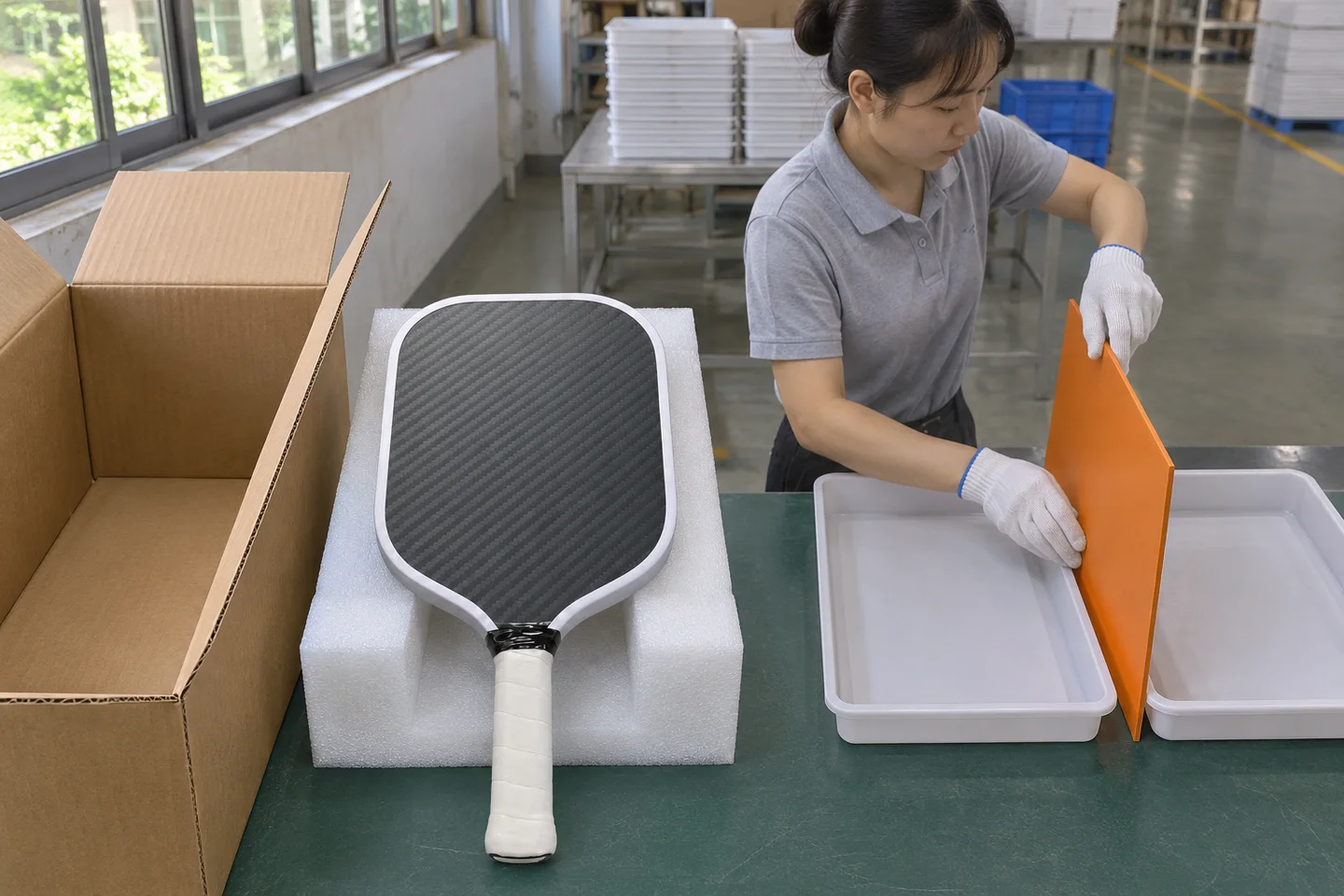
If a carton sample shows a repeatable shift and its build record points to a single material changeover, I mark the associated range for a hold. I want to see how packing and production records justify separating that range before telling the buyer that the rest can go. Where the records do not establish a boundary, it is safer to hold the wider lot until they do.
Name the reason plainly in the disposition note. “Different from the reference on the agreed check” is different from “material substitution confirmed.” Preserve the units and their lot labels, the comparison settings and the supplier’s response. A careful record gives both sides a way to resolve a real problem without treating every disagreement as deliberate conduct.
| What the evidence shows | What I would do next |
|---|---|
| Results are in range and the underlying records reconcile | Document the covered range and sign off against the agreed release requirements |
| Results shifted but the documents reconcile | Repeat under the agreed method, check build variables and hold the affected range while the shift is open |
| Results look similar but the material trail is incomplete | Hold pending reconciliation; the numbers do not fill a documentary gap |
| A different material is confirmed | Apply the agreed remedy or use the written change process; do not release as the original specification |
Choose the next test before opening more cartons
If the point at issue is a measurement with a clear test method, additional draws can be useful once the selection and limits are set. The NIST sampling-plan guide 7 sets out why an acceptance plan must be designed for its objective. Do not keep sampling until a convenient pass appears. If the gap is a missing material record, use the extra time to check the chain. Drawing more paddles cannot recreate a missing purchase or issue document.
Should you commission an independent method, the ILAC signatory search 8 offers a route to the accreditation body. Verify the particular laboratory scope and method separately before sending samples. Agree custody, packaging and whether testing may consume a unit. Keep a matching retained sample if a question or dispute is likely, and name who gets the report and who decides how the affected units are resolved.
Put the release instruction where it can be used
Before confirming the bulk run, write the required records, comparison method, hold trigger and acceptance owner into the custom paddle purchase brief. Where artwork or launch timing is already committed, spell out whether the identifiable unaffected range can ship separately. The release instruction should not depend on someone finding an old message after cartons are taped.
For a repeat order, retain the final decision with the report and traceability documents. A previous production lot can be a useful comparison only if you can explain why it was accepted and which specification it represents. Keep that evidence with the specification revision rather than treating a good sales run as proof that every requirement was met.
Conclusion
I do not end a material investigation with a paddle that feels right or a report with a recognisable name. I want to know which material was approved, which material the records show entering the job, and how units taken from the finished lot compare with the benchmark. If one link breaks, I hold the affected range and investigate that link. Test similarity is not proof of identity, and a meaningful difference is a reason to ask a better question.
Planning a repeat run of custom Kevlar pickleball paddles?
Send your current specification revision, reference sample or baseline report, proposed quantity and any material-lot evidence you need at release. We can use those details to discuss which records and comparison steps belong in the order.