A black carbon face can look convincing while leaving the most expensive question unanswered: whose fiber are you buying? I want the purchasing evidence before I ask a buyer to trust the texture, the price or the way a sample plays.
We have purchasing documentation proving that we use imported Toray carbon fiber. A supplier that can provide the corresponding, valid proof can substantiate that it uses imported Toray. Start with that evidence, then confirm that it covers the material intended for your order; a black face or a good playing feel cannot identify the fiber's manufacturer.
The buying decision has four parts: request the right proof, connect it to the proposed build, evaluate the sample for its proper purpose, and decide what to do if an answer is missing. That keeps the material question clear without turning every paddle enquiry into a laboratory project.
What Proof Should I Ask a Toray T700 Supplier to Provide?
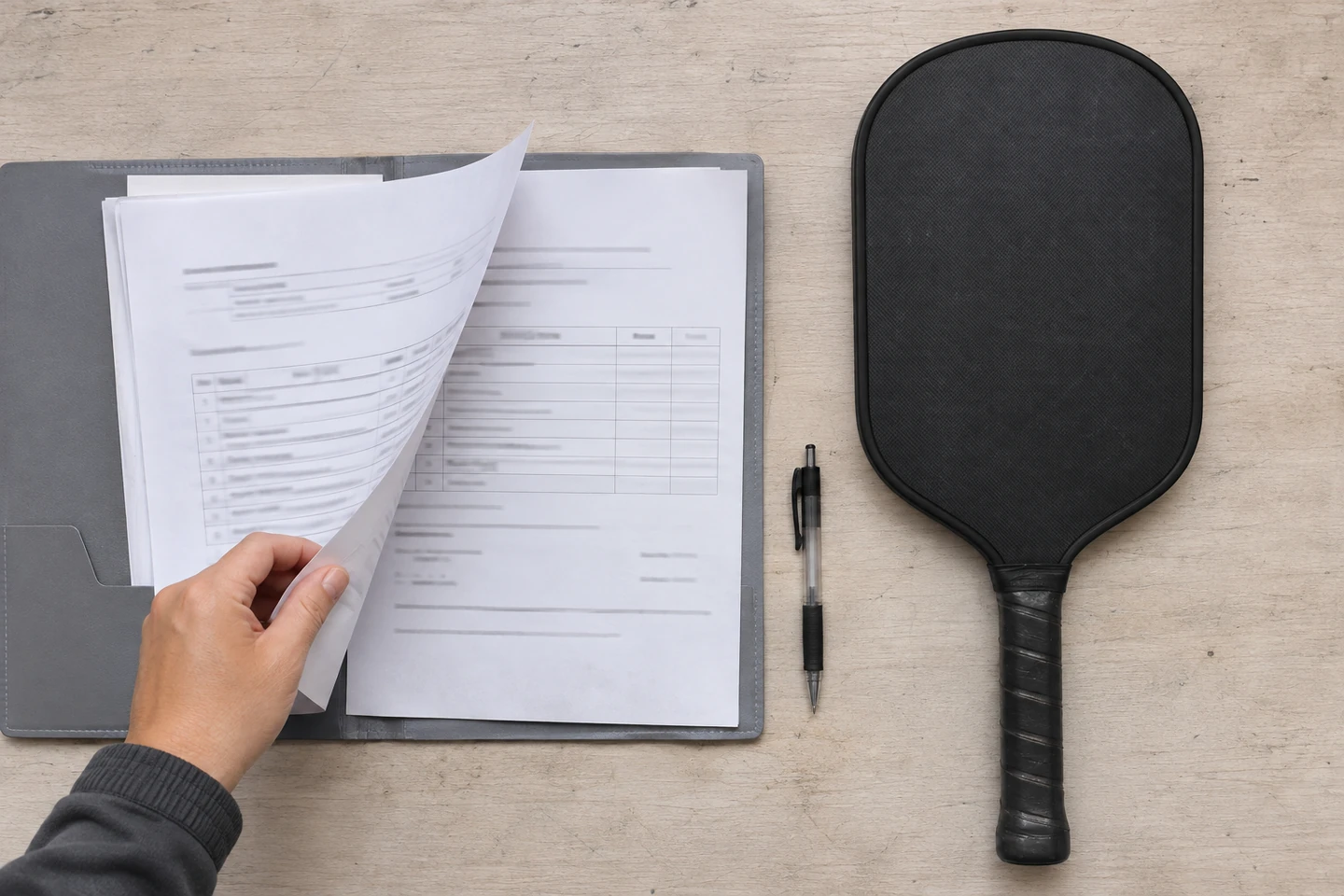
A product photograph tells you what the seller wants you to see. Your first request should reveal what material the supplier actually purchased, so you can decide whether its Toray claim has a sound basis.
Ask for the relevant purchasing and import evidence identifying the Toray material. Read the material description, parties and document status together; a product brochure or generic fiber data sheet cannot replace proof of procurement.

Put the material question ahead of the photograph
Both black paddle faces looked convincing to a Malaysian distributor. In October 2025, he asked whether the finer-looking surface was the one made with Toray fiber. I explained that the photograph could help us discuss finish, but the purchasing documents were the evidence to request for the manufacturer claim.
His sample enquiry covered 10 paddles in shape 005 with Imported Toray T700 Carbon Fiber faces and the C05 Stabilizing-Rim Dual-Density Foam Core, at 16 mm thickness. He kept that build for discussion and asked for the corresponding material documents before deciding which samples to buy. The first decision became whether the supplier could support the stated material, rather than which photograph looked more expensive.
Our custom T700 paddle provides a specific starting product for that enquiry. Ask for the face requirement by name, with the core and shape alongside it. “Carbon paddle” leaves too much room for two suppliers to quote different things under the same short description.
Read each document for the question it answers
A commercial invoice 1 serves a purchasing and customs-clearance purpose. Read the stated goods and parties, then ask how they relate to the material offered for your paddle. An invoice for an unrelated carbon product does not answer your enquiry merely because it contains the word carbon.
A certificate of origin 2 concerns the origin of the goods it describes. Check that description alongside the purchase evidence. Keep the fiber's manufacturer, its grade and its country of manufacture as separate questions instead of expecting one stamp to settle all three.
| Material offered as evidence | What it helps you establish | What to check next |
|---|---|---|
| Relevant purchase or commercial invoice | Procurement of the described goods | Material identity and the supplier's connection to the purchase |
| Applicable import or origin document | Import or origin information for described goods | Whether those goods match the source material under discussion |
| Manufacturer's data sheet | Meaning and properties of a stated grade | The actual purchase evidence and material identity |
| Paddle photograph or sample | Appearance and product suitability | The documents supporting the fiber-manufacturer claim |
Keep the brand and country claims accurate
Toray's T700S data sheet 3 lists manufacturing locations in Japan, the United States, Korea and France. Imported Toray therefore should not automatically become “Japanese-made fiber” in your listing. Use the origin shown by the relevant evidence if you want to make a country claim.
Ask for the precise grade stated in the source documents rather than filling in a suffix yourself. The data sheet helps interpret that description; it does not identify which material arrived at a particular factory. This small distinction prevents a broad catalog label from turning into a more specific promise that the supplier never supported.
How Do I Connect the Documents to My Paddle Order?
A useful document can still concern material other than the stock intended for your job. Once the purchase is clear, follow the material into the proposed production rather than collecting more unrelated paperwork.
Match the material identity across the relevant documents, then ask which received material will be used for your build. Confirm that connection before approving the Toray description for the order.
Follow the material description, not just the heading
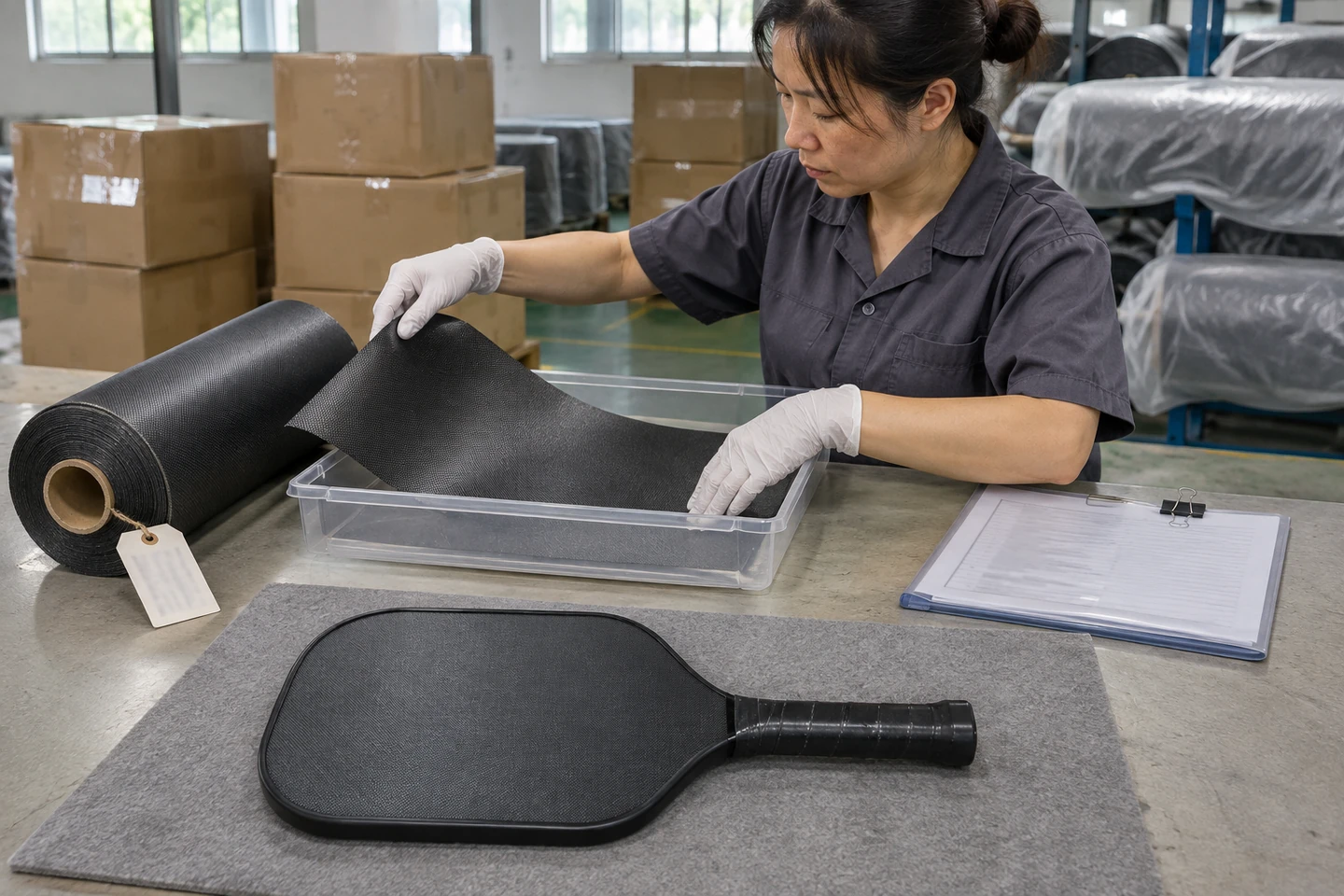
At the material-preparation stage, a buyer's concern is that the document says Toray while the proposed job says only carbon cloth. I ask for the cloth description and its source-material reference together. The names can differ when a converter turns yarn into fabric, so I want the relationship explained rather than treating different wording as automatic proof of substitution. The next decision is whether the identified cloth matches the requested face material before it is allocated for cutting.
Toray's fiber marking guide 4 separates fiber type, tow size, treatment and other designation fields. That is why “12K” and “T700” should not be treated as interchangeable descriptions. Ask the supplier to explain the code it actually uses; do not demand that every fabric seller reproduce a yarn label unchanged.Ask for a clear material-to-job connection
The practical aim of raw-material batch traceability 5 is to connect the material batch with the finished goods made from it. Ask which received roll or material lot is intended for your job and how the supplier will identify that connection during production. A clear answer matters more than an impressive software screenshot.
For a paddle, cloth cutting and manufacturing provide a useful place to ask the question: which material is being cut for this build? You are seeking an understandable connection, not assuming the factory has a particular barcode system or demanding unrelated customers' production files. Discuss what can be shared for your order without exposing private commercial information.
| Connection to confirm | Useful supplier response | Buyer decision |
|---|---|---|
| Purchase record to material | Explain the grade and relevant material reference | Is this the imported Toray material being offered? |
| Received material to cutting | Identify the roll or lot intended for the job | Does the evidence follow the material into production? |
| Cutting to finished build | Explain how the job retains that material identity | Can the stated face requirement be carried into this order? |
| New material on a later run | Identify the new lot and corresponding evidence | Does the repeat order need an updated material check? |
Leave enough information visible to make the check
A supplier may reasonably protect prices and unrelated customer information. Agree what can be covered while leaving the material description, relevant identities and document status understandable. If every connecting field disappears behind a black box, ask for another way to confirm the relationship. A heavily obscured image can leave the buying question unanswered even when the underlying document is genuine.
Use the paddle specification checklist to keep the exact face requirement beside the selected core, shape and thickness. Record the evidence you expect to review as part of that material discussion. You do not need a new administrative system; you need both sides to understand what the Toray line on the order means.
What Can the Sample and Court Test Actually Tell Me?
The paperwork can answer where the fiber came from while leaving you undecided about the paddle. A buyer still needs to know whether the completed build is suitable for the people who will use it.
Use the sample to judge the complete paddle's finish, handling and playing suitability. Keep that buying decision separate from fiber-source verification, which rests on the corresponding material evidence.

Make a playing comment useful to the purchase
The Malaysian distributor's next concern was whether a lively response would make the Toray paperwork unnecessary. I kept his selected build unchanged and separated two questions: did the paddle suit his players, and was the named fiber supported? He retained the document request and planned an outdoor sample session for handling feedback. A positive court impression could support the sample choice without being asked to establish the material's origin.
On court, a backhand volley can make grip comfort, reach and the player's sense of control easier to discuss than another catalog photograph. Ask what the player preferred and what felt unsuitable. Those observations help decide whether to continue with the sample or request a change; they do not reveal the company that made the carbon fiber.
Compare the whole build you are considering
Keep the shape, core, thickness and grip details visible when comparing samples. A different core or handle can change the complete playing experience, so avoid assigning every preference to the face material. For this enquiry, shape 005 and the C05 dual-density foam construction belong beside the Toray face in the discussion. The core name alone does not establish a performance ranking.
A useful response says which part of the purchase should change. “The grip feels too large for my testers” gives us a concrete question. “This must be fake because it feels different” mixes a product preference with a sourcing accusation. First establish whether the samples are comparable, then decide whether the concern belongs in the specification discussion or the evidence review.
Keep performance reports within their stated scope
USA Pickleball describes its PBCoR measure as paddle performance testing 6 concerned with paddle response and the trampoline effect. A performance result and a purchasing document answer different questions. Neither a casual court session nor that performance measure should be presented as an authentication of the Toray supply chain.
If your sales plan requires an officially approved model, check that model's applicable approval separately. Material documentation is not an approval record. Once the sample suits the project, carry its selected configuration into the sampling-to-production approval record, keeping the material requirement with it rather than letting a good playing session replace it.
What Should I Do If the Evidence Is Missing or Changes?
The answer is not always an immediate yes or no. A missing connection may be explainable, while a supplier that repeatedly substitutes marketing claims for evidence leaves you with a different buying decision.
Ask for the specific missing information, hold the unsupported material claim, and decide whether the response is sufficient before committing. For a later material lot, confirm the corresponding evidence again instead of treating one old document as a permanent guarantee.
Resolve a specific gap before escalating the dispute
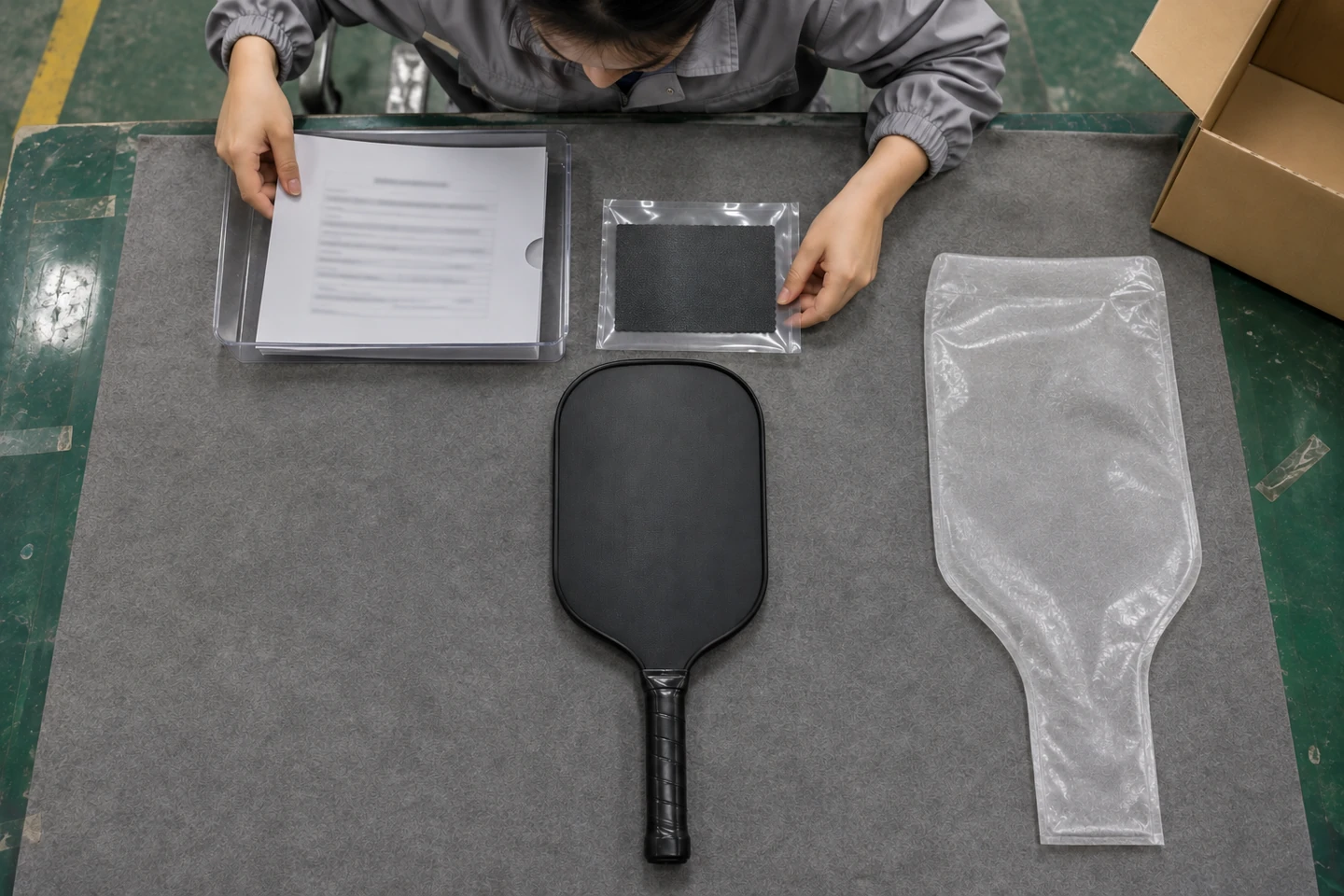
At the order discussion, a buyer has a document with the right material name but no explanation connecting its holder to the paddle supplier. I identify that missing relationship and request clarification instead of declaring the whole document false. A trading or converting step can explain a different company name. If the relationship remains unexplained, I keep the imported-Toray claim unconfirmed for that purchase and recommend pausing the commitment that depends on it.
Ask a focused follow-up: which material does this document cover, and how does it reach the proposed order? If a document is marked draft, proposed or not issued, preserve that status and request the relevant issued evidence. Do not let a cropped screenshot turn an unfinished document into a completed one. Where verification is needed, use the issuer's applicable contact or checking process.
| What you receive | Practical response | What remains open |
|---|---|---|
| Relevant proof with a clear material connection | Continue the sample and order discussion | Complete-build suitability and agreed commercial terms |
| A genuine-looking document with a missing connection | Ask for the specific relationship or material reference | The imported-Toray claim for this order |
| Only photographs or marketing data | Repeat the request for procurement evidence | Whether the named fiber is substantiated |
| A different lot on a repeat run | Review the corresponding material evidence | Whether the earlier purchasing decision still applies |
Buy a laboratory answer only when it fits the question
If you are considering outside testing, describe the disputed claim before paying for a report. Fiber-tow tensile testing 7 under ASTM D4018 concerns prepared fiber-tow specimens and their properties; a strength number alone does not provide a purchasing trail. Ask what specimen the laboratory needs and exactly what conclusion its report can support.
There are also FTIR identification limits 8: Intertek notes that high carbon content can obscure useful spectral detail. Do not buy a generic scan assuming it will name Toray. Agree the question, scope, cost and expected conclusion with the laboratory first. Testing can be useful when properly specified, but it should address the unresolved issue rather than distract from missing procurement evidence.
Make repeat orders a new material check, not a new argument
Keep the accepted product specification available when returning to the supplier. Ask whether the face material or its source lot has changed and what evidence corresponds to the proposed run. A new lot is not automatically a problem; the important point is that the evidence remains applicable. You can preserve the chosen product without pretending the original purchase document covers every future delivery.
If the supplier cannot support the claim your brand needs, narrow the request or consider another supplier before building your sales message around it. Price negotiation cannot supply missing proof. We use imported Toray and have the purchasing evidence to support that statement; the useful discussion is how the relevant evidence connects to the paddle you want us to make.
Conclusion
Start with the corresponding purchase proof and any applicable import evidence. We have purchasing documentation proving that we use imported Toray carbon fiber, and a supplier should be able to support its own claim with corresponding, valid documents. Confirm the connection to your order, use samples to judge the complete paddle, and resolve any specific gap before relying on the material claim in your purchase or your marketing.
Discuss Your Toray T700 Paddle with Rudy
For a custom Toray T700 pickleball paddle, send your chosen shape, core, thickness, enquiry quantity and the material claim you need to verify. Tell us which purchasing or import evidence you need to review and whether you are comparing samples or preparing a production order.
Rudy · Factory Partner · info@shuenpickleball.com · WhatsApp +86 137 1215 6638