Your logo can look perfect on a phone and still disappoint on a finished paddle. Small lettering, an unexpected background or a different-looking brand color can undo the design you thought you approved. I separate approval of the artwork from approval of its printed result, because they answer different buying questions.
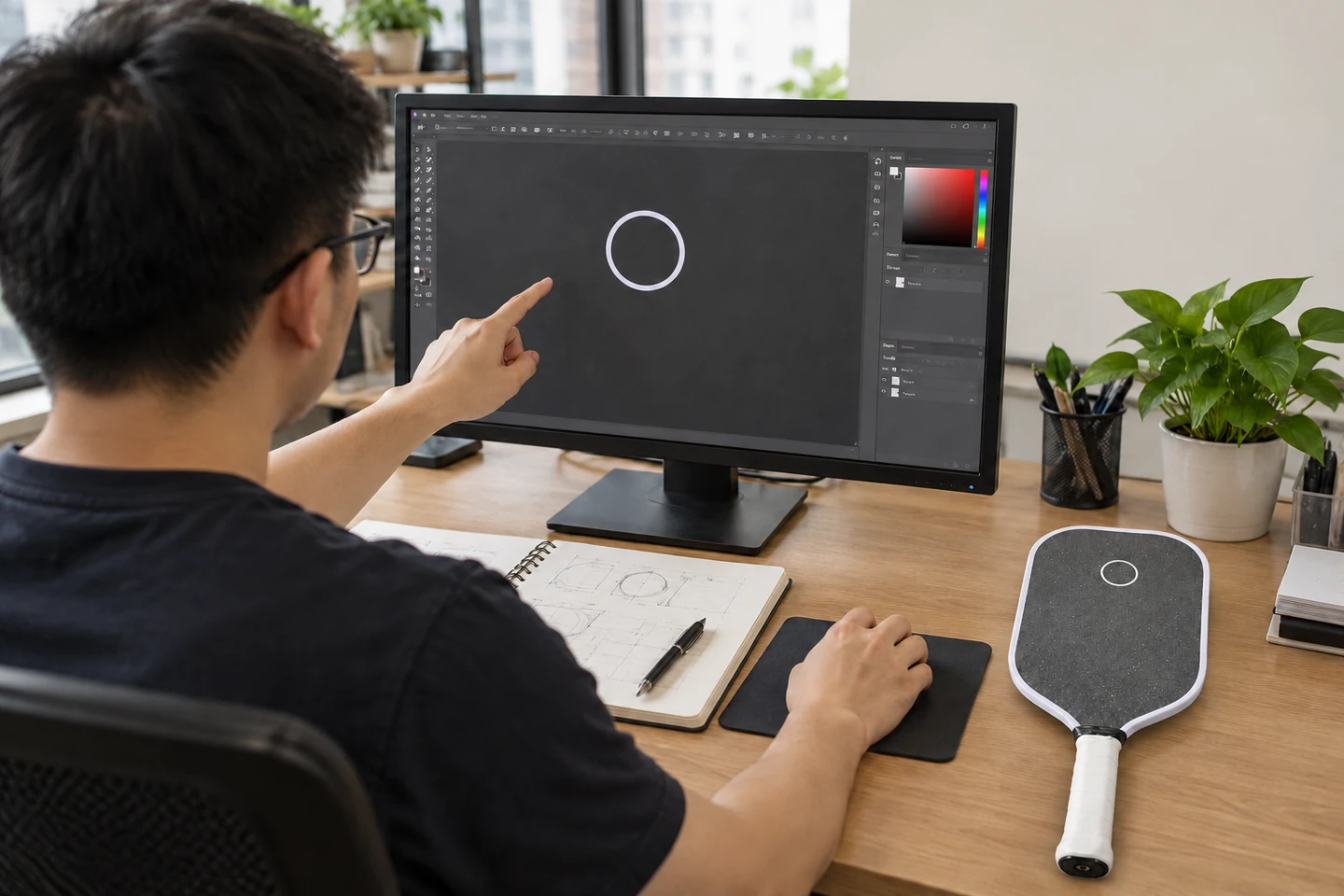
Send us your rough design first. If you do not have one, you can use AI to develop a design concept for us to review. After you approve that image, our designer rebuilds it as an editable design file and sends screenshots for your confirmation. Once the design is confirmed, we print samples and show you the actual result. We arrange bulk production only after you confirm that the printed effect meets your requirements.
That sequence gives each approval a useful job. First agree what the brand should look like, then how the artwork will be reproduced, then what the physical sample demonstrates, and finally which result you are authorizing us to repeat.
What Artwork Should I Approve Before Sample Printing?
A concept image helps us understand your intention. It does not necessarily contain the shapes, lettering and separate elements needed to reproduce that intention consistently.
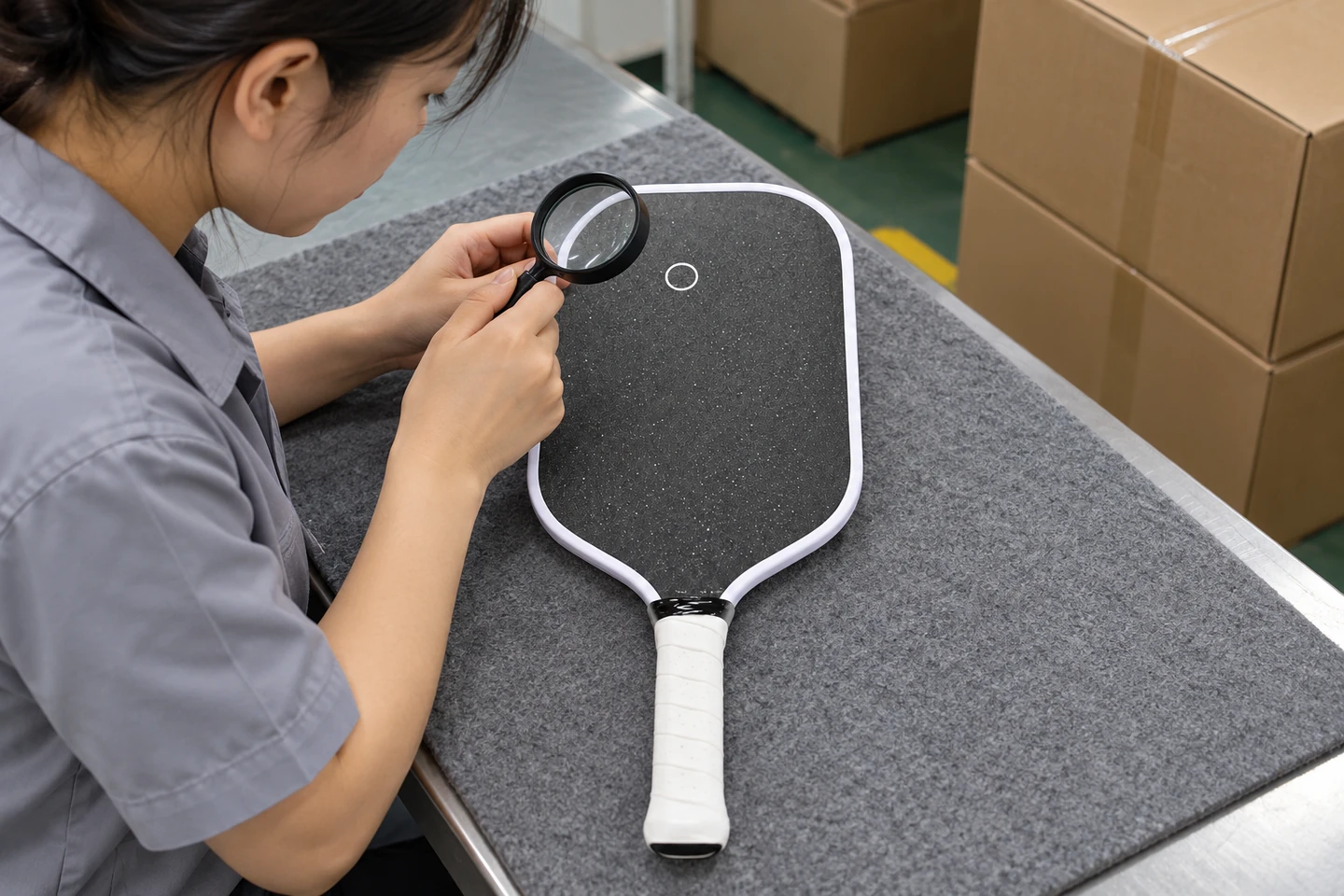
Approve the visual direction first, then review the designer's editable reconstruction on the selected paddle shape. Check spelling, logo proportions, placement and both faces before authorizing sample printing.
Start with the detail your brand cannot lose
The small opening inside her logo was the Canadian brand owner's concern. She liked a design image but worried that redrawing it would turn the mark into a different symbol. We discussed that in June 2026. I asked her to identify which parts were essential and which background elements could change, so our designer would not treat every pixel as equally important.
Her sample enquiry covered five paddles in shape 007 with Emery Grit faces, C03 Perforated Frame Damping Cores and 16 mm thickness. She marked the opening and the spacing around the name as fixed, then approved the overall direction for editable reconstruction. The sample request remained an enquiry at that stage; approval of a concept was not approval to produce the bulk order.
You do not need a finished brand manual to begin. Send the image you like, the exact words and any elements that must remain unchanged. If you have no design, use AI to explore a concept and choose the direction you want our designer to develop. Our designer then reconstructs the approved image into editable artwork instead of treating the picture as a ready-to-print production file.
Review the reconstruction, not just the familiar picture
A scalable logo is different from a screenshot of that logo. Vector artwork 1 defines shapes mathematically, while raster images contain pixels that become visible when enlarged. That distinction matters when a designer changes the logo's size or separates it from its background. It does not mean every photograph or texture should be converted into vectors.
We send screenshots of the reconstructed design for your confirmation. Compare the actual letters, curves and negative spaces rather than simply recognizing the overall style. A screenshot is useful for this layout decision even though it cannot establish the final physical color or surface finish. Keep those later questions separate so a useful early approval does not become an accidental promise about everything.
| Artwork decision | What to show or confirm | What remains for the printed sample |
|---|---|---|
| Logo identity | Correct shape, lettering and spacing | Small details reproduced on the actual face |
| Layout | Front and back, orientation and relative placement | Printed alignment on the finished paddle |
| Background | Intended coverage and visible face areas | Opacity, texture and overall appearance |
| Color direction | Named reference and important brand relationships | Accepted physical color under agreed viewing conditions |
Resolve ownership and layout before making copies
Use artwork you own or have permission to use, including any supplied font or graphic. A logo is not just decoration: brand symbols can qualify for trademark protection 2. An attractive reference image should guide a discussion, not become permission to copy another brand's identity. Resolve rights questions with the appropriate adviser rather than expecting a printing approval to settle them.
Put the design on the selected paddle outline before approving its position. A graphic that fits one shape can sit awkwardly near another shape's shoulders or edge. Include the component colors in your custom paddle brief, but distinguish them from the printed face. Changing the grip color is not the same instruction as changing the logo color.
How Should I Confirm the Printing Process and Physical Appearance?
A process name sounds reassuring, but the result still depends on the artwork, surface and finishing choices. Ask what the proposed method will do to your particular design.
Have the supplier explain the proposed printing approach for the selected face, including coverage, color handling and any finishing layer. Approve a physical printed sample rather than choosing a process solely because its name sounds premium.
Connect the printing proposal to the selected face
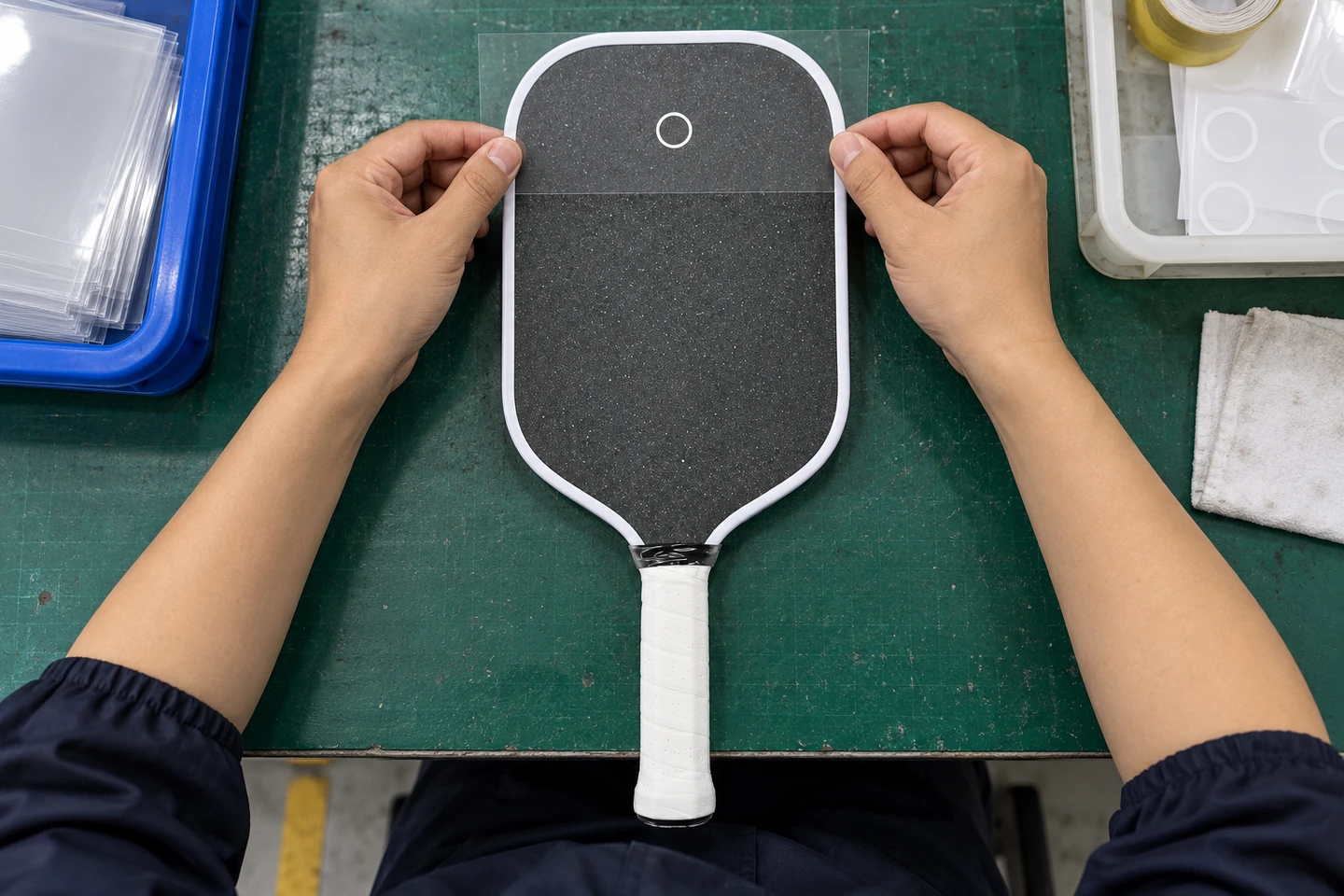
At the sample-preparation bench, I keep the chosen face beside the artwork when a buyer asks for a pale mark over a dark background. The concern is whether the logo stays visible without losing the intended surface appearance. I ask the printing team to explain the proposed coverage and show the result on that face, because a clean paper print cannot settle the same question. The buyer can then accept the physical effect or revise the graphic before it is repeated.
For an Emery Grit paddle, discuss the intended face finish directly. Do not assume that a printed example on another material demonstrates the same outcome. Our one-piece hot-pressed paddle platform and the chosen construction identify the product; they do not automatically specify an ink system or a guaranteed print result.
Ask which printing method is proposed and why it suits the design. If the supplier uses terms such as digital printing or screen printing, ask about the actual limitations relevant to your graphics: small lettering, fine lines, large solid areas and the requested finish. There is no useful universal ranking without the sample and project requirements.
Make color and coverage concrete
Provide the best available color reference and identify the color relationships that matter most. A bright logo against a dark face may matter more to the brand than a tiny decorative gradient. Print color management 3 depends on the output device and printing conditions, so merely sending color numbers does not answer every reproduction question.
Ask whether the proposed process uses an underlying white layer, and whether it covers the whole graphic or selected areas. Printing suppliers use white underlayers on colored or transparent materials 4 in relevant applications; this is a reason to ask about coverage, not a statement that SHUEN uses that manufacturer's equipment or ink. The actual paddle sample must demonstrate the approach being offered.
| Print question | Useful evidence to request | Decision it supports |
|---|---|---|
| Will small details remain clear? | Close view of the actual printed logo | Keep or simplify the detail |
| How much face remains visible? | Full-face view and physical sample | Accept coverage or reduce it |
| How will brand color be judged? | Agreed reference and viewing conditions | Define an achievable accepted appearance |
| What finishing layer is proposed? | Description and sample of that finish | Accept the complete printed surface |
Compare the cost of the complete result
Ask what the quotation includes for artwork reconstruction, sample printing and any additional version you request. Do not assume unlimited revisions or that a complex graphic has the same cost as a simple mark. Conversely, do not accept an unexplained extra charge simply because the file contains several colors. Ask which work or setup causes it.
Keep the customizable face and component options distinct. Face printing, a custom logo ring and a branded butt cap are different production requests. Dedicated tooling for customized rings or caps is quoted for the project; a face-printing approval does not include those parts automatically. Decide what must appear in this sample and what can be discussed separately.
What Should I Check on the Printed Sample Before Approving It?
The sample should answer whether your brand looks right on the product people will handle. A flattering photograph is helpful, but it is not the whole review.
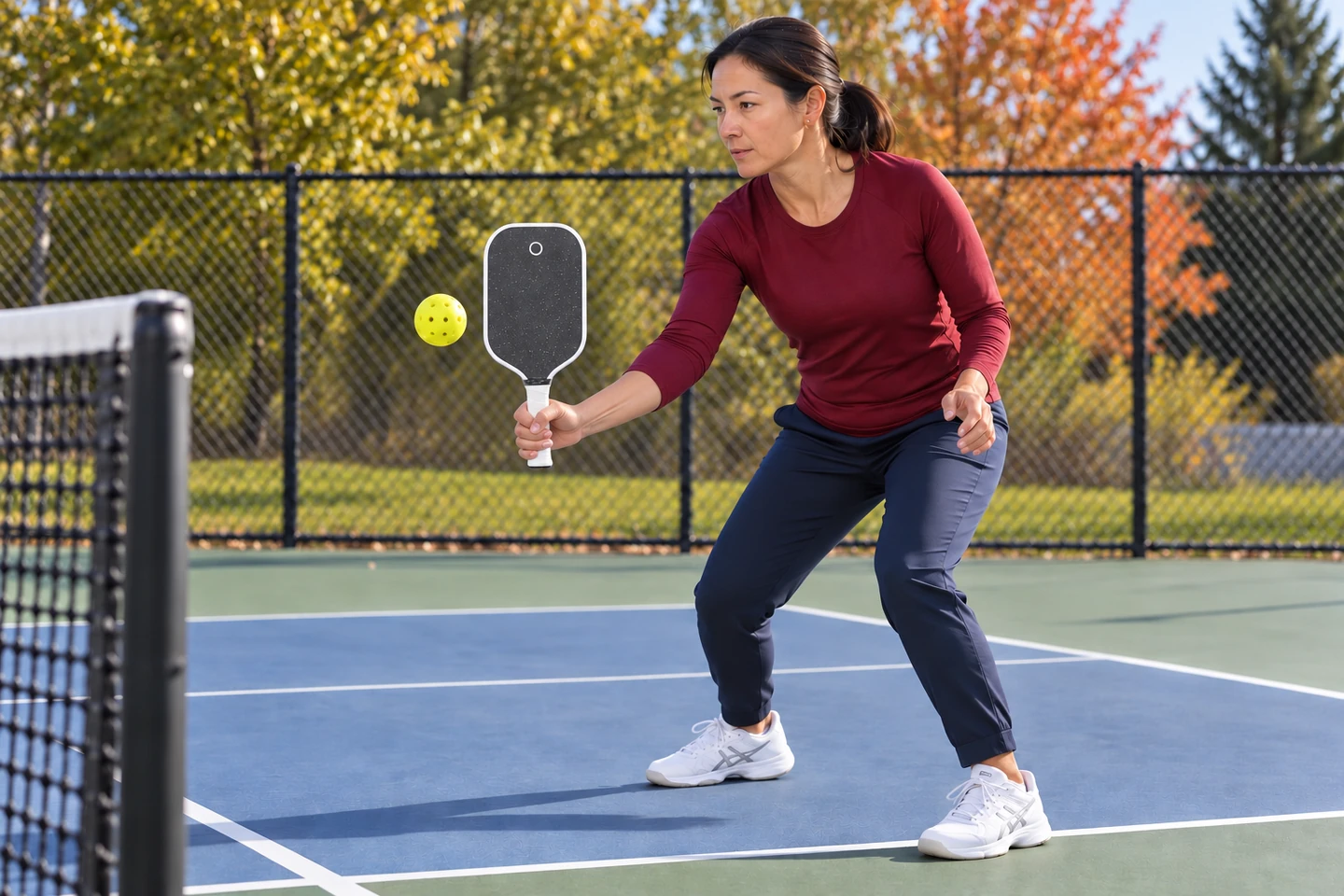
Inspect the actual print for identity, alignment, color, coverage and visible defects, then use the sample normally on court and inspect it again. Agree any additional durability test separately; casual play is not a quantified lifetime or certification result.
Look at the whole paddle and the smallest essential detail
When the Canadian buyer returned to the logo question, I did not ask her to approve only a close-up. I requested a full-face review alongside the small opening she had identified earlier. A sharp detail can still be positioned poorly on the overall paddle. She kept both checks in her sample-review request and withheld bulk approval until the printed result could be considered as a whole.
Check both sides, not only the face used in the product photograph. Look for unexpected clipping near the edge, inconsistent spacing, stray marks, missing sections and unclear lettering. Distinguish an error against the confirmed artwork from a new preference that appeared only after handling the sample. Both deserve discussion, but they can require different changes and costs.
For remote reviews, request a straight-on view and a closer view of the disputed area without decorative filters. ICC profiles connect device color values to a standard color space 5; an uncontrolled camera-and-phone chain cannot be assumed to provide a reliable physical color match. If the decision depends on a subtle shade, discuss receipt of the physical sample rather than arguing over increasingly compressed pictures.
Check appearance in the conditions that matter to the brand
Compare the sample and reference together under an agreed light, then consider the normal setting in which the product will be seen. A pair of colors can match under one light and separate under another, a phenomenon called metamerism 6. A useful approval describes the conditions instead of demanding that every phone, shop and court show identical color.
Take the printed sample through ordinary practice, including low forehand volleys, then inspect the logo and surrounding print again. This connects the appearance decision to the paddle's intended use without turning the article into a performance comparison. Record visible changes and where they occur. Do not treat one session without visible damage as proof of a lifetime wear claim.
Keep an unused comparison sample if the allocation permits. It gives you an original appearance to compare with the played paddle, rather than relying on memory. Identify which sample was used and avoid mixing wear observations with pre-existing print defects.
Agree the meaning of any durability test
Ask what concern a proposed test addresses and whether it is appropriate for the actual surface. Adhesion, rubbing and outdoor exposure are not interchangeable questions. A supplier should explain the method, sample preparation and acceptance criteria before a result is used to release production.
For example, ASTM D3359's tape-test scope 7 primarily addresses coating adhesion on metallic substrates and notes limitations for other substrates. Naming that standard does not automatically establish a suitable paddle test. Do not improvise a destructive test on the approved reference and then call the result certified. Discuss the applicable procedure and who will perform it if formal evidence is needed.
What Exactly Should My Bulk Printing Approval Authorize?
“Looks good” can refer to the layout, a photograph or the actual sample. Production needs to know which decision you have made.
Approve the identified physical print result together with its matching artwork, paddle configuration and agreed finish. List any unresolved issue explicitly, and confirm revised samples where a change affects the result before releasing bulk production.
Turn acceptance into one clear instruction
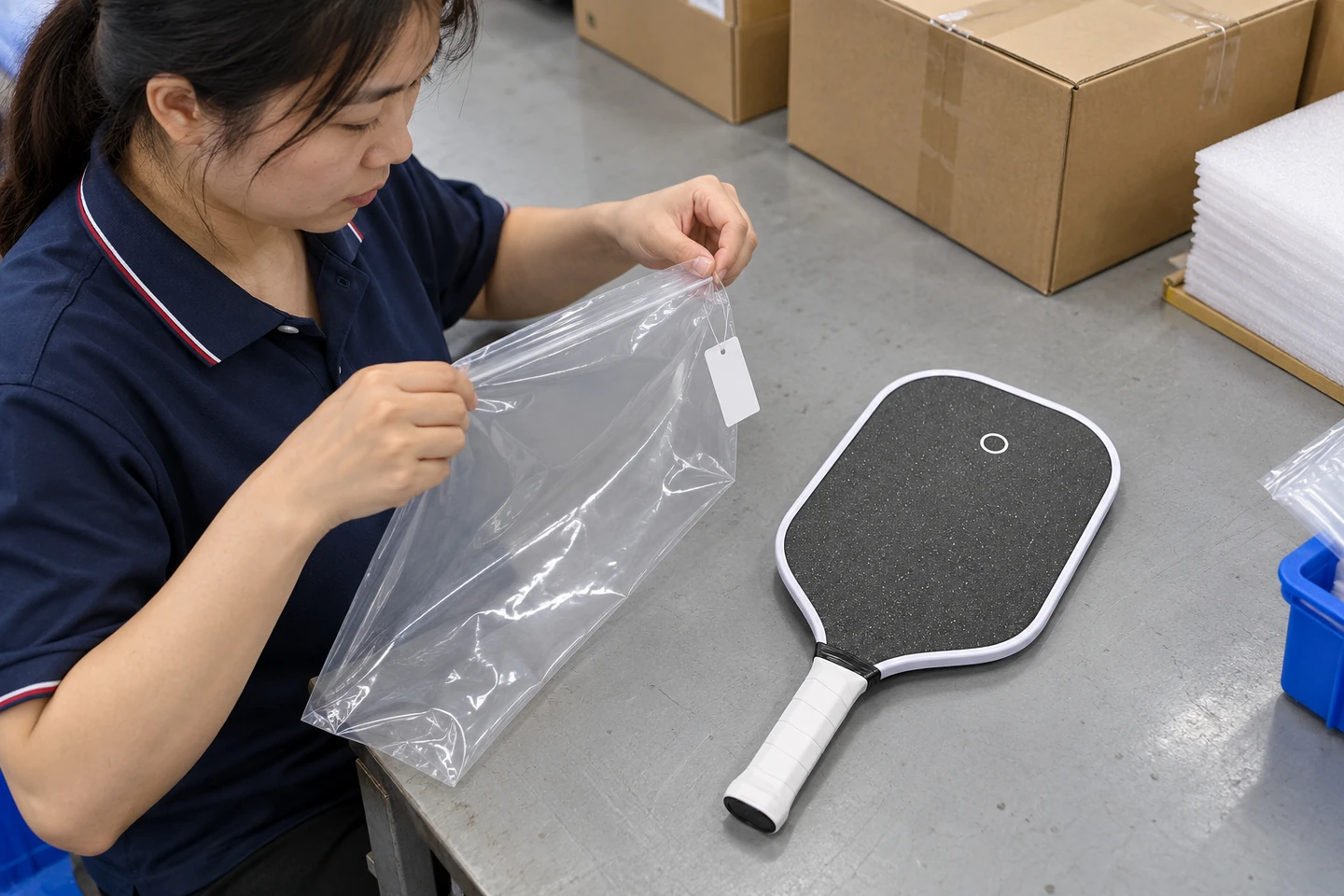
At the production handover, I separate a buyer's approval of the logo position from an unanswered comment about its color. The concern is that a short positive message could be read as permission to proceed with both. I hold the unresolved print decision apart from the accepted layout, because repeating an open issue across the order would make the sample step pointless. The buyer's next instruction must either accept that result or specify the revision for review.
Name the sample and the matching artwork in your message. Include the selected face and finish so the accepted print is not detached from the surface on which it was produced. The purpose is not to create more paperwork; it is to prevent two different paddles from being called the approved version.
Separate defects from later design changes
Use a short print inspection check sheet 8 to collect repeatable observations such as missing print, misplaced graphics or unclear lettering. Define the observation in ordinary words and attach a useful photograph where needed. A record saying “bad quality” gives neither party enough information to decide what to change.
| Approval item | State explicitly | If it is still open |
|---|---|---|
| Artwork | Front-and-back file version | Return it for correction |
| Physical result | Identified sample and accepted finish | Request the relevant sample review |
| Appearance limits | Agreed color, placement and defect criteria | Clarify before bulk release |
| Revisions | What changes and what stays unchanged | Confirm cost and timing implications |
If you decide to enlarge the logo after accepting the sample, say that it is a design change. Ask whether another printed sample is needed and what it means for cost and timing. Do not send a replacement file with no explanation and assume the earlier approval covers the new result.
Release production only when the print question is closed
Keep the accepted sample available and connect it to the sample-to-production handover. Our sequence remains straightforward: confirmed design, sample printing, actual-result review, then bulk production after your confirmation. An urgent sales deadline should not silently remove the stage that establishes the intended appearance.
Before releasing the order, check that the quantity allocation refers to the approved design or clearly identified designs. If several colorways are involved, state which have been accepted and which have not. One approved print does not authorize every variation in the folder. A precise approval lets production proceed with a settled requirement instead of asking the workshop to interpret your brand preferences.
Conclusion
Begin with your rough design or a concept you developed with AI, then approve the designer's editable reconstruction through its screenshots. Confirm the proposed printing approach on the selected face and inspect the actual printed sample, including its appearance after ordinary use. Once you accept that result, identify the matching artwork and configuration before authorizing bulk production. The important approval is not that an image looks attractive, but that the printed paddle represents your brand as intended.
Discuss Your Paddle Artwork and Print Sample
Start with the custom Emery Grit paddle. Send your rough design or concept image, exact logo text, important color reference, selected shape and core, intended quantity and the details your brand cannot lose. We can discuss editable reconstruction and the printed sample you need to approve.