A good sample can win your confidence and still leave the bulk-order question unanswered. What exactly must the next shipment match? At SHUEN, I want the accepted paddle and its written configuration to remain available together, so neither side has to argue from memory when production arrives.
We recommend five custom samples partly so you can retain one accepted paddle as a reference for the bulk order. Before ordering, we record the shape, face material, core structure and material, dimensions and other agreed details in a configuration checklist. Compare both the received samples and the later bulk paddles against that checklist and the retained reference, and agree how differences will be checked before approving production.
Consistency is not a promise that every object will be indistinguishable under every condition. It is a practical agreement about what stays fixed, what variation is acceptable, how you will check it and what happens when something does not match. The reference paddle gives that agreement a physical starting point.
Which Sample Should I Keep as the Bulk Reference?
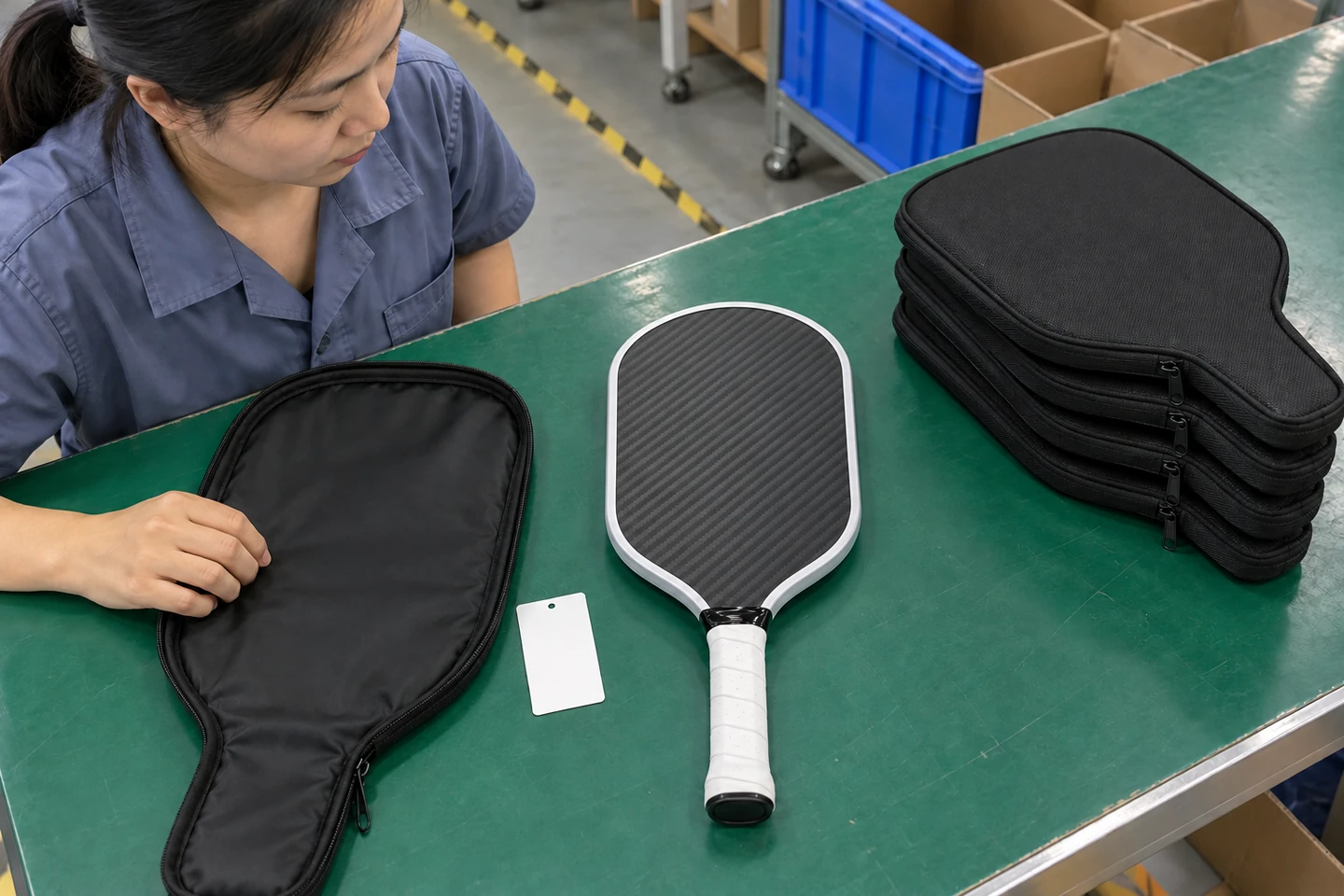
The most popular paddle in the club bag is not necessarily the best reference to keep. By the time production arrives, its grip and surface may have changed through use.
Choose an accepted sample, identify it clearly and protect it from routine play. Use the other samples for evaluation, while keeping the reference and its configuration available for the later bulk comparison.
Reserve one before the set disappears into use
A Malaysian shop owner worried that every sample would leave with a different club player. We discussed that in June 2026, when he was arranging five samples and wanted to keep something reliable for checking a later bulk purchase. I suggested separating one accepted paddle from the circulating set rather than trying to recover the least worn one afterwards.
His chosen direction was shape 002 with Kevlar / Aramid faces, a C14 Gen 3 Standard PP Honeycomb Core and 14 mm thickness. He allocated four paddles to playing feedback and kept one for appearance and configuration comparison. The later order remained a decision to make after evaluation; retaining the reference did not turn the sample request into a bulk commitment.
The Kevlar / Aramid paddle page helps identify that face option. Keep the actual sample's material description with it, not simply a photograph of its color. The material maker describes Kevlar as a synthetic fiber 1; the material name alone does not describe the paddle's complete face construction, finish or core.
Identify what the reference represents
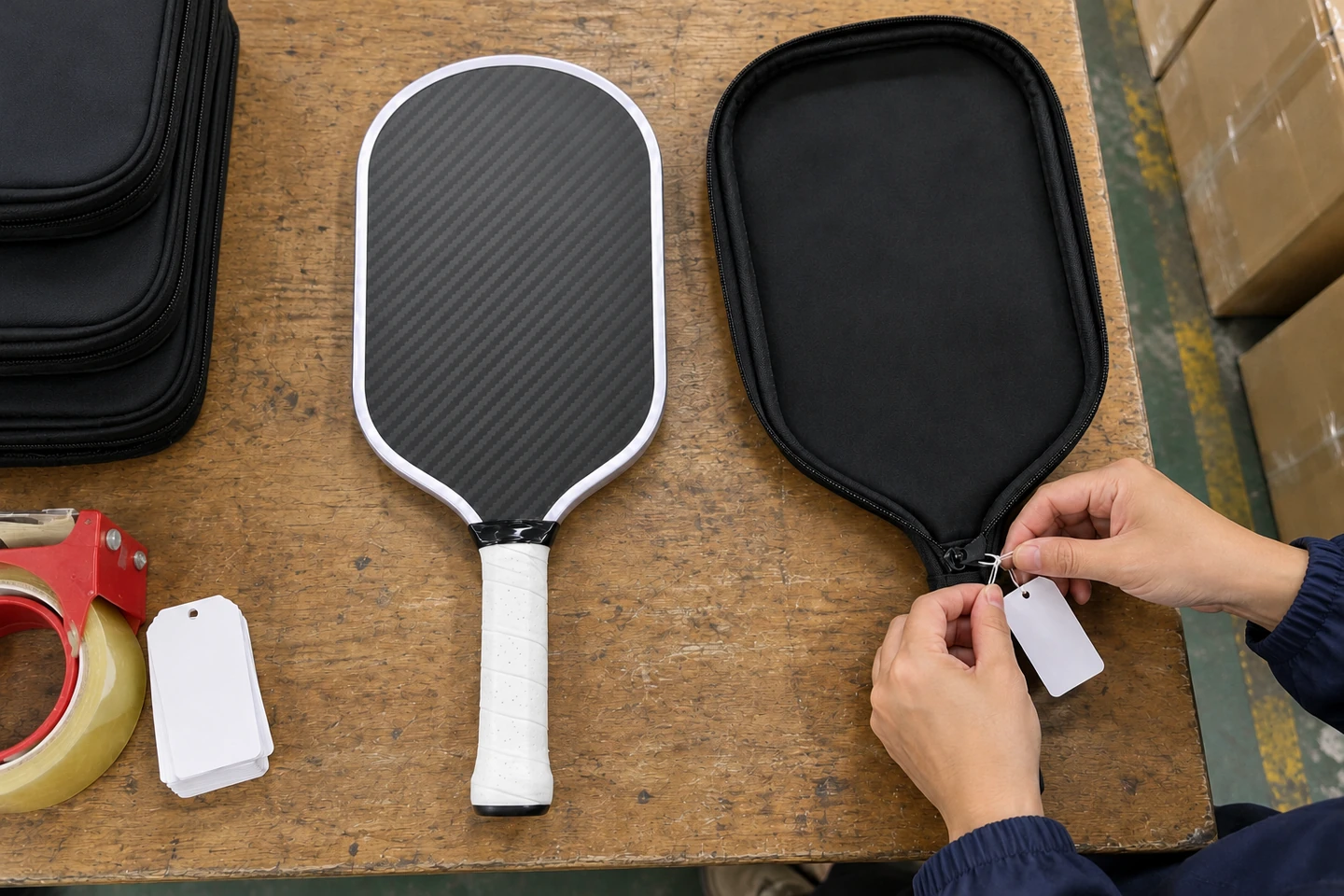
Use a removable tag or a marked protective sleeve to connect the paddle to the agreed configuration. Keep the identification away from the face area you intend to inspect. Include the approval date and the particular version, especially when several sample rounds look similar. A retained first attempt is not the approved reference simply because it arrived first.
Photograph the front, back, edge, handle and components before putting the reference away. These images help locate a concern quickly, but they do not replace the object. A phone image can hide texture, flatten the edge and shift color. Store the paddle where it is protected from casual handling and ordinary damage, and keep any supplier care instructions with it.
| Sample role | Main use | What to avoid |
|---|---|---|
| Retained accepted paddle | Appearance and configuration reference | Daily play, regripping or unrecorded modification |
| Circulating evaluation paddles | Handling and playing feedback | Losing the identity of the tested version |
| Earlier development version | Explain a particular requested change | Confusing it with the accepted reference |
| Production comparison unit | Check the later run against the reference | Returning it to sale before an issue is understood |
Keep a reference, not a silent exception
If the accepted paddle has a minor feature that you do not want repeated, say so before production. A scratched sample that is otherwise acceptable should not become permission for scratches on every finished paddle. Mark the exception in the agreement and distinguish it from the details you are accepting.
For the same reason, replacing the reference requires a deliberate decision. If the grip or artwork changes after approval, identify what the new sample supersedes and what remains unchanged. Keep the old sample separate rather than allowing two different objects to share the same approved status. The aim is a usable comparison, not a shelf full of competing answers.
What Must the Written Configuration Lock Before Production?
Two paddles can have similar graphics while hiding different construction. The reference shows what you accepted, but it cannot make every internal detail visible.
Record the exact shape, face material, core structure and material, dimensions, thickness, components and approved artwork before ordering. Define the acceptance method and any agreed ranges rather than relying on “same as sample” alone.
Connect visible details to the hidden build
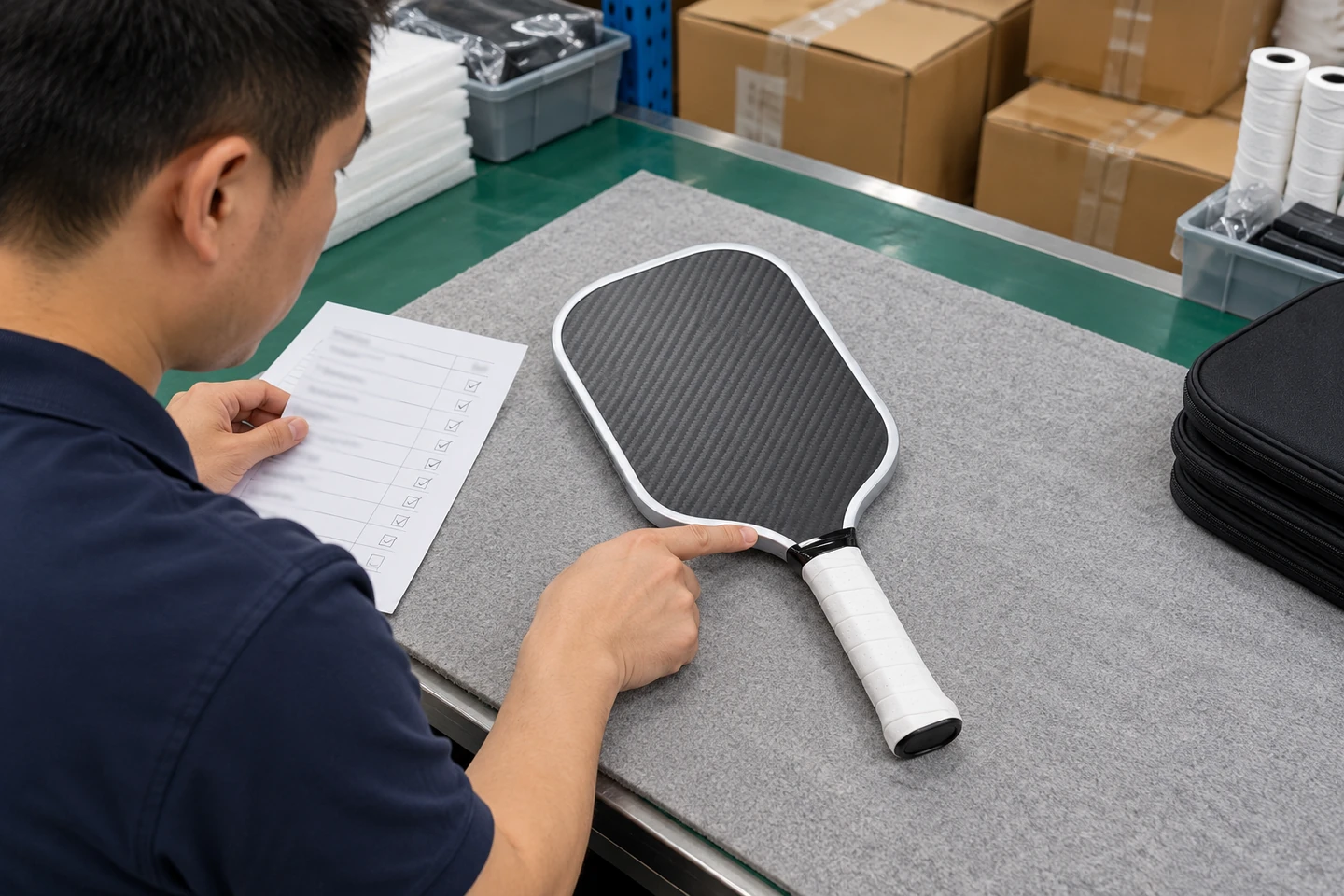
At the configuration bench, a buyer's concern is often that a matching face could conceal a changed core. I put the accepted paddle beside the written build and check the face and core as separate entries. A photograph cannot establish the internal construction, so I ask for the core ID and material to remain explicit in the production agreement. The buyer can then approve one defined build rather than a look that several constructions could share.
Our custom paddle specification checklist brings those choices together. For this sample direction, the C14 description stays distinct from the Kevlar / Aramid face and shape 002. Do not replace the core entry with a broad phrase such as premium technology, or infer performance from the generation number.
Include the one-piece hot-pressed construction and the agreed thickness where they belong in the build. If a supplier proposes a substitution, ask which requirement changes and whether another sample is needed. An apparently similar substitute should not become accepted just because it is available sooner. Resolve the product decision before relying on the earlier approval.
Write dimensions and components so both sides can check them
Name the measurement and its unit, not just a number. A length, handle length and grip circumference describe different things. Consistent measurement units 2 make technical information easier to communicate across languages. Confirm the measuring points and acceptable range with the supplier; this article does not assign universal paddle tolerances.
| Configuration area | What to specify | How it supports comparison |
|---|---|---|
| Shape and dimensions | Shape ID, drawing and agreed dimensions | Prevents an outline change being hidden by graphics |
| Face and core | Named material, core ID and structure | Keeps appearance and internal construction separate |
| Thickness and weight | Agreed values, ranges and checking method | Gives numerical differences a defined basis |
| Grip, edge, ring and cap | Component choices, colors and fitting details | Stops small finishing substitutions being overlooked |
| Artwork and packaging | Approved files, placement and packing scope | Connects the finished appearance to the order |
The customizable paddle details extend beyond the printed face. If the reference uses a particular grip, compare that grip rather than adding an overgrip and then reporting a different handle size. Separate optional buyer additions from the supplied construction.
Approve changes as changes, not as casual messages
A revised logo sent after sample approval can affect the appearance comparison even if the construction stays fixed. Identify the new file, the affected side and the intended placement. Keep unchanged details intact rather than reopening the whole product. Adobe's explanation of print color management 3 shows why output profiles and printing conditions matter; identical screen values alone are not a physical color agreement.
Ask how the proposed change affects the sample, price and production plan before authorizing it. A quick approval of the new graphic should not be interpreted as approval of a new core. Keep the scope narrow enough that you can later explain exactly what changed and why the bulk paddle is expected to differ from the original reference.
How Should I Compare Playing Feel Without Wearing Out the Reference?
A protected master helps with appearance, while a paddle that has been played for months answers a different question. Neither should be used carelessly as the sole judge of a new run.
Keep the master protected and compare production play observations with an identified evaluation paddle under similar conditions. Separate a repeatable difference from wear, setup changes or one player's new preference before deciding what requires investigation.

Give the playing comparison a specific purpose
The Malaysian buyer later asked whether the stored paddle had to join every club session to remain useful. I kept its role separate from the four evaluation paddles: the master preserved the accepted appearance, while an identified working sample provided the playing reference. Sending the master through normal club use would weaken the very comparison he wanted to preserve. He retained the protected paddle and kept one circulating sample identifiable for the later playing check.
Use a short, relevant drill rather than judging only the most powerful shot. For a buyer concerned about touch, a controlled backhand reset block lets the player describe how the paddle behaves in that particular movement. It does not establish a numerical performance claim. The purchasing question is whether a reported change deserves investigation against the agreed build, not which player can produce the most impressive rally.
Compare like conditions before blaming the production run
Keep the player, ball type, added grip and general session conditions as comparable as practical. Record how much the working sample has been used. If the older paddle has extra grip tape and the new one does not, resolve that difference before attributing the sensation to the core. Repeat a concerning observation rather than relying on one contact.
For measured checks, repeat readings under the agreed procedure and retain the actual results. NIST distinguishes short-term and time-related measurement variation 4; readings taken at different times can introduce another source of difference. The practical response is to make the comparison conditions explicit, not to claim that a casual court session is a laboratory test.
Explain observations in usable terms: which paddle, which movement, what changed and whether it happened again. “It feels different” is a starting point, not a diagnosis. A clear report lets us decide whether to review dimensions, components, construction records or another agreed check, instead of changing several features at once.
Agree what the inspection sample can establish
Five development samples help you select and understand a product. They are not automatically the inspection plan for a much larger production lot. Quality sampling 5 draws observations from a defined population or lot. Agree the selection, checks and acceptance decision for the actual order before treating a few selected paddles as evidence about everything packed.
SHUEN's quality staff perform individual performance checks and marking before dispatch. Ask which project-specific checks and acceptance details you need alongside that process. The sample-to-production sequence should carry the accepted configuration forward, not turn the initial sample approval into an unlimited guarantee about later variation.
What Should I Do If the Bulk Shipment Does Not Match?
An apparent mismatch needs a precise response before the stock is distributed. Mixing a suspect paddle back into ordinary inventory makes the next comparison harder.
Keep affected items identifiable, compare them with the approved reference and checklist, and send the supplier the specific difference and affected quantity. Separate construction or finishing concerns from transport damage and new preferences, then agree the next action.
Isolate the question before proposing the remedy
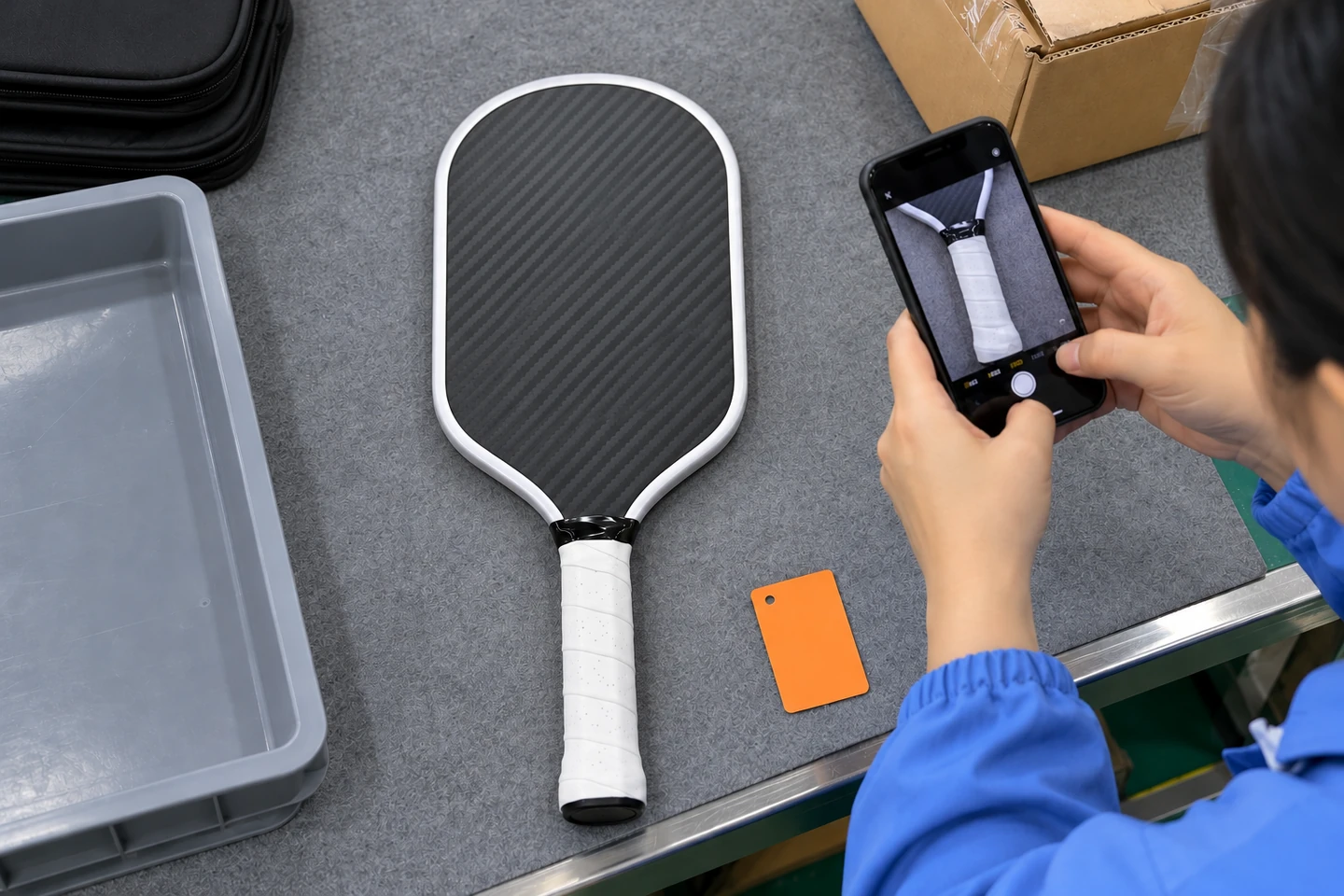
When a buyer reports that the grip is different, I ask for the affected paddle to remain unchanged beside the reference. Rewrapping it immediately would remove part of the comparison. I check the agreed component description and ask for photographs of the actual difference, because a changed preference and a supplied mismatch require different decisions. The next step is a focused review of that component rather than an unsupported rejection of the whole order.
Use a receiving check sheet 6 to collect observations consistently. Include the quantity inspected as well as the number showing the concern. Without that denominator, five affected paddles could mean five out of five or five out of several hundred, which are very different starting points for the review.
| Observation | Preserve or record | Next discussion |
|---|---|---|
| Visible configuration difference | Reference, affected paddle and agreed build | Identify the changed component or specification |
| Repeated playing concern | Paddle identity, setup and repeated observation | Agree the relevant comparison or further check |
| Shipping damage | Carton, packing and damaged contents | Follow the shipment's damage-reporting process |
| New preference after approval | Requested change and accepted baseline | Discuss a revised product, cost and sample need |
Keep the affected stock traceable
Record which carton or production identification accompanied the affected units. Keep that connection when moving items to a separate area. Batch-level traceability 7 links products to their associated batch information; the useful principle here is to avoid losing the identity of the stock under review. Agree suitable identifiers for your order rather than assuming a particular barcode system is included.
Photograph the reference and affected item under comparable lighting, with the relevant detail visible. Add an overall view so the close-up can be located on the paddle. Keep original files and avoid filters. If the issue concerns dimensions, include the method and units, not just a cropped display with no indication of what was measured.
Close the issue against the original agreement
Transport damage should retain its own evidence. FedEx's damage-claim guidance 8 asks for package and contents photographs and says to retain original packaging until the claim is resolved. Follow the actual carrier's applicable process and deadlines for your shipment; do not discard evidence while deciding whether the concern originated in production or transport.
Ask for a response that names the issue, affected scope and proposed next step. Confirm any return, replacement, rework or other arrangement before acting on it; do not assume a remedy or freight responsibility that was never agreed. Once resolved, keep the accepted outcome with the configuration so the next order starts from the right baseline rather than repeating the same uncertainty.
Conclusion
Keep one accepted sample protected, and keep its written configuration beside it. That is one reason we recommend a five-sample set: the other paddles can support evaluation while the reference remains useful for the bulk comparison. Before ordering, settle the build and checking arrangements. When production arrives, compare the agreed details, investigate specific differences and preserve the evidence until the next action is clear.
Define Your Sample-to-Bulk Reference
Explore the custom Kevlar / Aramid paddle and send your selected shape, face, core, thickness, component choices and artwork, together with the sample quantity and intended bulk quantity. Tell us which details matter most in your acceptance comparison so we can discuss the configuration and reference arrangement.