Your artwork should not become another brand's paddle, but that does not mean the factory must stop making paddles for everyone else. I draw that distinction early: protecting the design you bring us is a specific commitment, not a promise to leave the whole market.
We use the design you provide only for your brand. We do not use that design for other brands or disclose your brand-design materials to other customers, and these commitments can be written into our contract. The restriction applies to your specific design; it does not mean we stop manufacturing paddles for other brands.
A useful agreement tells both sides which design is protected, which uses are allowed, how samples are handled and what needs fresh permission. These are purchasing decisions before they become drafting questions. Have qualified counsel review the final wording, governing law and enforceability for the transaction; the points below explain the manufacturing scope we need to understand.
What Exactly Should the Brand-Only Restriction Cover?
“Exclusive design” sounds reassuring until two people point to different parts of the same paddle. One means the printed artwork; the other means every paddle sharing the outline.
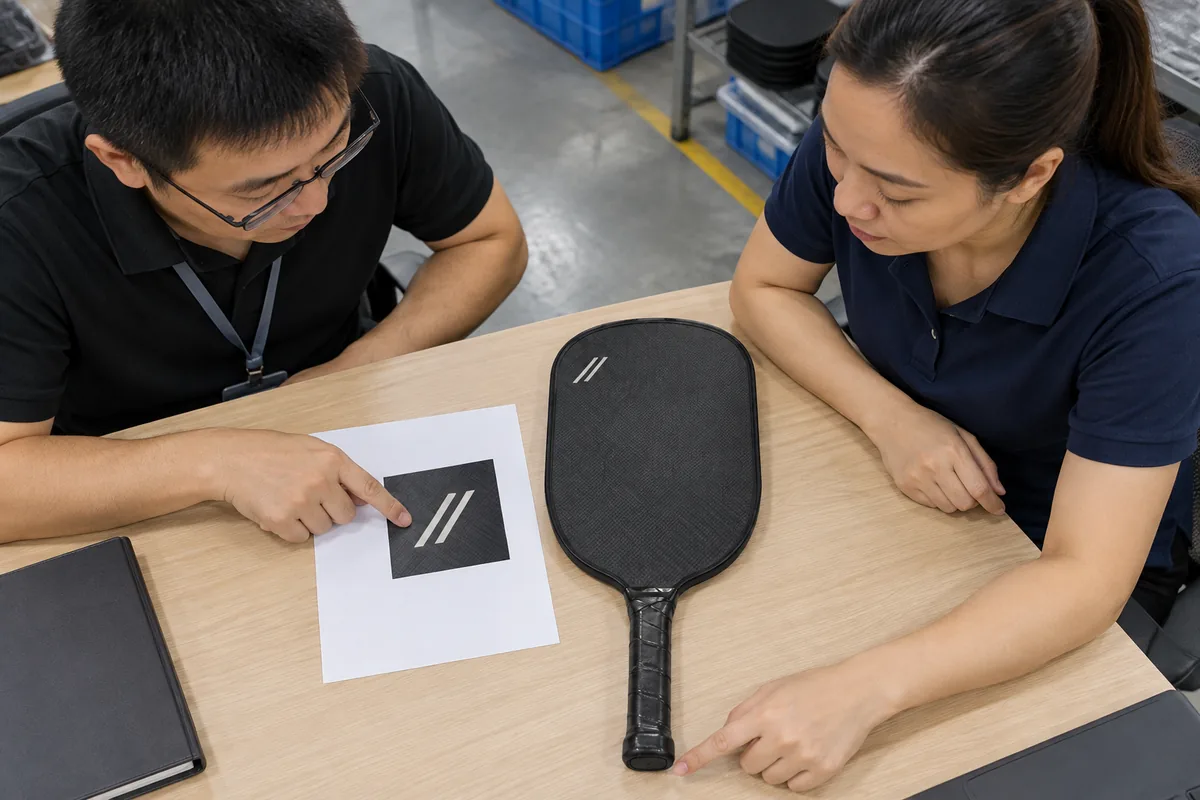
Identify the customer-supplied design and the brand it belongs to, then distinguish it from the selected production configuration. Tie the restriction to the actual artwork and agreed design elements, not an undefined product category.
Start with what another brand must not receive
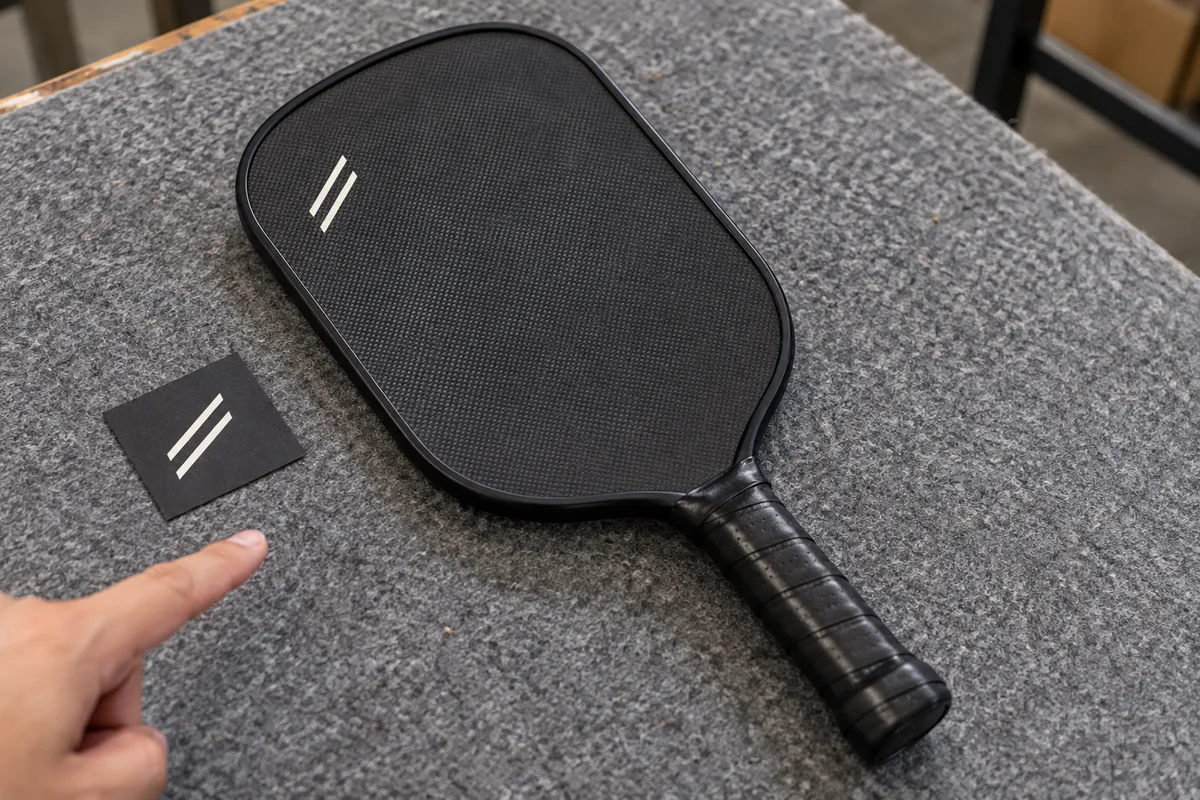
The Vietnamese brand owner wanted to know whether changing the name would let another buyer use her graphic. During our discussion in April 2026, I separated the artwork she supplied from the factory's existing paddle options. The restriction concerned her design itself, not only the word printed at its center.
Her enquiry covered 30 paddles in shape 004, with Imported Toray T700 Carbon Fiber faces and C06 Gen 4 TFP Shoulder-Damped Honeycomb Cores at 16 mm thickness. She identified the front-and-back composition as the protected design and kept that configuration as a separate production choice. We could discuss building her paddle without treating every use of shape 004 as use of her artwork.
Our Imported Toray T700 Carbon Fiber paddle page identifies the face option in that discussion. A material selection helps define the product being requested; it does not describe who may reuse a graphic. Keep those two questions separate when you send the enquiry, especially if a shared catalog shape is part of the project.
Describe the design in a way production can recognize
Attach the supplied front and back artwork, relevant logo files and any specific graphic elements that must stay within your brand. Identify the brand by its actual name in the agreement, rather than relying on “our customer” or a salesperson's chat nickname. The public article does not need that private information, but your transaction documents do.
A trademark identifies the source of goods or services 1; the complete face composition can include more than that source identifier. A no-logo-reuse sentence therefore should not quietly replace the broader restriction on the customer-supplied design. Point to the whole protected material, including the reverse face when that is part of the design.
| Item being discussed | What to identify | What not to assume |
|---|---|---|
| Customer-supplied artwork | Both faces and the specific composition | Removing the name makes reuse acceptable |
| Brand identifiers | Exact logo and brand name supplied | A logo file describes every protected element |
| Catalog configuration | Shape, face, core and thickness | Selecting it reserves the whole catalog option |
| Later design revision | The changed artwork and affected elements | A new filename automatically changes the agreement |
Separate permission to manufacture from ownership claims
Providing an image for production is not a reason to make unsupported statements about every underlying right. If an outside designer or asset provider contributed to it, establish the permission your project needs. The U.S. Copyright Office explains obtaining permission from a copyright owner 2 as one route to lawful use. That is a separate check from asking us to keep your supplied design within your brand.
For a stock graphic, examine the actual terms rather than assuming that a download button grants exclusive use. Different Creative Commons licenses 3 allow different forms of sharing and adaptation, and some restrict commercial use. Our brand-only manufacturing commitment cannot remove rights that an outside creator already granted to others. Resolve the asset's permissions before making an exclusivity claim about it to your own buyers.
How Is Design Protection Different from a Broad Non-Compete?
A factory can respect your design while supplying other paddle brands. The problem is not the existence of those brands; it is using your protected design for their products.
Write the confidentiality and brand-only design-use commitments clearly. Do not treat them as an agreement to stop serving other brands, reserve an entire country or prevent every similar product unless a separate, explicit arrangement has actually been agreed.
Keep the commercial request narrow enough to answer
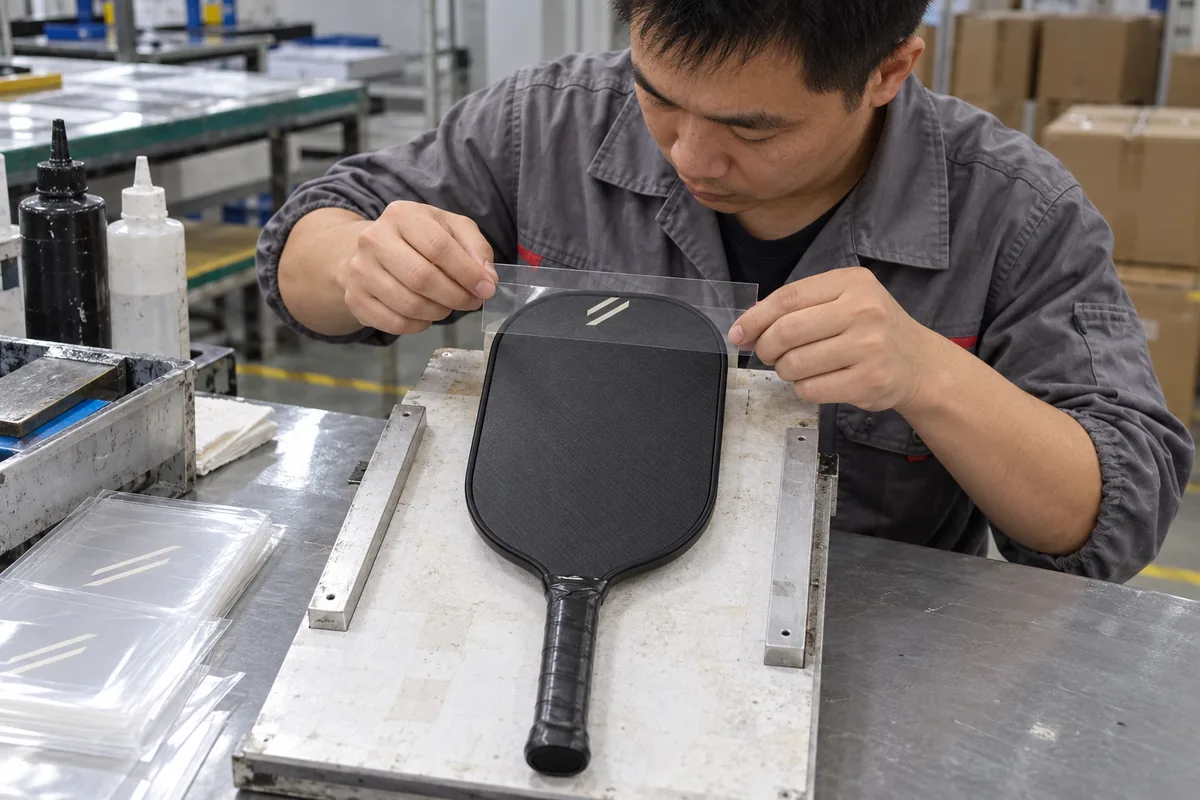
At the print-preparation bench, a buyer's worry is that a distinctive border could be carried into another brand's artwork. I compare the supplied composition with the proposed production image, rather than answering with a promise about every paddle we make. The relevant decision is whether that specific design is being used outside the buyer's brand. Keeping the scope there lets the project proceed without pretending that ordinary factory work for other brands has been prohibited.
The customizable parts of a paddle help make this conversation concrete. The printed face, edge color, grip, bottom cap and underlying shape are not automatically one indivisible exclusive asset. Identify the customer-supplied elements you want protected and ask separately about anything beyond them. A broad word such as “similar” needs discussion before either side can know what it excludes.
Distinguish information sharing from permitted use
A confidentiality clause addresses disclosure; a use restriction addresses what someone may do with the material. You need both ideas when the concern is that the design could remain private yet still be manufactured for another brand. A document called an NDA should be read for its actual obligations, not accepted solely because of its title.
The UK Intellectual Property Office's NDA guidance on a specific permitted purpose 4 is useful here: define why the recipient is receiving the information. For our discussion, that purpose concerns the customer's paddle project. Counsel should translate the agreed scope into suitable wording rather than copying a generic employment non-compete into a manufacturing purchase.
| Request | Practical meaning to settle | Separate question |
|---|---|---|
| Do not disclose my design | Do not give protected brand-design materials to other customers | Which project participants need access? |
| Use this only for my brand | Do not manufacture this supplied design for other brands | Which versions and design elements are included? |
| Do not sell to other brands | A restriction on wider factory business | This is not our stated design-use commitment |
| Give me market exclusivity | A commercial territory or channel arrangement | It requires its own discussion, not an assumed NDA benefit |
Do not turn a shared configuration into a hidden monopoly
A familiar outline or face material does not by itself show that someone reused your artwork. Compare the actual protected design before making that conclusion. Conversely, a different core or thickness does not make copying the supplied graphic acceptable under the brand-only commitment. Product construction and permission to use the design answer different questions.
Limited permission to use copyright material 5 can be tied to specified purposes. That distinction helps explain why permission to produce a customer's paddle is not permission to adapt the artwork for a different brand. It also does not establish a transfer of ownership. Keep any ownership assignment, licensed assets and tooling terms separate instead of trying to settle all of them with the word exclusive.How Should Samples Be Used Without Opening the Design to Others?
A protected design still needs to become a usable paddle. Samples may pass through printing, inspection and playing evaluation, so decide which handling is part of your project and which would expose it beyond that purpose.
Keep sample production and evaluation within the agreed project scope. Discuss who receives the design, who receives physical samples and whether photographs or public demonstrations are allowed; approval to make a sample is not a general permission to show the design to other customers.
Let the project team work without granting unrelated use
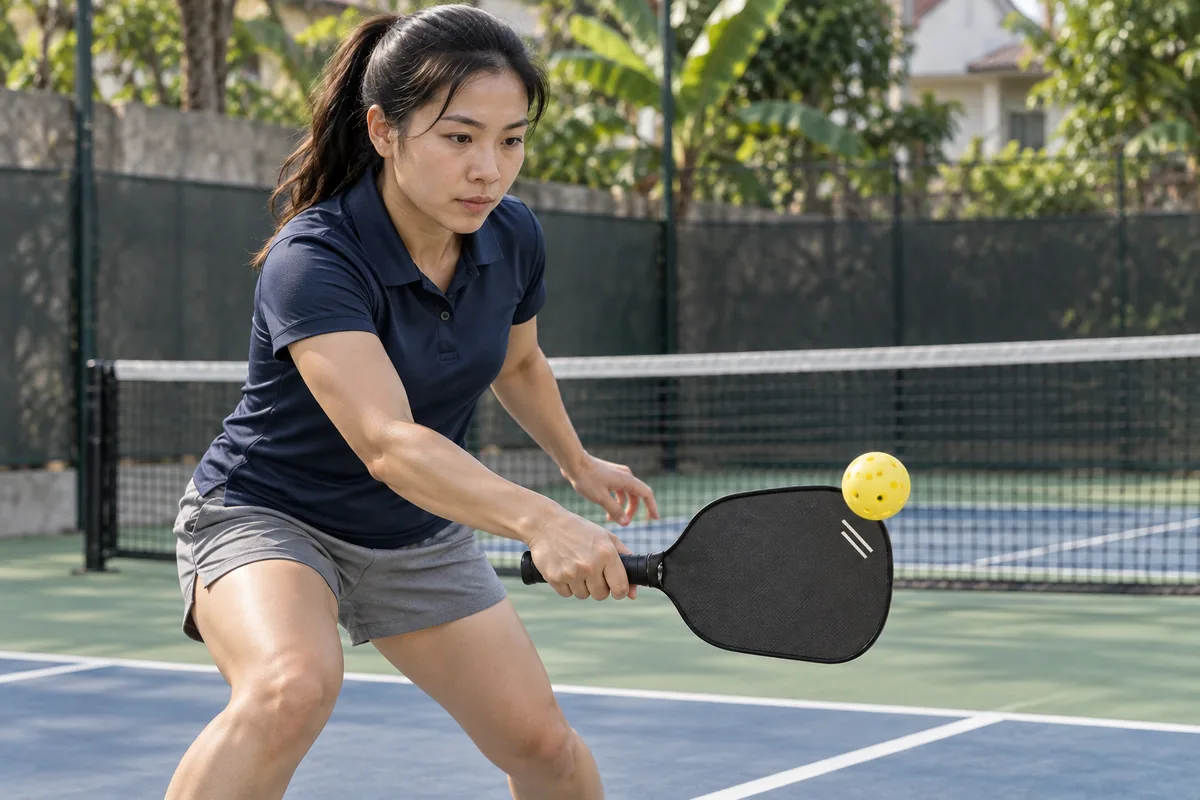
When a buyer wants a printed sample but worries about its visibility during production, I connect the protected artwork to the particular sample job. At the sorting bench, I separate that job's paddles from unrelated demonstration stock. A sample made for the customer's evaluation is not a showroom sample for another enquiry. This gives the buyer a practical route to inspect the result while keeping the purpose of the work unchanged.
Discuss access with the supplier before sending sensitive files. Designers, production staff and other necessary project participants may need different information. Ask how your requested restrictions will apply to those participants rather than assuming nobody except one salesperson can see the artwork. Agree the details that matter to your project; do not substitute an unrealistic promise that makes production impossible.
Decide what a court session is allowed to reveal
Playing evaluation can be private in intention and public in practice. If you bring the paddle to an open club session, other players may see both faces or take photographs. Choose the audience and setting with that possibility in mind. The aim is not to turn a confidentiality discussion into a performance-testing protocol; it is to avoid authorizing public exposure by accident while finding out whether the sample suits your players.
Trade-secret protection depends on confidentiality and reasonable protective steps 6, among other conditions. Do not describe artwork already released publicly as secret merely because the supplier signed a document. A restriction on using your supplied design for other brands remains a different contractual question from whether information qualifies as a trade secret.For the Vietnamese enquiry, the buyer kept the early evaluation within a small selected group rather than making it a promotional event. The paddle could be played with and discussed without treating the session as permission for factory marketing. Any later public launch would be her own decision to communicate, not an assumption we made from the existence of the sample.
Agree photographs and demonstration use separately
A production photo for your approval and a sales photo shown to another buyer have different audiences. Tell us what approval images you need and discuss any limits on wider use. Do the same for rejected prints, spare samples and earlier artwork versions. Material no longer selected for your final paddle can still reveal your design direction.
WIPO lists limiting access and using confidentiality agreements 7 among protective measures. Use that principle to ask practical questions about the particular project, not to claim a security system that has not been confirmed. Put your agreed handling requirements beside the paddle project brief, so the person arranging samples can see both the product request and the restrictions that accompany it.
What Should Happen When the Artwork or Order Changes?
A second colorway, a revised reverse face or a later reorder can reopen the meaning of “this design.” Resolve the change deliberately instead of letting a new attachment silently broaden permission.
Identify the updated design, confirm whether the existing restrictions cover it and record any newly agreed use before production. Keep brand-only design protection separate from approval of the physical sample, and leave unagreed legal or commercial terms open for explicit review.
Carry the protected design into the next production decision
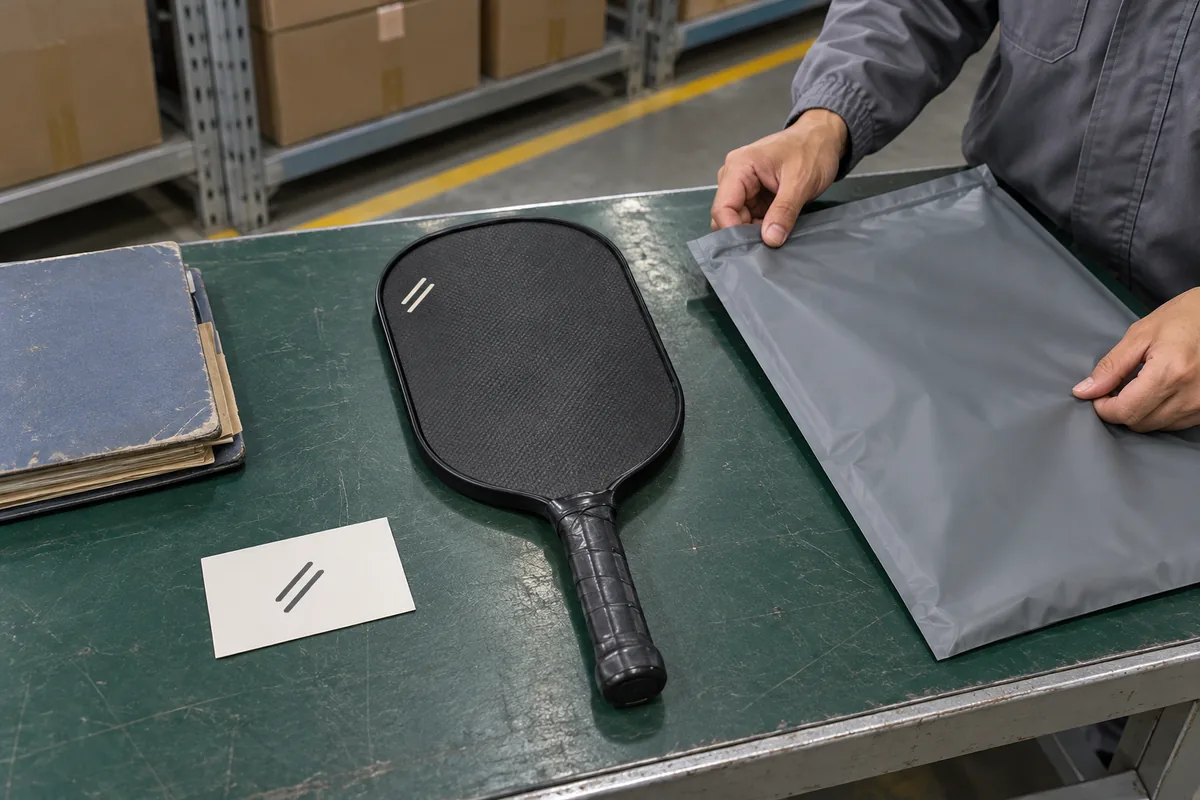
At the final job check, a buyer may want a revised back face while keeping the original front. I put the two faces together for confirmation and remove the superseded back from the active production instructions. The new request changes what we should make, not the brand for which the supplied design may be used. The buyer can then approve the revision without accidentally authorizing a different customer's use of either version.
Connect this step to sample-to-production approval. Accepting color, positioning or a playing sample answers whether to move forward with that product. It does not, by itself, settle permission for advertising, resale under another brand or a transfer of intellectual-property ownership. Ask the question that matches the decision you are actually making.
| Change or event | Confirm before proceeding | Do not silently infer |
|---|---|---|
| Revised face artwork | Which design replaces the earlier version | Permission to reuse the old design elsewhere |
| New brand under the same buyer | Whether use for that brand is authorized | Any brand owned by the buyer is automatically included |
| Promotional photograph request | Intended audience and agreed use | Sample approval permits public marketing |
| Reorder after a gap | Current artwork and continuing agreed scope | An old filename is enough to authorize every change |
Keep the final agreement and attachments together
Both sides need the same final text and the design it refers to. Check the named parties, attachments, approval authority and the specific purpose before signing. If the agreement is electronic, make sure the chosen signing process identifies the intended document and signer rather than relying on a pasted image of a signature alone.
Digital IDs used for document signing 8 are one technical way to associate signing with an identity. They do not resolve unclear commercial wording. Ask your adviser to review duration, applicable law, dispute handling and remedies where needed; this article does not supply agreed values or promise a particular legal outcome.Raise a specific concern instead of making a broad accusation
If you later see a paddle that concerns you, keep the image or listing and explain which protected design element appears to match. Distinguish the supplied artwork from common configuration choices. That makes the concern answerable and helps avoid arguing about a shared material or outline when the actual issue is the graphic.
Send the relevant agreement and design version with the concern. Ask for an explanation of the specific use, and obtain appropriate professional advice if the matter becomes a dispute. Our stated commitment is clear: we do not use your supplied design for another brand or disclose your brand-design materials to other customers. A clear agreement lets both sides evaluate the concern against that commitment rather than against a different, assumed non-compete.
Conclusion
Protect the design you supply, name the brand it is for and distinguish the permitted project use from unrelated production or disclosure. We can put our brand-only use and non-disclosure commitments into the contract without claiming that we stop producing paddles for other brands. Set the scope before samples move, and revisit it when the design or intended use changes.
Discuss your brand's paddle project with Rudy
For a Imported Toray T700 Carbon Fiber custom paddle enquiry, send your chosen configuration, quantity and the design elements you want restricted to your brand. Tell us your confidentiality requirements before sharing sensitive artwork so we can discuss the agreement and sample scope.
Rudy · Factory Partner · info@shuenpickleball.com · WhatsApp +86 137 1215 6638