
The cheapest paddle on a quotation can produce the most expensive stockroom. Ordering another hundred just to reach a discount is tempting, especially when the unit price drops neatly down the page. At our factory in Dongguan, I start with a different question: are you comparing the same build, and can you use the extra paddles?
First select the face material and core on our website so we can establish the configuration. We then quote from the five-paddle minimum and at quantities such as 100, 200, 300 and 500 paddles. Larger quantities usually receive better pricing, but each face-and-core combination has its own costs, so one discount cannot be applied to every build. Choose the quantity by comparing the complete cost and the stock you can realistically use, not the lowest unit price alone.
A quotation ladder is useful when it makes the next decision smaller. Fix the product, compare the cash required at each step, test how much demand supports that stock, and confirm the exact quantity and terms you intend to order.

What Must Stay the Same Across My Quantity Quotes?
A price difference can come from quantity, construction or the finishing choices hidden in the description. You need to know which one you are buying.
Request each quantity tier for one defined face-and-core configuration, with the same shape, thickness, branding and packaging assumptions. Quote alternative builds separately.
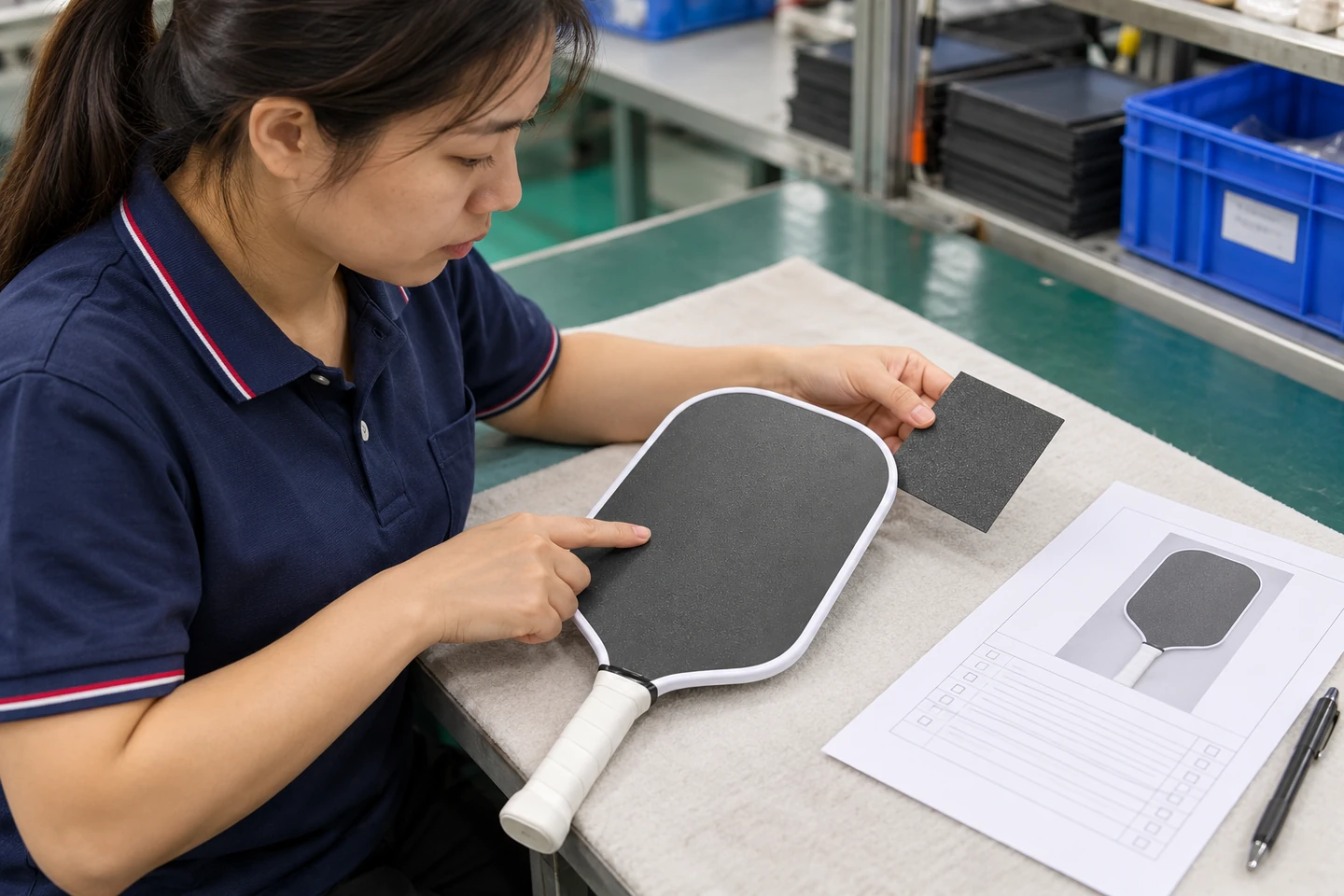
Put the buyer's configuration before the discount
A club buyer in New Zealand wanted to know whether moving from 200 to 500 paddles would make a more expensive face affordable. During our discussion in May 2026, he kept changing both the quantity and the core in the same comparison. I separated the two decisions: first choose the build to price, then compare the quantities for that build. Otherwise, neither of us could tell what the apparent saving meant.
He settled the quotation request around shape 005, Silicon Carbide Grit faces and the C02 Reinforced Honeycomb-Handle EPP–EVA Core, at 14 mm thickness. We kept the five-paddle starting point and the 100, 200, 300 and 500 tiers on one ladder. The other core stayed in a separate enquiry, and he asked us to return comparable totals before deciding how much stock to commit to.
The Silicon Carbide Grit paddle gives that discussion a material starting point. It does not make the internal core or finishing choices interchangeable. The selected construction remains an enquiry configuration to confirm for the project, not a reason to infer a performance advantage from its name.
Keep the finishing scope visible
One logo, several graphics, a different grip and individual retail boxes can change the scope even if the face and core remain the same. Put the intended artwork split and packaging beside every requested quantity. Ask which details affect the price rather than assuming all versions can be pooled into the same discount tier.
Our custom minimum is five paddles per model. That entry point lets you discuss a small starting quantity; it does not say that every mix of unrelated models or constructions receives the price of one larger run. If you want several versions, show the quantity for each and ask us to price that allocation explicitly.
| Quote field | Keep consistent across tiers | If you want an alternative |
|---|---|---|
| Face and core | Named face and exact core ID | Create a separate quotation ladder |
| Shape and thickness | Selected shape and agreed thickness | Identify the changed build |
| Branding and components | Artwork allocation, grip, ring and cap | Ask which change affects the price |
| Packaging and destination | Same packing scope and delivery point | Recalculate the affected charges |
Ask how the price applies to the quantity
A number beside “300” is not enough. Ask whether it is the price for every paddle in that order, what quantity range it covers, and whether any separate setup charge applies. In general pricing terminology, volume and graduated pricing 1 calculate totals differently. Your actual supplier quotation must state which calculation is intended; terminology from another industry is not SHUEN's pricing policy.
Also ask whether the offer is based on one order and one shipment. Separate releases, later purchases or different designs should not silently be added together to claim a tier. We can discuss the requested arrangement, but the written offer needs to describe it. A clear custom paddle brief makes those questions answerable without repeated guesswork.
How Do I Compare the Real Cost of Each Tier?
A lower unit price answers only one part of the purchase. The larger order still needs to be paid for, transported and stored.
Calculate the total cash required at each tier on the same scope, then compare the extra cash and extra units between neighbouring quantities. Keep freight, taxes and other confirmed charges visible.
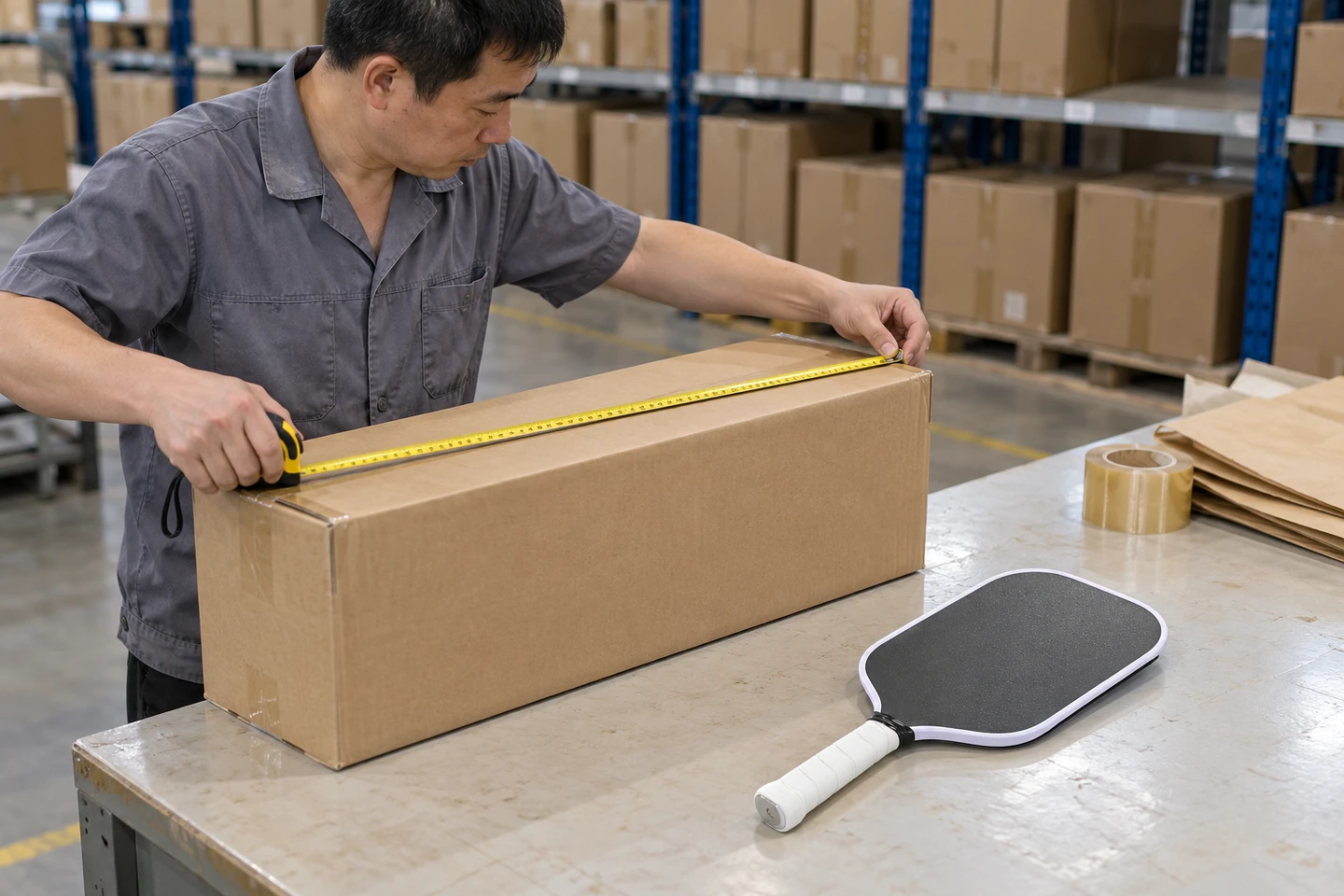
Read the total before the percentage saving
When a buyer points to the lowest unit-price row, I multiply it by the proposed quantity before discussing the discount. That often changes the question from “How much do I save per paddle?” to “What do I need to fund now?” I keep the smaller feasible order beside the larger one, because a larger invoice is not a saving simply because each piece costs less. The buyer can then decide whether the additional stock justifies the additional cash.
Calculation example in USD; these figures are not a supplier quotation. The table assumes the listed unit price applies to every paddle in the row and excludes freight, tax, setup and storage.
| Quantity | Assumed unit price | Goods total | Extra cash versus previous row |
|---|---|---|---|
| 100 | USD 40 | USD 4,000 | Starting comparison |
| 200 | USD 37 | USD 7,400 | USD 3,400 for 100 more |
| 300 | USD 35 | USD 10,500 | USD 3,100 for 100 more |
| 500 | USD 33 | USD 16,500 | USD 6,000 for 200 more |
Moving from 200 to 300 reduces the assumed unit price by USD 2, but requires USD 3,100 more for goods. The implied extra cash per additional paddle is USD 31: USD 3,100 divided by 100. That is a comparison tool, not a second quoted price, and it only holds under the table's assumptions.
Compare delivery scope before dividing by quantity
Goods total plus the buyer's confirmed freight, insurance, clearance, tax and other applicable charges gives a more useful funding comparison than goods price alone. Avoid counting a charge twice when it is already included. The chosen Incoterms rule and named place 2 help identify who carries particular delivery responsibilities, costs and risks. They do not replace the rest of the sales agreement.
For a New Zealand destination, check the current Customs guidance on import duties and GST 3 and have the applicable treatment confirmed for the actual shipment. Do not copy a tax estimate from another buyer's country. Keep an amount needed at import visible in your cash plan even when its eventual accounting treatment may differ.
Recalculate freight at each realistic step
Packing volume can change the comparison. A larger order may spread some charges across more paddles, but another carton or a different shipping service can also create a step in total freight. Courier dimensional-weight pricing 4 is one reason a neat unit-price ladder does not automatically become a neat delivered-cost ladder.
Ask for the packing assumptions and a shipment estimate for the quantities you are seriously considering. If two tiers have almost the same delivered cost per paddle, the smaller commitment may be more useful. If the saving is substantial, test it against demand and cash rather than treating it as permission to order. Unconfirmed freight stays a visible estimate, not a fixed price hidden inside your total.
How Much Stock Can My Demand Actually Support?
The right tier depends on what happens after the cartons arrive. A quotation cannot establish how many paddles your customers will want.
Set a realistic demand horizon, separate firm needs from hopeful interest, and use a small evaluation quantity when the configuration is still unproven with your intended players.

Separate interest from committed use
The New Zealand buyer's next question was whether positive club interest justified the 500-paddle option. I asked him to separate confirmed club requirements from players who only wanted to try the sample. Interest was useful, but it did not establish the timing or quantity of purchases. He kept 200 and 300 as the immediate quotation comparison and left 500 as a later possibility rather than treating it as committed demand.
Choose a planning period that matches how you actually sell or distribute. Identify current stock, expected use during that period and the buffer you can justify. Do not invent a year's demand to make a discount look comfortable. The SBA's market-research guidance 5 distinguishes questions about demand, customers and pricing that deserve investigation before a purchase decision.
A waiting list, a retailer's expression of interest and a confirmed order are different signals. Keep them separate. If the higher tier only works when every optimistic enquiry converts immediately, the stock plan is doing too much work to defend the price.
Use playing feedback to settle the build, not to predict every sale
When players have not used the proposed paddle, a five-paddle start can answer a more urgent question than the 500-piece price: is this a configuration worth scaling? Let the intended players use it on court, including ordinary groundstrokes, and ask whether the grip, shape and overall response fit their needs. This is a product-selection step, not a claim that five opinions establish market demand.
Keep the test proportionate to the buying decision. A clear grip concern is a reason to resolve the build before multiplying it into stock. If the build works but interest is still uncertain, the issue has moved from product suitability to sales quantity. The material, thickness and target-price discussion helps connect the selected product with the customer and price position you intend to serve.
Do not let a discount turn an unfinished configuration into a bulk purchase. Equally, do not keep repeating samples when the product is settled and the real question is simply how much you can sell.
Put a cost on waiting stock
Stock needs space, handling and cash while it waits. New Zealand's business guidance on inventory management 6 explains why holding too much inventory can create costs and tie up funds. For a custom paddle line, include the practical risk that you may later change the graphics or configuration before the earlier stock is used.
Test a slower-sales case alongside your expected case. Ask what happens if the next hundred paddles take twice as long to move, without pretending that this is a forecast. Can you still fund operations and the next useful product decision? If not, the cheaper tier may be too large for now.
The answer does not have to be the minimum quantity. A larger order can be sensible when demand, configuration and cash are sufficiently clear. The point is to earn the higher tier with evidence, not buy it because it appears at the bottom of the quote.
What Should I Confirm Before Placing the Chosen Order?
Choosing a number is not the end of the comparison. The factory must know which configuration and commercial offer that number belongs to.
Confirm the exact build, quantity allocation, total price, payment timing, packing, delivery scope and quote validity. Ask for alternatives explicitly; do not assume a large-tier price survives a smaller or split order.
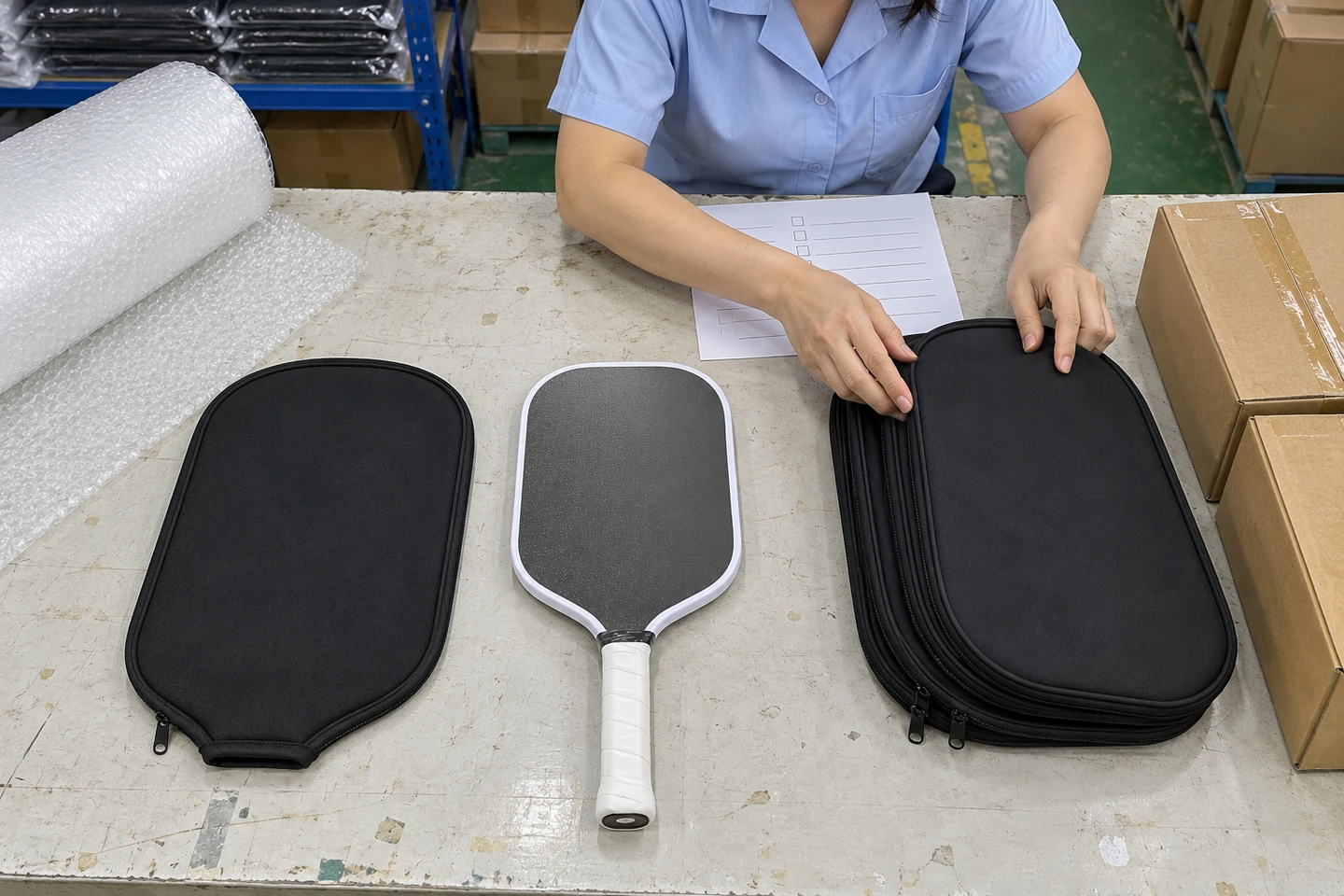
Check the cash timing as well as the total
At the final comparison, I ask buyers to place the proposed payment dates beside their expected sales receipts. If the larger tier would use money needed for freight or ordinary operations, I bring the smaller tier back into the discussion. Unit savings are not useful when the order leaves the business unable to complete delivery. The next step is to choose a fundable quantity or request a different arrangement, not to hide the shortfall in a sales forecast.
A cash-flow forecast 7 should show when money comes in and goes out, not merely whether a sale looks profitable. Use the payment terms actually offered. Do not assume a deposit percentage, credit period or future sample-fee credit that has not been agreed for your order.
Turn the selected row into a clear order request
The final request should let the supplier reconstruct the chosen offer without searching through several messages. A pro forma invoice 8 can set out the product description, quantities, prices and other transaction details before shipment. Check the actual document against your decision; receiving a formatted invoice does not mean every field is correct.
| Confirm before ordering | What to send or check | Do not assume |
|---|---|---|
| Chosen build | Face, core ID, shape, thickness and agreed finish | A material name defines the whole paddle |
| Quantity allocation | Total plus each model or artwork allocation | Different builds pool into one discount |
| Complete offer | Currency, goods total, separate charges and validity | An old price remains open indefinitely |
| Payment and delivery | Agreed timing, destination and shipping scope | Future sales arrive before payments fall due |
Check payment and delivery arrangements with the exact order in mind. If the destination, packaging or artwork allocation changes, ask which figures need updating before you pay.
Keep the next order separate unless an arrangement is agreed
You can ask whether an initial quantity followed by a later release is workable. You can also ask for a smaller tier now and a fresh quotation later. These are requests to discuss, not automatic entitlements to the price of one larger production run. Do not promise a future order merely to reach today's discount.
Keep the selected quantity and the next review point clear. Revisit the ladder when actual demand, stock on hand or the configuration changes. That makes the quotation a planning tool rather than a reason to repeat the same order size forever.
Conclusion
Start with the face material and core, then request comparable prices from five paddles through the larger quantity tiers you are considering. Different configurations need different quotations. Compare complete cash requirements, extra stock, demand and payment timing before choosing a row. The most economical order is the quantity that supports your actual business need without paying for a discount you cannot use.
Request a Configuration-Specific Quantity Ladder
Start with the custom Silicon Carbide Grit paddle. Send your selected face, core, shape, thickness, artwork allocation, packaging and destination, plus the quantities you want compared. We can discuss the five-paddle starting point and separate quotations at 100, 200, 300 and 500 paddles.