A lower MOQ is not much of a win if you spend weeks persuading the wrong supplier to accept it. I would rather start with a factory whose normal order size fits your first buying decision, then negotiate the details that still stand in the way.
Look for a low-MOQ factory before asking a high-MOQ supplier for an exception. SHUEN starts at five paddles. Keep enough pieces for repeated evaluation rather than reducing the request to one; one paddle is not enough to judge a factory's production capability. For special-material combinations, each selected special material requires at least two paddles and the whole order must still total at least five.
The negotiation is about finding a workable first commitment, not winning the smallest possible number. I separate that decision into supplier fit, optional scope, a concrete counteroffer, and the response when a supplier says no.
Is This Supplier a Good Fit for a Small First Order?
Before discussing concessions, I want to know whether a small order belongs in the supplier's business at all. An exceptional favor is a weaker starting point than a clearly offered service.
Choose suppliers whose normal minimum and customization scope fit your project; negotiate a remaining gap, not a complete mismatch in business models.
Ask what the minimum actually covers
In May 2026, a New Zealand private-label owner asked about five paddles in shape 006, with 3K carbon fiber faces, C10 Split-Handle MPP–EVA Foam Cores and 14 mm thickness. She had approached a supplier with a much larger minimum and wanted to know whether requesting only one paddle from us was the strongest bargaining position. I explained that our starting quantity was five and that one finished piece could not adequately reveal production consistency. She chose to request a five-paddle quotation for that single configuration rather than keep negotiating for one.
That was a supplier-selection decision, not a concession we invented to close the conversation. Our custom 3K paddle configuration provides a concrete product starting point. The face, core and shape identify what she wanted quoted; the core name does not promise a particular playing result.
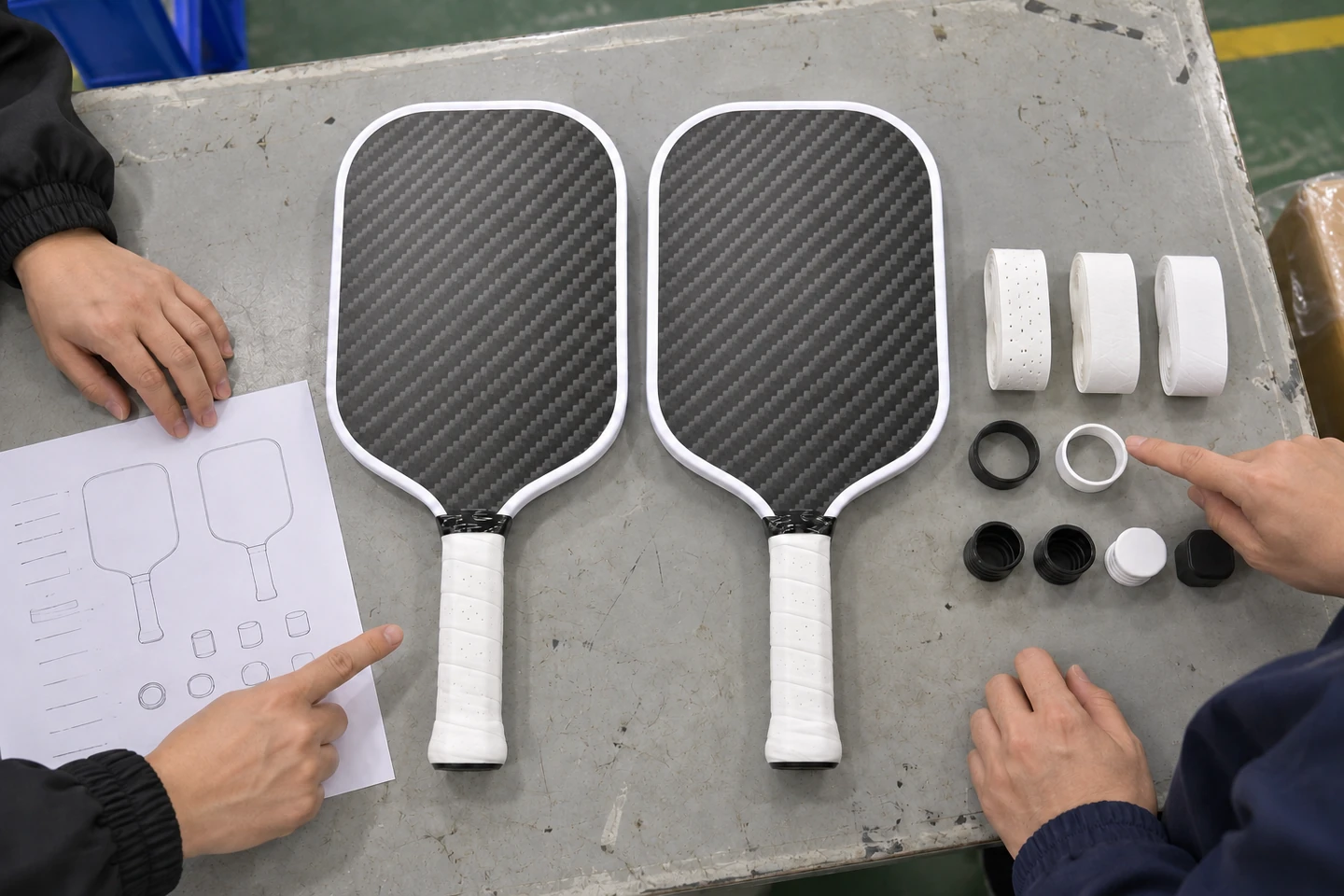
Ask whether a quoted minimum applies to the whole order, each model, each artwork, or a specially sourced component. Those are different constraints. Our custom-model minimum is five per model; standard models can be mixed to a total of five. The special-material arrangement still requires at least two per selected special material and at least five overall. Do not turn a component-level allowance into permission for a two-paddle order.
Look for a repeatable small-order process
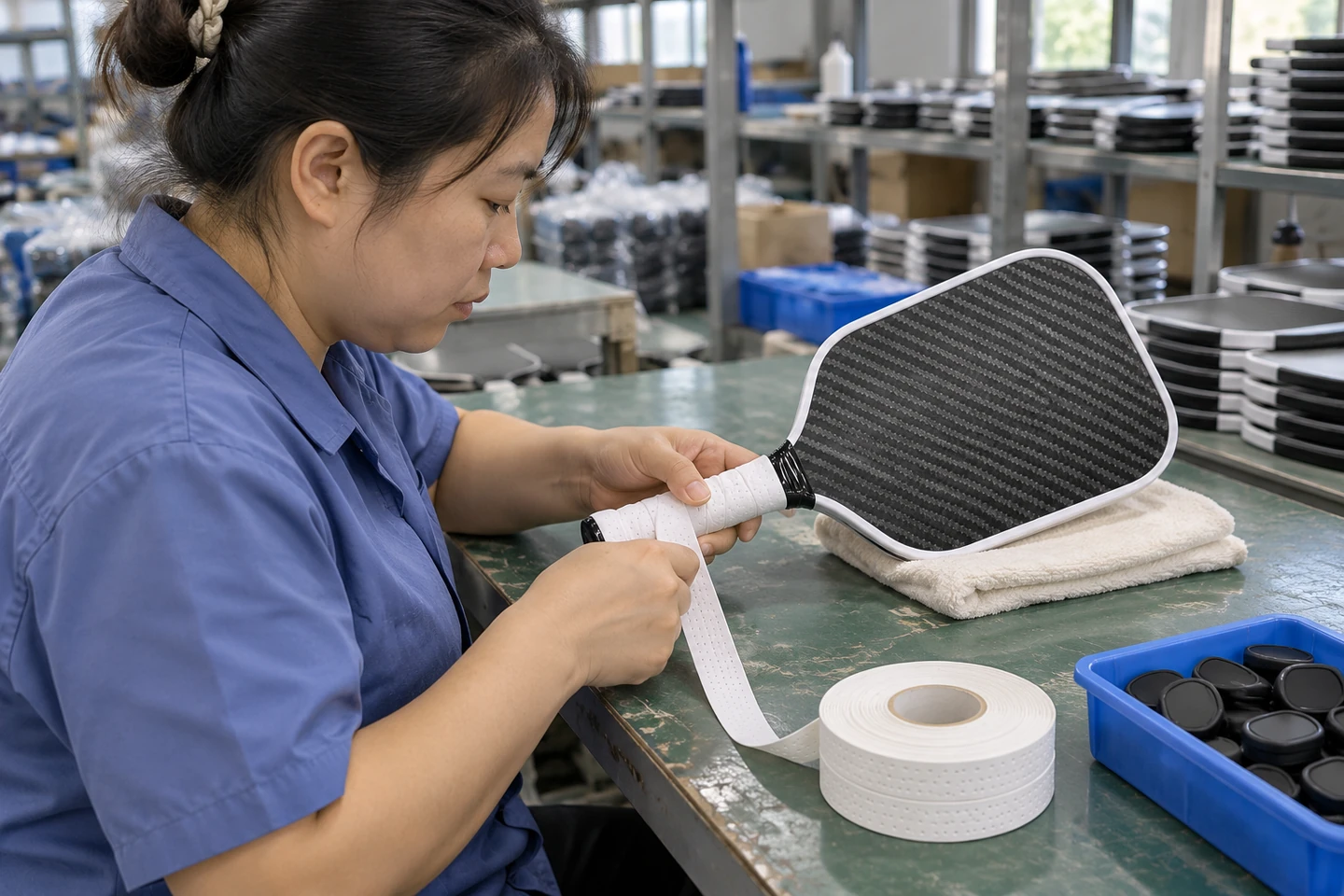
A factory can say yes to a small quantity and still leave the scope unclear. Ask how configuration confirmation, sample preparation, branding review and inspection will be handled. At our grip-finishing bench, a worker still has to fit the grip correctly on a small batch. Fewer pieces do not remove the physical work or the need to inspect the finished paddle.
ASQ's supplier selection criteria 1 include technical support, capacity, delivery and the total cost of working with a supplier, rather than purchase price alone. I use that broader view when advising a first-time buyer: a low minimum should come with a clear route to the product you need.
| What the supplier offers | What to establish | Negotiation decision |
|---|---|---|
| A normal small-order service | The covered model and branding scope | Continue with configuration and terms |
| A one-time quantity exception | Which requirements changed to allow it | Compare the complete revised offer |
| A large minimum tied to your requested development | Whether existing options meet the same need | Discuss a narrower route |
| A large minimum with no workable alternative | Whether the order fits your actual budget and demand | Keep searching rather than overbuying |
Keep a real alternative available
Your alternative might be another suitable supplier, a simpler launch, or waiting until the project is ready. Harvard Business School's explanation of BATNA 2 describes the course you can take if no agreement is reached. For this purchase, I would assess that alternative before treating the first supplier's number as unavoidable.
Do not bluff about another offer. Compare actual available scope and your own ability to proceed. If every discussion starts with a quantity you cannot reasonably use, changing the supplier shortlist may solve more than another discount request.
Which Requirements Can I Trade Without Weakening the Product?
Once the supplier is a reasonable fit, the useful question is what can change. I do not put the face material and an optional logo component into the same bargaining basket.
Offer flexibility on genuinely optional presentation or development work while keeping the agreed face, core, shape, thickness and quality requirements explicit.
Separate the product from the extras
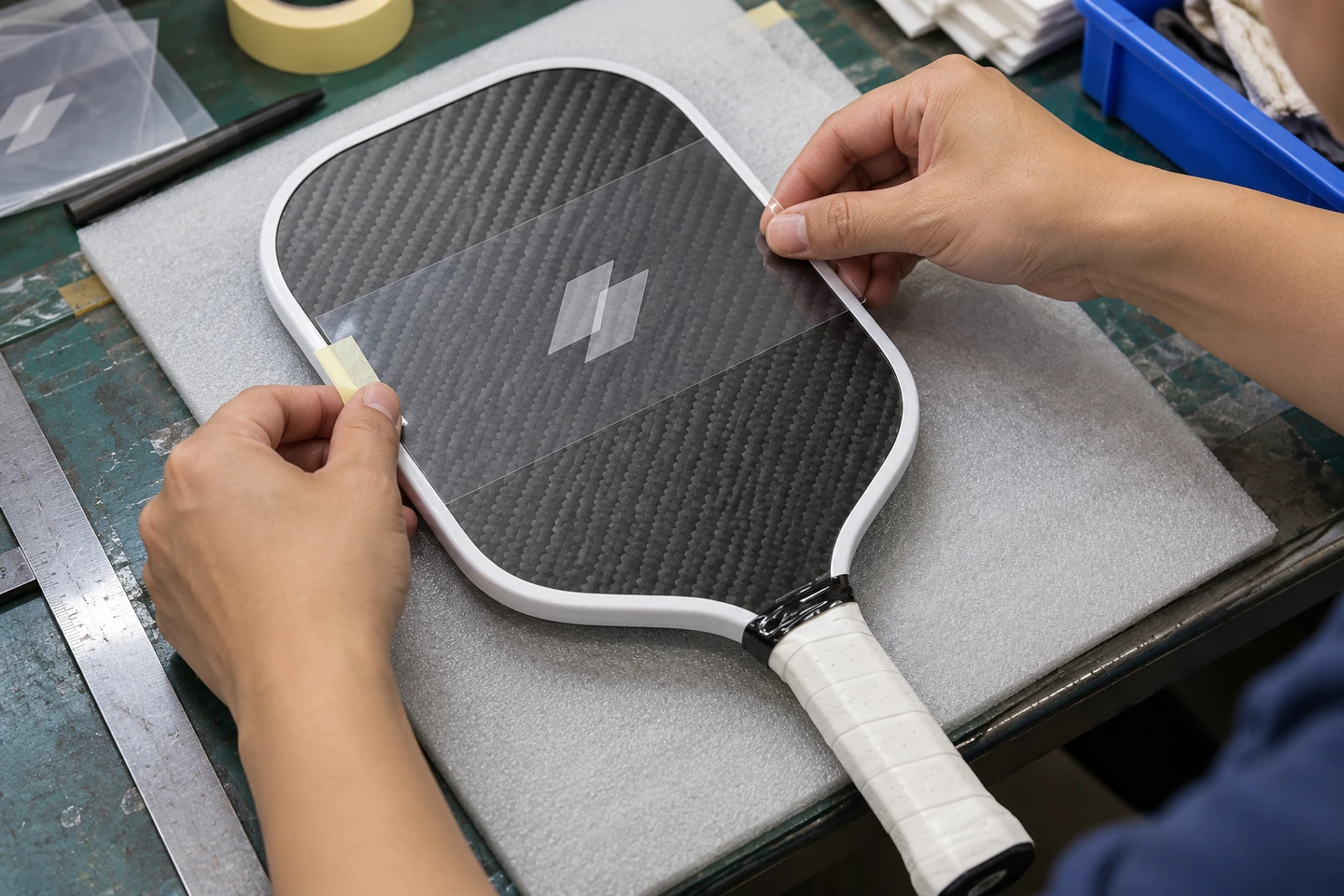
The New Zealand buyer's next concern was whether every branding detail had to be included in the first request. At the artwork bench, I compared the face layout with her request for a dedicated logo ring. I kept the selected 3K and C10 build unchanged because changing the structure would change the product she wanted to evaluate. She decided to postpone the dedicated ring request and ask for an available component option to be quoted instead.
That choice did not automatically reduce the MOQ or guarantee a cheaper total. It removed one separate development question from the first negotiation. Custom logo rings and butt caps require dedicated tooling, quoted for the project. The useful trade is asking whether that work is needed now, not assuming the factory will absorb it.
Review the paddle customization options by function. Face graphics, edge color, grip and molded logo components are not interchangeable forms of branding. Keep the detail that your first product decision depends on; postpone an optional detail only if its absence will not make the sample misleading.
Give the supplier a specific choice to consider
Negotiators call trading across differently valued issues logrolling 3. The practical point here is to offer a change you can genuinely accept and ask whether it addresses the supplier's constraint. “Can we use one approved artwork instead of several?” is clearer than “Please support my startup.”
| Possible flexibility | What stays protected | What to ask before accepting |
|---|---|---|
| One artwork direction | Agreed product construction | Does this alter the minimum or only the setup scope? |
| An available grip or ring option | Required fit and usable finish | Which exact component will be supplied? |
| Simpler packaging | Appropriate protection for shipment | What protection remains and what is excluded? |
| Existing shape rather than new development | The intended dimensions and handling requirements | Does the existing option actually meet the brief? |
If an existing option does not meet the brief, it is not an honest substitute. I prefer a clearly declined trade to an agreement that produces the wrong paddle. A proposal to remove complexity needs the supplier's response, not an assumed saving attached to every deleted item.
Reduce avoidable revisions, not necessary checks
A settled artwork direction can make a small project easier to discuss. Adobe explains that vector artwork 4 can scale without the resolution loss associated with enlarging raster images. For a logo, supplying the appropriate editable artwork can remove uncertainty about the design you are asking us to place.
That is different from waiving the sample review or telling the factory to use any material that is convenient. Name which changes you authorize and which you do not. If the discussion moves from manufacturing your defined design toward developing one with the factory, clarify the OEM or ODM development scope before treating the new proposal as equivalent to the old one.
How Should I Present a Concrete MOQ Counteroffer?
A counteroffer should be easy to answer. If I must guess which material, quantity or optional work the buyer is changing, the next message will be a clarification rather than a decision.
State one complete first-order proposal, explain the limited flexibility you are offering, and ask for the revised quantity, scope and total cost together.

Put the requested commitment in one message
When the buyer asked how to approach the remaining quotation, I condensed her request into one configuration and one optional change. I did not attach a promise of future orders because she had not established demand. She chose to request the five-paddle build without dedicated logo-component tooling, with later production to be discussed only after evaluation. That gave the factory a defined offer to answer without treating a possible future order as a present commitment.
A useful message reads: “Please quote five paddles in shape 006, 14 mm, with 3K carbon fiber faces and the C10 Split-Handle MPP–EVA Foam Core. Keep that build unchanged. For this first order, please quote an available grip, ring and butt-cap arrangement instead of dedicated logo tooling. Confirm the artwork scope, packaging, delivery terms and complete amount. If this proposal does not fit your minimum, please identify the specific condition that prevents it.”
Adapt the message to your real requirements. Do not copy a configuration merely because it makes the request sound precise. The purpose is to make a clear commercial proposal, not to add technical vocabulary that the buyer cannot assess.
Keep changes attached to the same product
NASA describes a configuration baseline 5 as an agreed description of product attributes at a point in time. The practical discipline I borrow is simple: compare the revised offer against the same defined paddle, and identify each change explicitly.
If the supplier responds with another core, a different thickness or altered artwork scope, ask whether that is an alternative proposal. It might be worth considering, but it is not merely a lower minimum for the original product. Keep the original request beside the alternative until you decide which you want.
Ask for any separate development charge to be identified rather than hidden inside an attractive unit price. A higher per-piece price for a smaller order is a proposal to evaluate, not an automatic reason to reject it. Equally, a lower unit price does not justify buying stock that your first stage does not need. Compare the cash commitment and the usefulness of the actual goods.
Ask for a complete commercial answer
A supplier can accept the quantity while leaving shipping or tooling unresolved. ICC's Incoterms 2020 rules 6 address the allocation of costs, risks and responsibilities between seller and buyer. Identify the delivery arrangement and destination when comparing proposals, rather than treating every quoted total as the same service.
Before paying, reconcile the payment and delivery details with the accepted configuration, quantity and included work. Ask when each payment is due, what confirmation precedes production, and what shipment information will be provided. These questions do not require inventing a payment policy; they require the supplier to state the policy that applies to your order.
Keep future demand separate. You can describe the market you intend to serve and the decision that follows evaluation. Do not guarantee an annual volume, automatic reorder or exclusive relationship merely to obtain a small first shipment. A credible modest proposal is more useful than a large promise you cannot support.
What Should I Do If the Supplier Refuses the Lower Quantity?
“No” can mean the proposed configuration is unsuitable for that quantity, a particular component has a minimum, or the supplier simply does not serve small orders. Those answers call for different decisions.
Clarify the reason once, revise only a requirement you can genuinely change, and move to another suitable supplier or pause the purchase when the gap remains.

Diagnose the refusal before making another concession
The buyer still asked whether she should press us to go below five after simplifying the branding. I explained that postponing dedicated tooling did not remove our five-paddle starting quantity. She decided to retain the five-paddle quotation and leave the larger launch undecided. I supported that choice because a workable first order was more important than another round of bargaining over a single piece.
The Program on Negotiation describes active listening 7 through paraphrasing, inquiry and acknowledgment. Here, that means checking the reason you heard: is the obstacle the model quantity, a special material, or optional development? Ask for the smallest viable proposal under the requirements you have actually retained.
Avoid firing back with a lower number before understanding the answer. Equally, you do not need endless explanations. Once the constraint is clear, decide whether changing the relevant requirement helps your project.
| Supplier response | Useful next move | Stop condition |
|---|---|---|
| The model minimum is firm | Decide whether that quantity fits your first commitment | It exceeds what you can sensibly buy |
| An optional component causes the difficulty | Ask about an acceptable available component | The replacement would undermine the product |
| A different specification is offered | Assess it as a separate proposal | The essential build is no longer available |
| No workable small-order route exists | Thank the supplier and pursue another suitable option | Further concessions add no useful path |
Protect the reason for buying a small batch
Five paddles leave room for repeated use and comparison across finished pieces. One attractive specimen cannot sufficiently establish a factory's production capability. That does not make five a statistical certification of the factory; it makes the first purchase more useful than negotiating everything down to one object.
On a New Zealand outdoor court, putting the selected paddle into actual play serves the buying decision that justified the order. The negotiation should preserve that opportunity, not replace it with a single display piece and a large future promise. At this stage, the question is whether to proceed with the workable small batch. Detailed player allocation and testing methods can follow after that decision.
If even the viable minimum is beyond the current project, pause. A small business does not owe a supplier an order simply because the conversations have been friendly or technically helpful.
Exit cleanly when the fit is wrong
Past messages are not a reason to accept unwanted inventory. The Program on Negotiation's discussion of sunk costs in negotiation 8 warns against allowing time and effort already spent to drive further commitments.
A clear closing message can say that the current minimum does not fit the first stage, thank the supplier for clarifying it, and leave future contact open without promising an order. Then compare the alternative you prepared. Success is a sound buying decision, including a decision not to buy, rather than making every supplier say yes.
Conclusion
Start with a supplier that already supports a sensible first order. Negotiate optional scope openly, keep the product requirements intact, and present a counteroffer the factory can answer as a complete proposal. If the minimum remains unsuitable, move on or pause rather than promise demand you have not established. Our starting quantity is five paddles; special-material mixes require at least two per selected special material and at least five overall. The goal is a useful first purchase, not the lowest number at any cost.
Discuss a workable first order with SHUEN. Start with the custom 3K pickleball paddle. Send your selected shape, core, thickness, requested quantity, essential branding, optional details you can postpone, and delivery destination. We can clarify the applicable minimum and quote the defined scope.