Which document would let you put a Toray claim on your own paddle listing with confidence? At our factory, I treat that as a purchasing question: the evidence needs to follow the material into the proposed job, not stop at the supplier's brochure.
Ask your supplier for the Toray carbon-fiber import customs declaration as purchasing evidence to help verify the face material's authenticity. Review it with the corresponding purchase, delivery and material-lot records, so the evidence connects the imported fiber to your custom paddles rather than merely showing an unrelated import.
The useful result is a small, connected evidence package. You should know what to request, which declaration fields need explanation, how an intermediary changes the paperwork and what to do when an acceptance question remains open.
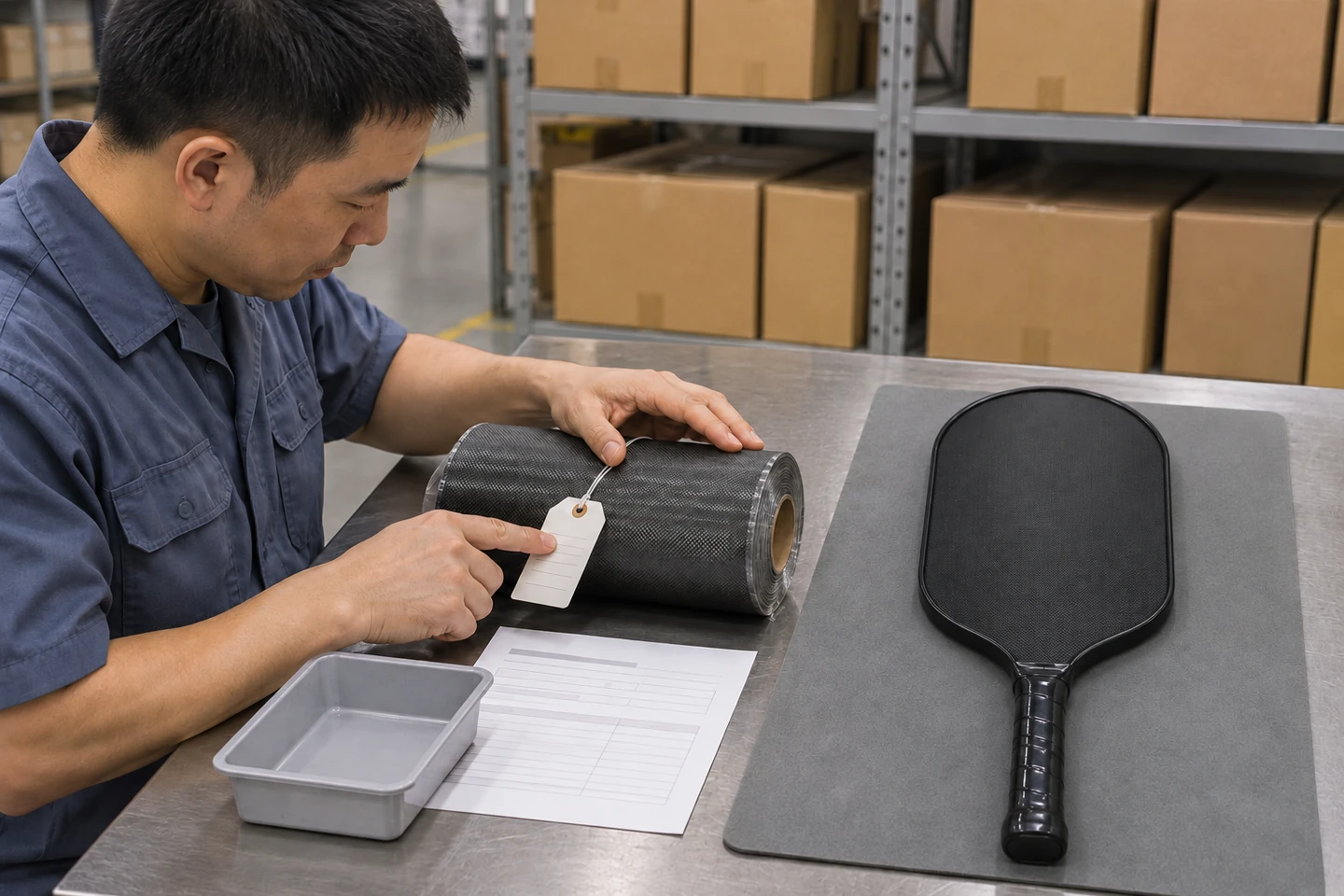
What Should I Include in the Raw-Material Evidence Request?
“Send proof of Toray” leaves the supplier guessing whether you want a brochure, an invoice or the history of a particular roll. Name the purchasing decision before requesting attachments.
Request the import declaration, corresponding purchasing and delivery documents, available batch documents and the connection to the proposed production material. State the exact face claim you need supported and discuss what can be shared privately.

Start with the buyer's actual claim
“Why would the importer's name be different from the paddle factory's?” a New Zealand brand owner asked me. I explained that a fabric supplier or distributor could sit between the fiber importer and the factory; the missing purchase connection mattered more than matching one company name.
We discussed this in June 2026 for an enquiry covering 15 paddles in shape 002, with Imported Toray T700 Carbon Fiber faces and C09 Carbon-Wrapped EPP Cores with 20 mm EVA Rims, at 16 mm paddle thickness. He kept that configuration and asked for the upstream import evidence together with the intervening purchase records before deciding on samples. The 20 mm dimension described the EVA rim, not the paddle thickness.
Our custom Toray T700 paddle gives that enquiry a defined material starting point. Keep the manufacturer claim separate from the origin claim: asking for Toray does not automatically mean asking for fiber manufactured in Japan.
Request documents that answer different questions
Ask first for the relevant raw-fiber import declaration and the purchase invoice or delivery document that identifies the goods. Add available manufacturer or upstream batch certificates, then ask how the factory identifies the material received for your job. A certificate of analysis or conformity is useful only within its stated issuer, batch and scope. Do not assume every supply route produces an identical certificate set.
| Evidence to request | Question it helps answer | Connection still needed |
|---|---|---|
| Raw-material import declaration | What goods were declared for import? | Relevant invoice and imported material identity |
| Purchase invoice and delivery note | Who supplied which material to whom? | Connection through any reseller or converter |
| Available batch certificate or analysis | What does the issuer state about that batch? | Issuer, batch identity and actual scope |
| Receiving and material-use references | Which stock is intended for this paddle job? | Link to the agreed production batch |
A public technical sheet serves a different purpose. Toray's carbon-fiber and prepreg data sheets 1 describe their values as lot-average typical properties for material selection. Use them to understand the offered grade, while requesting purchasing evidence for the material actually supplied.
Agree a readable package before samples move
Put the request in your custom paddle purchasing brief, beside the face requirement and enquiry quantity. Ask which documents are available now, which depend on selecting the production lot and who can explain the connections. That makes a missing item a clear follow-up rather than a surprise after payment.
Commercial privacy deserves a practical answer. Prices, bank details and unrelated customer information can be covered. The material description and enough relevant parties, dates and reference fields must remain readable for the intended check. If that cannot be shared directly, discuss a controlled review or confirmation through the appropriate issuer. Do not demand public posting of confidential purchasing records.
Which Import Declaration Details Need to Match?
A large stamp attracts attention, but the goods description and transaction connections do more purchasing work. Read the document as one part of a material movement, not as a stand-alone authenticity award.
Check the document's status, relevant parties, goods description, dates, quantities and linking references against the corresponding transaction documents. Ask about differences rather than filling gaps with assumptions.
Check what was imported and by whom
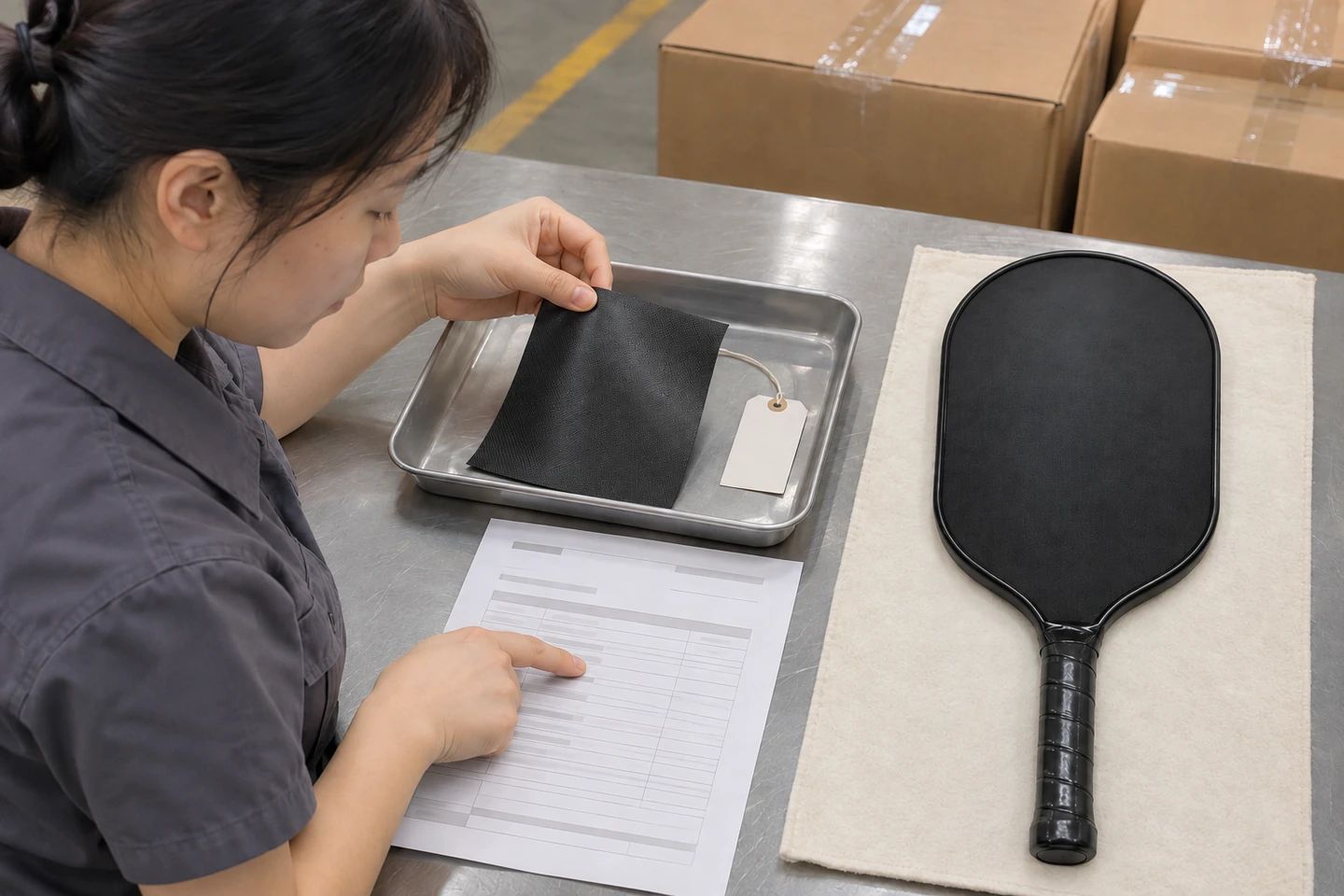
At a document review, a buyer points to a declaration describing carbon fiber while the quotation describes finished carbon cloth. I put those descriptions side by side and ask which supplier converted the fiber into the cloth. The difference needs a connecting record, not an immediate counterfeit accusation. Until that relationship is explained, I keep the proposed face claim open rather than approving it from the declaration alone.
Field names and layouts vary. Request the complete relevant page and its supporting references, rather than insisting that every form use the same English labels. A translation can help you read the source; it should retain the original identifiers and any qualification about status. Never let a translated summary replace an unreadable source entirely.
| Field or detail | Compare it with | Question when it differs |
|---|---|---|
| Importer and supplier identities | Purchase and delivery documents | Which party supplied the factory? |
| Goods description and designation | Invoice, batch label and specification | Fiber, fabric or another material form? |
| Dates and document status | Receipt and proposed production timing | Does the sequence describe available stock? |
| Quantity and units | Related receipt or allocation information | Are kilograms, rolls and pieces being confused? |
| Declaration and transaction references | Supporting documents | Which reference connects these records? |
Reconcile dates and quantities without inventing a yield
An older declaration can still concern material remaining in stock; an old date alone does not establish a problem. Ask which received lot is still available and how the supplier connects it to the proposed run. Conversely, a recent date does not establish that the stock is yours. Timing becomes useful when it follows the actual goods.
Quantity checks also need the right units. Imported fiber weight, fabric roll length and finished-paddle count are not interchangeable. Processing, laminate construction and cutting waste can affect the relationship. Ask for an understandable allocation explanation where needed, rather than inventing a universal “paddles per kilogram” conversion or demanding an exact match between unlike quantities.
The commercial invoice's clearance role 2 includes supporting import and export clearance and customs assessment of duties and taxes, as the U.S. International Trade Administration explains. Use it to understand the transaction, then follow the material connection. Keep the upstream raw-fiber import into China separate from your finished-paddle import into New Zealand.
Preserve origin and issue status accurately
Toray's T700S data sheet 3 lists manufacturing locations in Japan, the United States, Korea and France. Read the origin evidence for the particular goods if country of manufacture matters to your listing. Do not turn a Japanese company name into a Japanese-origin claim or add a grade suffix absent from the purchasing documents.
Check whether the document is issued, a draft or a proposed amendment. A file marked “PROPOSED AMENDMENT — NOT ISSUED” must retain that status; cropping the label does not complete the transaction. For a suspicious alteration or unresolved issuer question, request confirmation through an independently established issuer contact or applicable official process. A polished scan is not a substitute for that response.
How Do I Follow Resold or Converted Material into Production?
The importer may sell fiber to a fabric maker, and the factory may buy that fabric domestically. Your task is to understand the steps that occurred, without requiring the paddle factory to appear on a declaration for an import it did not make.
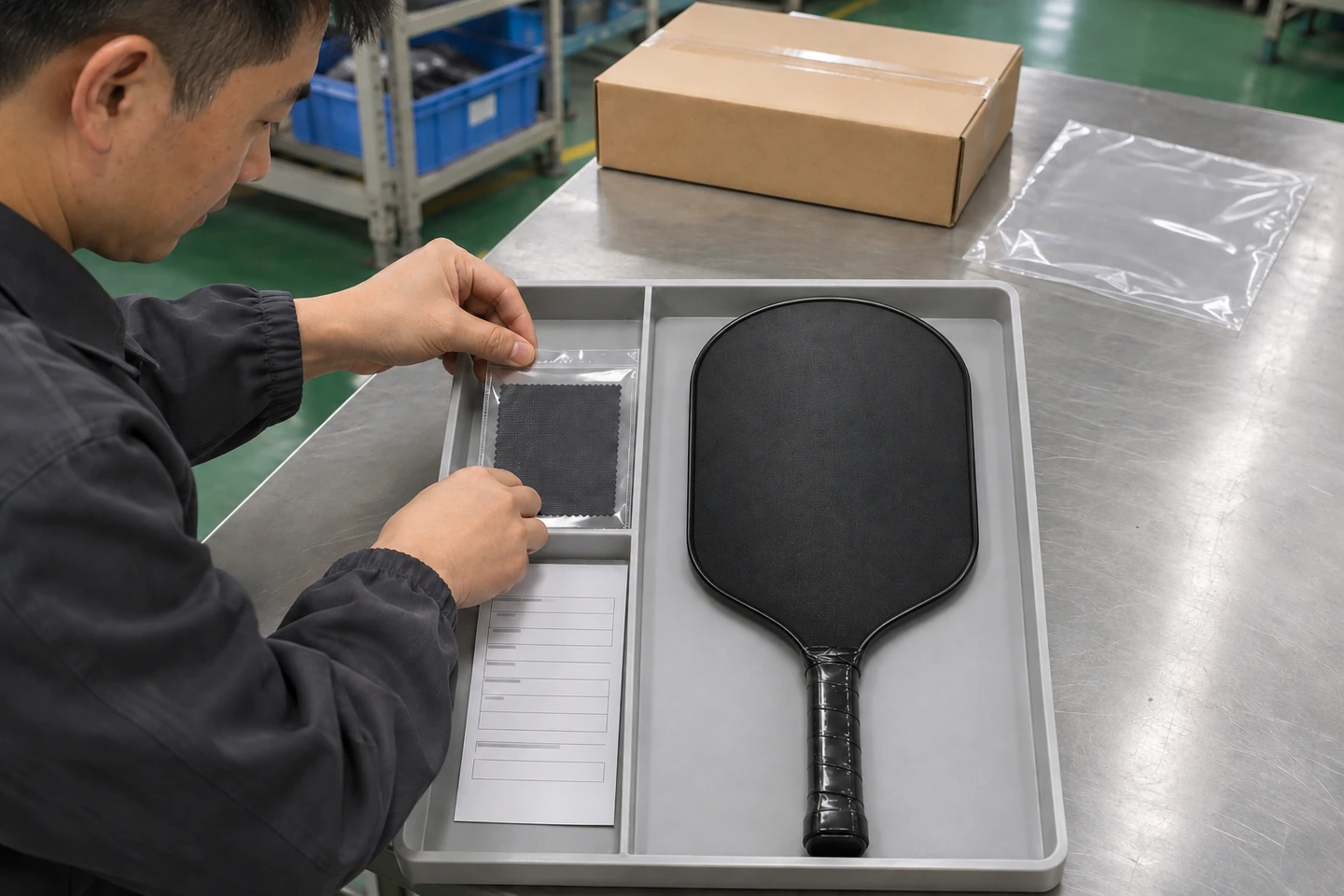
Follow the material through each relevant sale or conversion, then connect the received roll or lot to the paddle job. Require an understandable relationship between identifiers, even when processing changes the material's name or reference.
Bridge the intermediary instead of rejecting its name
For the New Zealand enquiry, the buyer's next concern was how to ask for proof without demanding somebody else's complete accounts. I narrowed the request to the relevant upstream purchase and delivery references, plus an explanation of the material sold onward. He agreed to ask for the connecting transaction first and leave unrelated pricing covered. The enquiry could continue without pretending that an intermediary's existence settled authenticity either way.
A domestic invoice for fabric is a useful connection, but “carbon cloth” alone may be too broad for a named-fiber claim. Ask the fabric supplier to identify the input fiber and the output fabric lot it relates to. If a certificate accompanies the fabric, check whether it describes composition, conformity with an order or a tested property. Those are different statements.
Connect received stock to the material being cut
At the material-preparation bench, I want the roll selected for cutting to remain identifiable against the job's face requirement. When a buyer worries that approved paperwork could sit beside unrelated stock, I ask for the receiving reference and the material-use connection for that job. The purchasing decision is whether the proposed production uses the identified material, not whether a supplier can display a convincing folder.
The GS1 explanation of traceability inputs and outputs 4 describes the links an internal system needs while leaving the internal system itself outside that standard's scope. For this purchase, ask how incoming material, cutting or lay-up allocation and finished-paddle batches are connected. The supplier can explain its actual method; a particular software platform is not the requirement.
Use the paddle specification checklist to keep the Toray face requirement alongside shape 002, C09 and 16 mm thickness. A core description does not identify the face fiber, and a clear face record does not authorize an unagreed core substitution.
Make the evidence usable for your sales claim
For New Zealand sales, the Commerce Commission says claims need reasonable grounds when they are made 5. Keep the relevant sourcing evidence before writing the named-material claim into a listing. The guidance does not prescribe a special Toray certificate; it makes substantiation a practical responsibility for your own wording.
Consumer Protection's Fair Trading Act guidance 6 also covers impressions created by images and omitted information. Check packaging and graphics as well as sentences. A Toray-fiber statement should not quietly become a suggestion that Toray manufactured, endorsed or certified the complete paddle.
What Should I Do When Material Acceptance Is Still Disputed?
A document gap, a composition question and an uncomfortable grip call for different responses. Decide which issue prevents acceptance before spending money on another test or another sample.
Identify the unresolved claim, ask for the evidence that can answer it and agree the next decision with the supplier. Keep source verification, laboratory findings and sample suitability separate when accepting the paddle.

Put the disagreement into one answerable question
At the acceptance discussion, a buyer is ready to approve the sample but still cannot connect the fabric lot to its purchase evidence. I separate sample suitability from the unresolved sourcing requirement and identify the missing link. The sample can remain the chosen physical configuration while the material claim stays unaccepted. That prevents a good playing impression from silently closing a document dispute.
| Unresolved issue | Appropriate next request | Decision to hold |
|---|---|---|
| Importer differs from seller | Relevant onward-sale connection | Acceptance of the sourcing explanation |
| Fabric lot has no input reference | Converter's input-to-output explanation | Named-fiber claim for that lot |
| Composition is disputed | Agreed suitable test and identified specimen | The specific composition conclusion |
| Sample feels unsuitable | Clear feedback on the complete build | Product configuration approval |
Carry the material requirement into the sample-to-production acceptance discussion. Agree what closes the question before committing to production. Do not presume a universal refund, replacement or testing-cost policy; settle the applicable commercial terms for the actual issue.
Commission only a test that can answer the dispute
Before sending a specimen, ask the laboratory what conclusion its method can support. ILAC's guidance on accredited bodies and scope 7 explains where to check accreditation scope and the standards or methods identified in reports. Match that scope to the proposed work and keep the tested sample's identity clear.
ASTM D3171 constituent-content testing 8 addresses composite constituent content under its stated methods and limitations. Ask whether the method suits your face laminate and the question being disputed. A composition result does not name the fiber manufacturer by itself. Do not buy a generic test report expecting it to replace a missing purchasing chain.Let court feedback decide suitability, then revisit changed material
An outdoor forehand groundstroke session can help a buyer discuss response and handling of the selected sample. Keep the build fixed while collecting that feedback; otherwise a changed grip or core can confuse the comparison. The session helps decide whether the complete paddle suits the players. It cannot authenticate Toray fiber, regardless of how convincing the feel is.
On a reorder, ask whether the material lot or source has changed and request the corresponding evidence where it has. An unchanged design does not ensure unchanged raw-material sourcing. If a material claim remains unsupported, pause the commitment that depends on it, narrow the claim only if the evidence supports doing so, or discuss another supply option.
Conclusion
Ask for the Toray carbon-fiber import declaration as purchasing evidence, then connect it to the relevant purchases, received material and paddle job. Explain differences in parties, material form and identifiers before accepting the claim. A useful evidence package supports the specific face statement you plan to buy and sell; samples and appropriately scoped tests answer the remaining product questions.
Discuss Your T700 Material Evidence with Rudy
For a custom Toray T700 pickleball paddle enquiry, send your quantity, shape, core, thickness, destination and exact face-material claim. Include the import, purchase and batch information you need to review, and tell us whether you are choosing samples or preparing production.
Rudy · Factory Partner · info@shuenpickleball.com · WhatsApp +86 137 1215 6638